
Home › Jurassic World Survival › Dimetrodon Frenzy Pack
Frenzy Pack Review
Dimetrodon Frenzy Pack
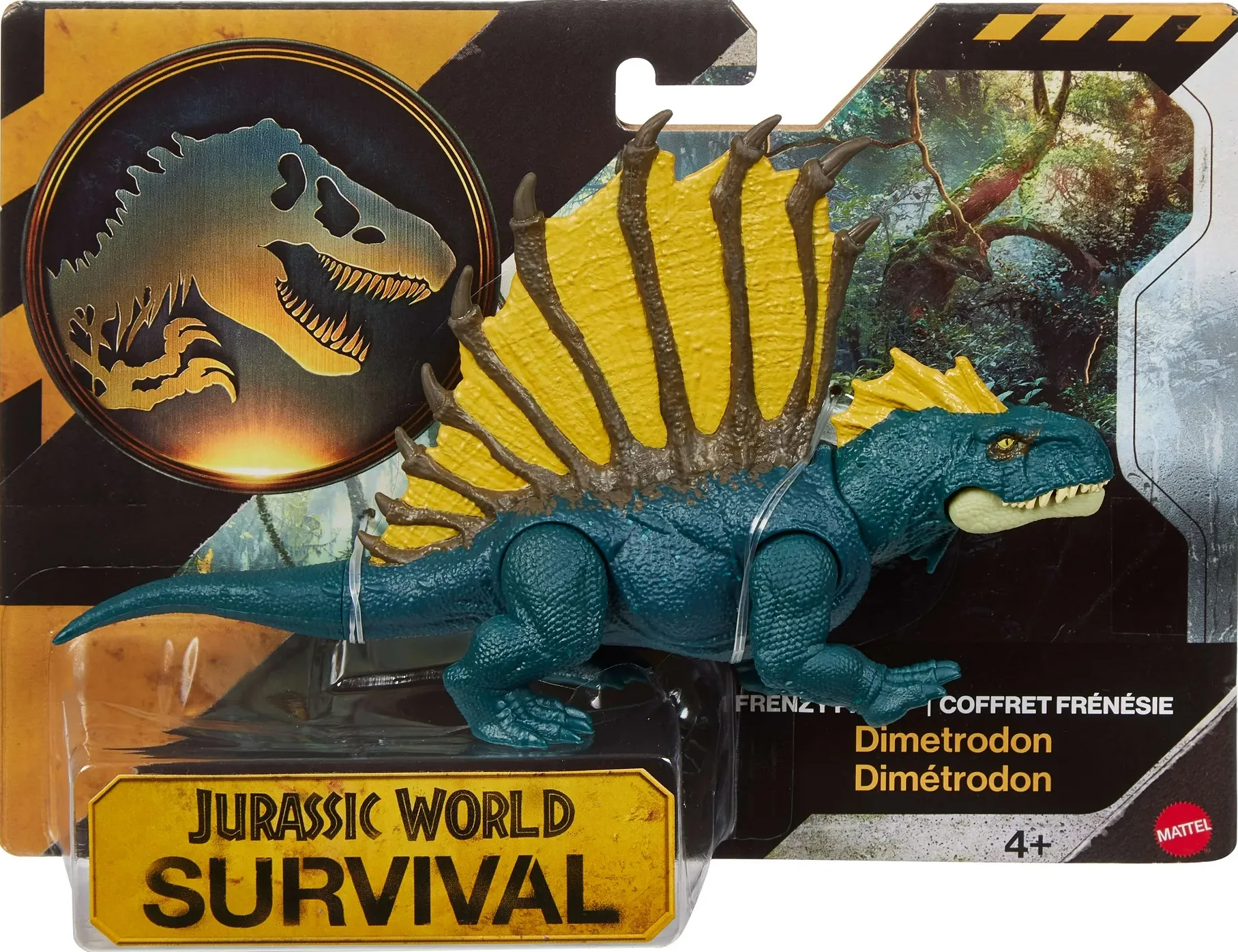
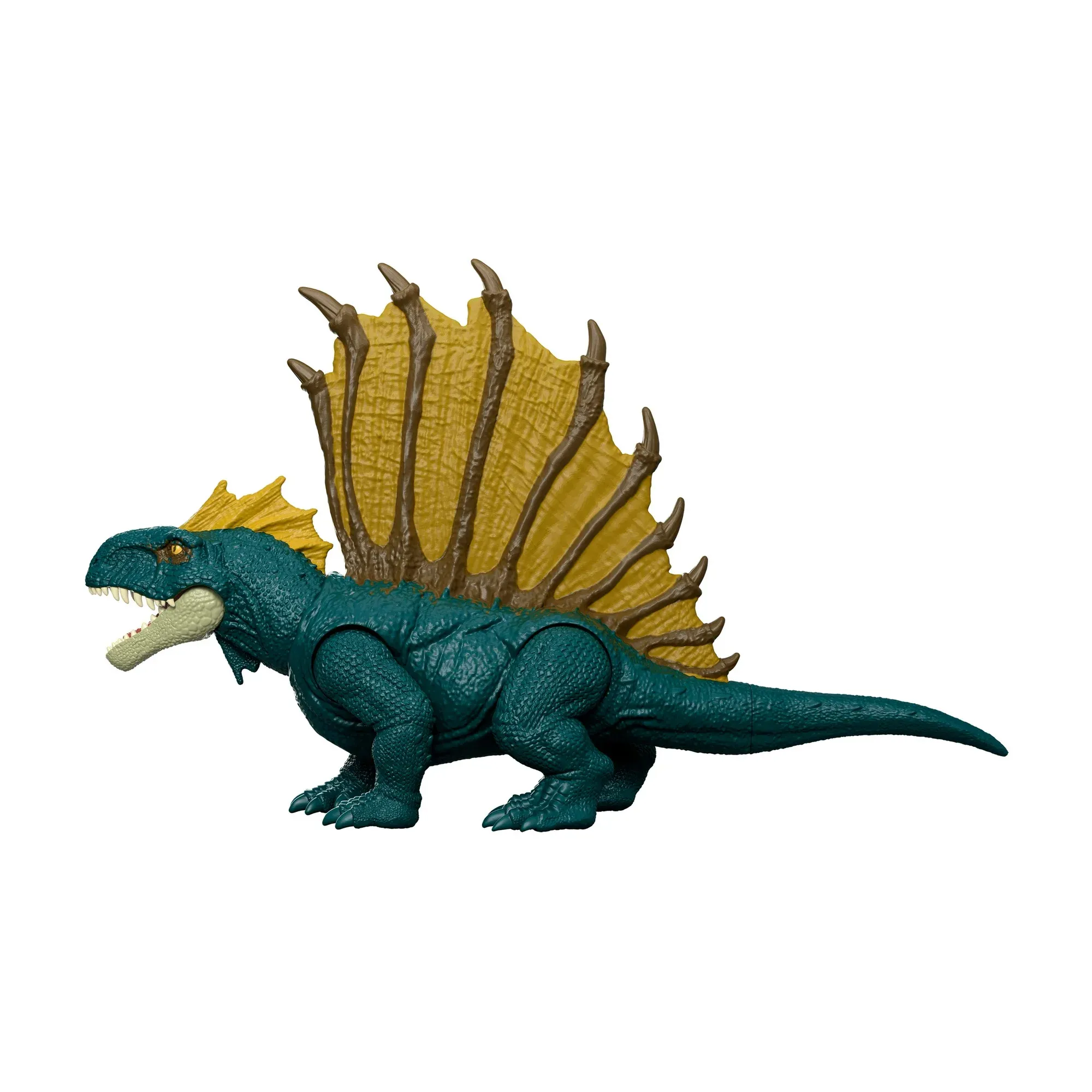
Mattel has released several Dimetrodons over the years, but this Survival version stands apart: a more aggressive head sculpt, a row of armoured scutes where the sail begins, and a deep teal body under a vivid yellow sail. It is a fantasy colour scheme that should not work, and somehow does.
🎨 Frenzy Pack sub-line🧲 Armoured back scutesArticulated jaw & limbsNot a dinosaurMattel · 2026Scan code included
🦖 The Most Famous "Dinosaur" That Isn't One
Dimetrodon is not a dinosaur. It is a synapsid — part of the branch that eventually produced mammals — and it died out some 40 million years before the first dinosaurs appeared. That has never stopped it turning up in dinosaur toy lines, and Mattel has now made several. This one is the Survival take.
“Meet the Dimetrodon. It’s got a giant sail, a face full of different-sized teeth, and an identity crisis. It’s the most famous ‘dinosaur’ in the park that isn’t actually a dinosaur. Try not to bring it up, it’s a sensitive subject for him.”
— Jurassic World Tour Guide
What Is Frenzy Pack?
Frenzy Pack is one of several sub-lines inside Jurassic World Survival, alongside Wild Roar, Strike Attack, Gigantic Thrashers and the rest. It is the smaller, simpler tier — no sounds, no lights, no spring-loaded gimmick — so a figure stands on its sculpt and paint alone.
Other Frenzy Pack releases on the site include Monolophosaurus, Vespersaurus and Ferrodraco.
Paint & Colour Scheme
Main body
Sail membrane & eye flashes
Sail spines & back scutes
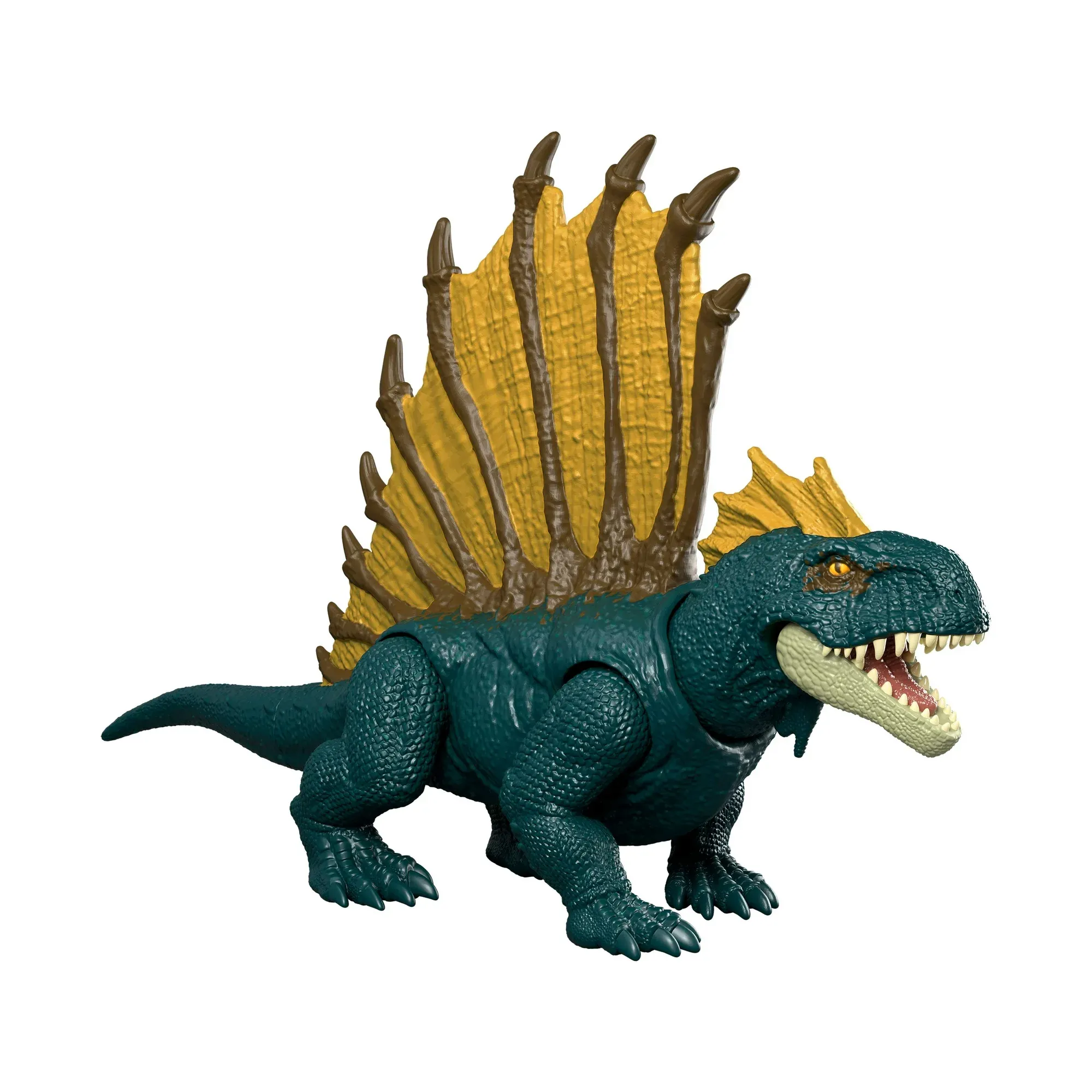
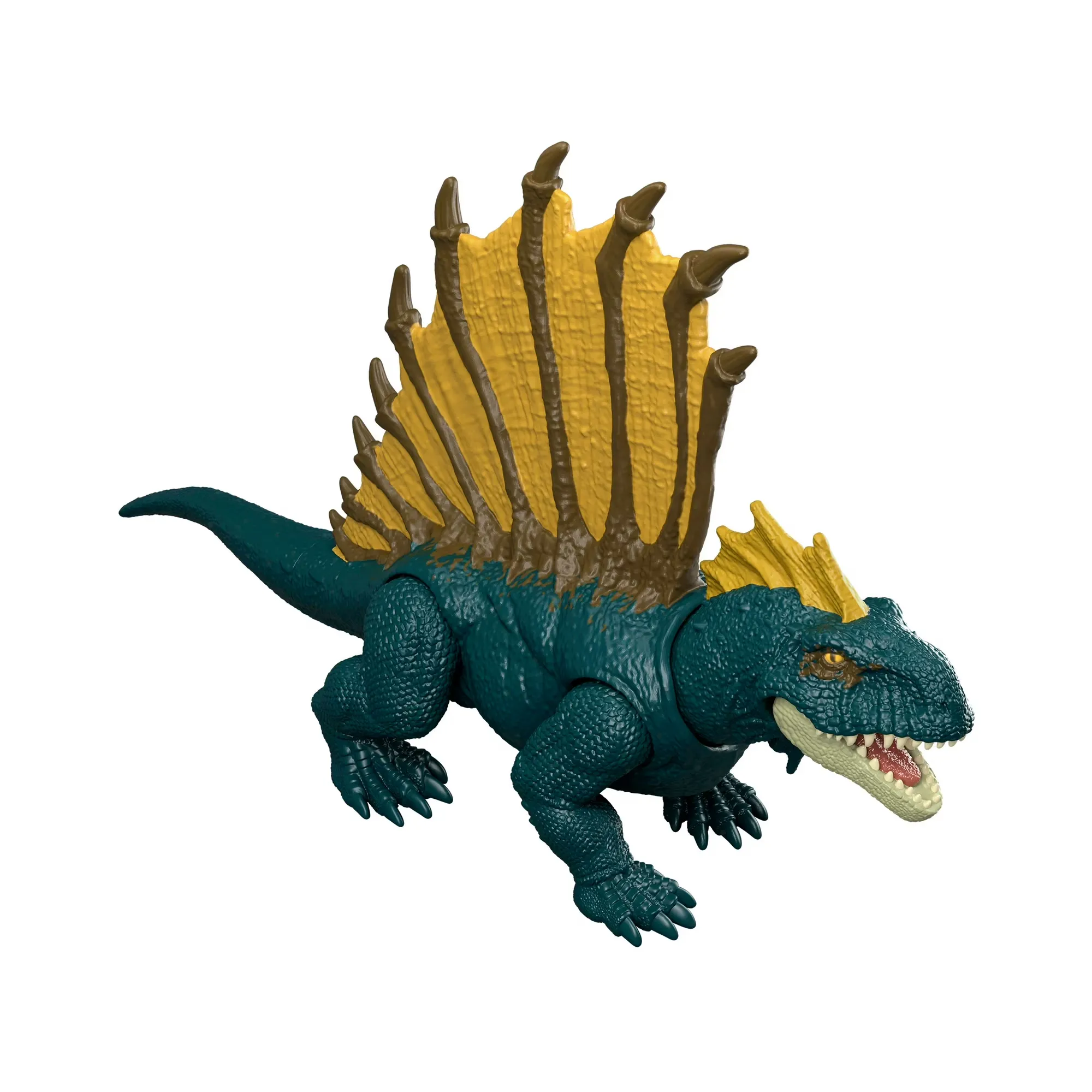
The main body is painted in a deep teal or blue-green, sharply contrasted by the massive sail and its vibrant, bright yellow membrane. The same yellow reappears as a striking accent over the eyes, which ties the whole scheme together rather than leaving the sail looking bolted on. The Survival spikes and the sail’s spines are a dark, earthy brown.
It is a specific fantasy look that does not make much sense at first, given how vivid the colours are — but it grows on you fast.
The Sculpt
Head and skin
The head sculpt is the most aggressive Mattel has given this animal — deeper jawline, harder brow, and the mouth set for a snarl rather than a neutral stance. Across the body the skin carries a detailed, scaly texture that holds paint well and stops the large flat areas of teal looking bare.
The sail and the Survival scutes
The spines of the sail itself are well defined, standing clear of the membrane rather than being half-buried in it. The Survival signature sits just in front of them: a row of prominent, dark brown armoured spikes or scutes running along the animal’s back, right where the sail begins.
Articulation
✓ Jaw — opens wide✓ Limbs — articulated✗ No action feature✗ No sounds or lights
As part of the Frenzy Pack series, this Dimetrodon has an articulated, openable jaw and articulated limbs. That lets you pose it with the mouth shut for a calm profile shot, or opened wide for a menacing expression. There is nothing beyond that — no spring mechanism, no sound, no light.
Verdict: Should You Buy It?
Yes, if the colours do not put you off. Of the several Dimetrodons Mattel has produced, this is the one with the most character: the head sculpt is genuinely aggressive, the sail is the best-defined the species has had, and the armoured scutes give the Survival theme something to hang on. The teal-and-yellow scheme is pure fantasy and looks odd on the peg, but it photographs well and it wins you over on the shelf. Like every Frenzy Pack figure it is articulation only, so buy it as a display piece rather than a plaything.
✦ What Works
- Most aggressive Dimetrodon head sculpt Mattel has made
- Well-defined sail spines and a vivid yellow membrane
- Row of armoured brown scutes where the sail begins
- Detailed scaly skin texture across the body
- Yellow eye flashes tie the colour scheme together
- Articulated jaw and limbs
✦ What Doesn't
- Fantasy colours will not suit every collection
- No action feature, sounds or lights
About the Dimetrodon
Dimetrodon lived in the Early Permian, roughly 295 to 272 million years ago, mostly in what is now Texas and Oklahoma. It is not a dinosaur and never was: it is a synapsid, on the branch of the family tree that leads to mammals, and it was already extinct some 40 million years before the first dinosaurs walked.
The name means “two measures of teeth”, a reference to the two distinct tooth types in its jaws — large canine-like fangs at the front, smaller shearing teeth behind. That differentiated dentition is one of the mammal-like features that marks it out from the reptiles it is usually shelved beside.
The sail is the obvious feature, built from enormously elongated neural spines rising from the vertebrae and covered in skin in life. What it was for is still debated: thermoregulation is the classic explanation, though display and species recognition have gained ground, since the sail grew disproportionately large as the animal aged, which is the pattern you expect from a signalling structure rather than a radiator.
How to Unlock It
How do you unlock the Dimetrodon Frenzy Pack in the Jurassic World Survival collection?
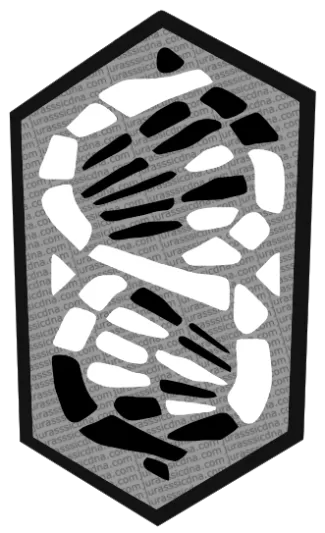
Open up your Jurassic World Play App (previously known as the Jurassic World Facts App), press the Scan button and point it towards the DNA code here:
Frequently Asked Questions
No. Dimetrodon is a synapsid, part of the branch of the family tree that leads to mammals, and it went extinct roughly 40 million years before the first dinosaurs appeared. It is simply the most famous non-dinosaur in every dinosaur toy line.
The main body is deep teal or blue-green, with a vibrant bright yellow sail membrane and the same yellow used as an accent over the eyes. The sail spines and the armoured back scutes are a dark, earthy brown.
A row of prominent dark brown armoured spikes or scutes running along the animal’s back, right where the sail begins. In line with the rest of the line, these are likely moulded in soft flexible rubber rather than hard plastic.
No. It has an articulated, openable jaw and articulated limbs, so it can be posed with the mouth shut or opened wide. There are no sounds, lights or spring-loaded mechanisms.
It is still debated. Thermoregulation is the classic explanation, but display and species recognition have gained ground, because the sail grew disproportionately large as the animal aged — the pattern you expect from a signalling structure rather than a radiator.
Open the Jurassic World Play App (previously the Jurassic World Facts App), tap the Scan button and point the camera at the DNA code that comes with the figure. The code is also shown in the unlock section above.