Home › Jurassic World Survival › Champsosaurus Frenzy Pack
Review
Champsosaurus Frenzy Pack Jurassic World Survival Frenzy Pack Review
Species choices like this one are why the Frenzy Pack range is worth paying attention to. Champsosaurus has never appeared in the Mattel Jurassic World line before, and it is an unusual, genuinely obscure prehistoric reptile that deserves the spotlight.
Wave: Jurassic World SurvivalToy Line: Frenzy PackYear: 2026
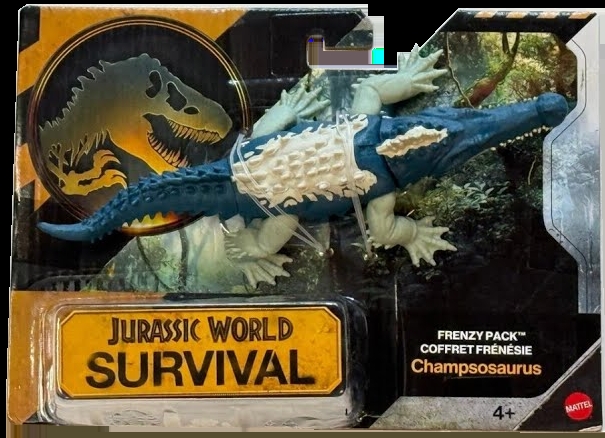
⚠️ First Appearance
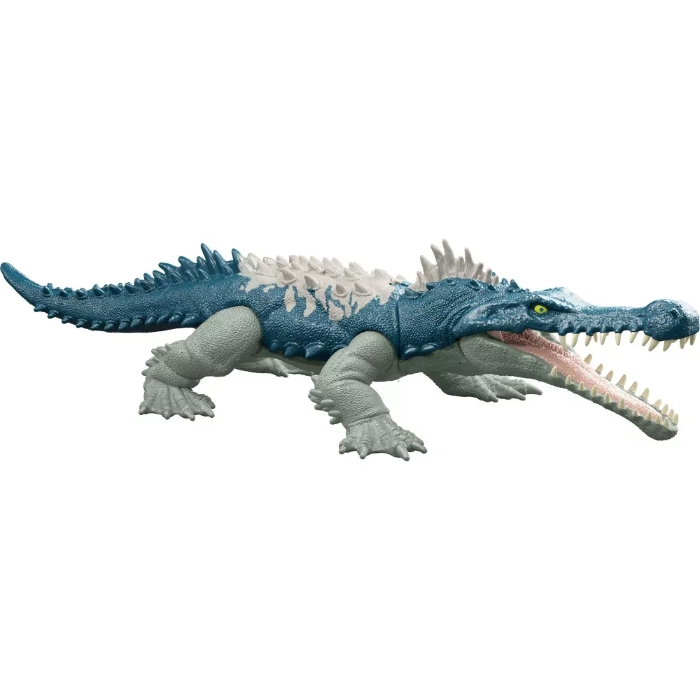
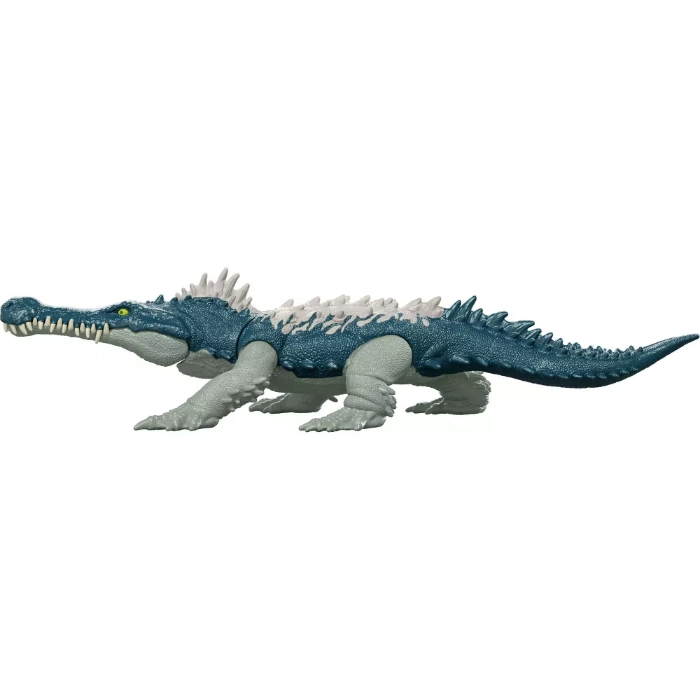
The result is a low-slung, deep blue, spiky-tailed figure that looks like nothing else on the shelf. It is stylised rather than scientifically faithful, but the sculpt has real character and the colour scheme is one of the more appealing in the wave.
🔬 Why This Species Is Worth Knowing
Champsosaurus looks like a gharial, but it is not a crocodilian at all. It belonged to the Choristodera, a completely separate reptile lineage, and its crocodile-like body plan is a textbook case of convergent evolution rather than shared ancestry. Two details give the game away:
- Crocodilians carry bony osteoderms embedded in their skin while choristoderes had only fine scales.
- Crocodilians have nostrils on top of the snout for breathing while submerged whereas choristodere nostrils sat right at the tip.
Even better, Champsosaurus was one of the survivors of the asteroid. It lived from roughly 80 to 55 million years ago, meaning it came through the Cretaceous-Paleogene extinction that ended the non-avian dinosaurs, and some Paleocene species actually grew larger afterwards than their Cretaceous ancestors ever managed.
1. Paint Scheme and Sculpt
Primary bodyOff-White
Crest & ridgesLight Gray-Green
Underside & legsLight Yellow
TeethGreen
Eyes
The dark blue that covers the body is the right call for this figure. It is deep enough to read as a serious, murky-water predator rather than a toy-bright colour, and because it sits so dark, the pale off-white applied along the length and ridges pops heavily.
A dark blue speckling is scattered across the body including through the lighter areas, adding surface texture making the figure looking very good.
The eyes are painted a clean green, though the pupil is simply the dark blue body colour showing through rather than a distinct black.
2. Sculpt and Details
Head, Snout and Jaw
The head detail is looking very good but nothing unseen before. There is a bumpy, roughened texture across the skull rather than large individually sculpted scales, which honestly suits a semi-aquatic reptile well. The nostrils are sculpted at the tip of the snout. The snout itself broadens noticeably toward the front, giving the head a specific silhouette.
The jaw articulates cleanly and opens impressively wide, which makes the figure fun to play with and pose despite the limited feature set.
Neck, Ridges and Spine
Along the back of the head and neck there are lots of ridges which probably comes from the Survival line’s main stylistic embellishment rather than a real detail from the actual dinosaur anatomy.
There is a heavy skin wrinkling that runs along the underside of the neck and throat that looks very good when you inspect the figure.
Moving down the spine, lots of crocodilian-style scutes and ridges follow the top of the body with decent detail worked into each one.
Tail
3. Action Feature, Light-Up and Articulation
✓ Jaw (articulated, opens wide)✓ Neck (up and down)✓ All four legs (forward, back, full swivel)✓ Tail swivel✗ No neck swivel✗ No action feature
Standard Frenzy Pack articulation, with the notable bonus that all four legs sit on swivels and can rotate fully. The absence of a neck swivel is the one omission that would have meaningfully improved poseability on a figure this low to the ground.
At a Glance
Verdict - Should I Buy It?
Yes. This is one of the most likeable figures in the entire Frenzy Pack range and an easy recommendation for anyone who values unusual species over yet another raptor repaint. The deep blue and off-white contrast works beautifully, the crocodilian scutes and spiky tail ridges are well realised, the webbed toes show genuine care, and the low-slung silhouette makes it stand out immediately.
It is stylised rather than accurate, and the tooth paint bleed and scrunched rear leg skin are real if minor flaws. But the sculpt is characterful, the detail is crisp across almost the whole figure, and it is an outstanding candidate for a repaint. For a species that has never had a Mattel figure before, this is a strong debut.
✦ What Works
- First Mattel Champsosaurus figure
- Deep blue and off-white contrast works beautifully
- Crocodilian scutes and spiky tail ridges well realised
- Webbed toes show genuine care
- Low-slung silhouette stands out immediately
- Jaw opens impressively wide
- All four legs on full swivels
- Detail is crisp across almost the whole figure
- Outstanding candidate for a repaint
✦ What Doesn't
- Dark blue bleeds down into the tooth row
- Scrunched rear leg skin
- Pupil is body colour, not a distinct black
- Neck ridges are stylistic, not anatomical
- No neck swivel
- No action feature
- Stylised rather than accurate
4. About the Champsosaurus
Champsosaurus is an extinct genus of semi-aquatic reptile belonging to the order Choristodera, known from the Late Cretaceous through the early Paleogene of North America and Europe, roughly 80 to 55 million years ago. It was first described from Late Cretaceous rock in Montana by the celebrated American paleontologist Edward Drinker Cope in the 1870s. The name derives from champsai, reported in an Ancient Greek source as an Egyptian word for crocodiles, combined with sauros, the Greek for lizard. Its distinctive hourglass-shaped vertebral centra are useful enough to paleontologists that they serve as biostratigraphic markers for dating rock layers.
Despite its striking resemblance to a modern gharial, Champsosaurus was not a crocodilian and was not closely related to one. The similarity is convergent evolution: two unrelated lineages independently evolving long narrow fish-catching jaws, eyes set high on the skull for watching above the waterline, and a laterally flattened tail for side-to-side swimming propulsion. The differences are telling. Crocodilians have bony osteoderms set into their skin; choristoderes had only fine scales. Crocodilian nostrils sit on top of the snout to allow breathing while lurking submerged; choristodere nostrils sat at the very end. Champsosaurus lived in freshwater environments and preyed primarily on fish, and it may have come ashore to lay eggs.
Its most remarkable achievement was survival. Champsosaurus lived through the Cretaceous-Paleogene extinction event that eliminated the non-avian dinosaurs, and the choristodere lineage as a whole persisted for at least 150 million years in total. In the aftermath of the extinction, North America became something of a hotspot for choristodere diversity, and several Paleocene species grew considerably larger than any of their Mesozoic ancestors. Champsosaurus gigas from the Paleocene of Montana reached around 3 metres in length, roughly double the size of the largest Cretaceous champsosaurs, making these animals significant freshwater predators during the ecological rebuilding that followed the asteroid impact.
How to Unlock
How to unlock Champsosaurus from the Frenzy Pack in Jurassic World Survival Collection?
Open up your Jurassic World Play App (previously known as the Jurassic World Facts App), press the Scan button and point it towards the DNA code here:
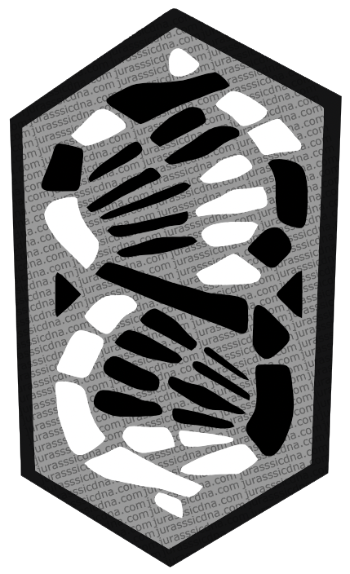
Photo Gallery
Frequently Asked Questions
No. Champsosaurus was a choristodere, a separate group of reptiles from crocodilians. Its resemblance to a modern gharial is convergent evolution, not close relationship. Crocodilians have bony osteoderms embedded in the skin while choristoderes had only fine scales, and crocodilian nostrils sit on top of the snout for breathing while submerged whereas choristodere nostrils sat at the very tip.
Yes. Champsosaurus lived from roughly 80 to 55 million years ago, meaning it came through the Cretaceous-Paleogene mass extinction that wiped out the non-avian dinosaurs. Its freshwater aquatic lifestyle likely helped it endure the aftermath. Some Paleocene species even grew larger than their Cretaceous ancestors, with Champsosaurus gigas reaching around 3 metres compared to about 1.5 metres for the largest Cretaceous champsosaurs.
Yes. The Survival Frenzy Pack Champsosaurus is the first Champsosaurus figure Mattel has produced for the Jurassic World toy line, which makes it a notable release for collectors who value unusual species.
No. It has standard Frenzy Pack articulation, an articulated jaw, neck movement up and down, full swivels on all four legs, and a tail swivel. There is no button-activated action feature.
Open the Jurassic World Play App, tap the Scan button, and point it at the DNA barcode on the Champsosaurus figure.