
Review
Distortus Rex a.k.a. D-Rex Jurassic World Survival Wild Roar Review
There has never been a Mattel Jurassic World figure quite like this one. The Distortus Rex is genuinely unlike anything the line has produced, massive, strange, six-limbed, and immediately captivating. It is already a figure that I believe will be one of the most prized from the entire Rebirth line, not just for its scale and uniqueness but because the sculpt is extraordinary and the dual action features suit the creature's chaotic, twitching, freakish personality perfectly.
🧬 What Is the Distortus Rex?
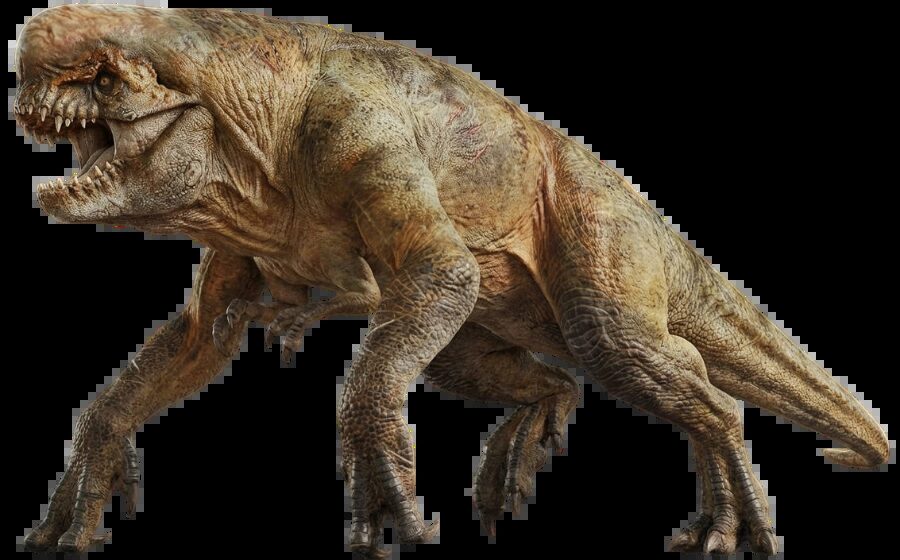
The D-Rex was InGen’s catastrophically failed attempt to engineer a T-Rex beyond anything seen in a Jurassic Park. The creature is the 26th iteration of an experiment that David Koepp, the film’s screenwriter, described as something “they should have stopped about 20 versions ago because it just got worse and worse.”
Starting from T-Rex DNA, fragments from multiple other animals were introduced into the genome, producing a mutant with six limbs, two massive gorilla-style forearms capable of grabbing prey, two small inner arms resembling an elongated T-Rex set, and two rear legs.
The skull is oversized and the gait is ape-like, allowing it to walk on all six while lunging. Officially designated D-REX V.23.111, it escaped from the InGen facility on Ile Saint-Hubert in 2010 after a dropped Snickers wrapper caused a cascade of door failures.
By the time the events of Rebirth take place in 2027, the D-Rex has been living wild on the island for 17 years and has integrated itself into the ecosystem as its apex predator.
🎥Gareth Edwards on the design:
The D-Rex draws inspiration from three cinematic sources confirmed by director Gareth Edwards:
– The Rancor from Star Wars (which Edwards directed Rogue One for)
– The Xenomorph from Alien
– The original T-Rex pushed to its breaking point.
When asked about the creature’s character and movement, Edwards told the animators to study David Lynch’s The Elephant Man, framing the D-Rex not as a monster that chose its condition but as a creature that did not ask to be made this way. Visually, it has also been compared by fans and press to the Cloverfield monster for its enormous head and primate-like locomotion.
About the toy
1. Paint Scheme and Sculpt
Paint Scheme: Light Brown, Medium Brown, Dark Brown, and Dark Gray
The primary body color is a light brown tone, with the lower jaw and underside running almost white. A darker brown dominates the upper side and creates a natural gradation from back to belly. Around the eye, dark brown spots and splotches create a patterned effect that radiates outward from the socket, giving the face a distinctive character.
Bumpy osteoderms on the top of the head carry a similar darker treatment. A brown speckling is visible throughout the body, adding surface variety. The paint runs well from head through the midsection but fades in the hip region as it does on most Mattel large figures, leaving the rear portions of the figure in the base light brown without secondary patterning.
The head sculpt is immediately impressive. Scale detail is varied and vibrant throughout, with larger scales on the lower jaw and finer detail moving up through the snout. Skin wrinkles and folds are prominent behind the head, giving the face a heavy, organic quality that suits the creature’s mutant nature. The teeth are the rubber material on both jaws, looking genuinely sharp, and the interlocking pattern when the mouth closes is particularly striking, similar to the tooth-mesh seen on the Indominus Rex and Indoraptor.
Skin texture throughout the body is excellent: varied, vibrant, and consistently detailed. The shoulder area is particularly nicely sculpted with deep skin wrinkles and folds. Speckling runs throughout.
The defining feature of the Distortus Rex’s body is its six limbs, and Mattel has represented all of them correctly and with care. The large outer forearms are the primary visual statement, thick, powerful-looking, planted somewhat forward and outward in a gorilla-like stance. These carry good musculature and skin texture, with scoots along the fingers and reasonably sharp-looking, flexible claws. They can move forward and back and have some outward movement. Between these, the small inner arms sit close to the body in the familiar T-Rex-like position. These are articulated forward and back but hang loosely, which the reviewer notes gives them an unnerving wobble that actually suits the creature’s unstable mutant quality perfectly. The wrist of the inner arm has swivel articulation.
The rear of the figure shows what appear to be battle scars near the hip area, a nice storytelling detail. Rear leg musculature in the thigh and calf is strong and well defined. The feet have a convincing T-Rex-like quality
2. Action Features, and Articulation
Distortus Rex figure comes with two different features:
Feature 1: Shake and rampage. Pressing the button on the back causes the figure to vibrate and shake while the jaw snaps, with both sets of arms moving erratically. The shaking gives the D-Rex a twitching, out-of-control quality that is genuinely evocative of the creature’s erratic presence in the film, and is reminiscent of the Epic Roaring T-Rex feature from an earlier Mattel release. The right inner arm shakes more actively during the feature, while the left stays somewhat still, then both shake when released.
Feature 2: Body twist arm swipe. Twisting the body activates the large outer arm to swing outward and downward with significant force. The strike has a genuine impact to it. With the arm positioned forward before activating, the result is a downward smacking motion that could topple a shelf full of smaller figures. Both features are accompanied by sounds.
- Jaw (articulated)
- Shake and vibrate (button, jaw snap + arms)
- Body twist arm swipe (large outer arm strike)
- Sound effects (both features)
- Large outer arms (forward, back, limited outward)
- Small inner arms (forward, back, loose)
- Inner arm wrist swivel
- Rear legs (forward and back, limited range)
- Tail swivel
Verdict Should I buy it?
Absolutely and without hesitation. The Distortus Rex Rumble N Rampage is genuinely one of the most unique and impressive figures Mattel has ever produced for the Jurassic World line.
The six-limb body plan is executed superbly, the sculpt detail is exceptional throughout, the shaking action feature suits the creature’s on-screen personality perfectly, and the arm swipe strike is genuinely powerful and satisfying. If you collect Rebirth figures at all, the D-Rex belongs in your collection. It is the kind of figure that will be looked back on as a defining piece of this toy line.
How to unlock
How to unlock Distortus Rex Rumble 'N Rampage in Jurassic World Rebirth Collection?
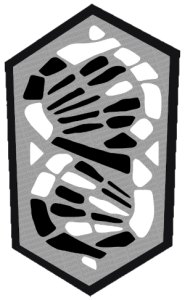
Open up your Jurassic World Play App (previously known as the Jurassic World Facts App), press the Scan button and point it towards the DNA code here:
3. About the Distortus Rex
"Clearly they should have stopped about 20 versions ago, because it just got worse and worse and worse."
— David Koepp, screenwriter, Jurassic World Rebirth (on the D-Rex experiments)
The Distortus Rex, officially designated D-REX V.23.111, is a mutant hybrid creature introduced as the apex antagonist of Jurassic World Rebirth (2025). It is not based on any real prehistoric animal but instead represents InGen’s catastrophically failed attempt to engineer a Tyrannosaurus Rex beyond the capabilities of anything previously created. DNA fragments from multiple unidentified animal species were introduced into the T-Rex genome, producing a creature with severely distorted anatomy. Six limbs, an oversized head, an ape-like gait, and features that biologists in-universe describe as resembling unresolved embryonic development rather than a healthy adult body plan.
Director Gareth Edwards described the D-Rex as a T-Rex “cranked up to 15 and gone wrong.” For the design, Edwards cited three major cinematic inspirations, the Rancor from Star Wars, the Xenomorph from Alien, and an ordinary T-Rex as the genetic base. When guiding the animators on the creature’s movement and character, Edwards pointed them toward David Lynch’s The Elephant Man, framing the D-Rex not as a psychopathic monster like the Indominus but as a creature that did not choose what it became. Unlike previous Jurassic World hybrids, the D-Rex shows no evidence of killing for pleasure, and despite living wild on Ile Saint-Hubert for 17 years, it has integrated into the island’s ecosystem without destabilizing it. It is the first fictional dinosaur antagonist in the franchise to survive on-screen, and the first to have six limbs.
The Distortus Rex is InGen’s failed 26th attempt to genetically engineer an enhanced Tyrannosaurus Rex. With multiple unidentified animal DNA fragments introduced into the T-Rex genome, the result was a six-limbed mutant with a massive head, ape-like gait, and severely distorted anatomy. It escaped from the InGen facility on Ile Saint-Hubert in 2010 and lives as the island’s apex predator during the events of Jurassic World Rebirth in 2027.
The figure measures approximately 51 cm (20 inches) in length and about 23 cm (9 inches) in height. It is comparable in size to the original Indominus Rex large figure and significantly larger than any standard Wild Roar figure.
Two action features are present. A button on the back causes the figure to shake and vibrate with jaw snapping and erratic arm movement, accompanied by sounds. Twisting the body activates an arm swipe where the large outer forearm swings outward and downward with significant force, also with sounds.
Director Gareth Edwards confirmed the D-Rex design drew from three main cinematic sources: the Rancor from Star Wars, the Xenomorph from Alien, and a T-Rex as the genetic base. Edwards told the animators to study David Lynch’s The Elephant Man for the creature’s character and movement, framing it as something that did not choose its condition.
Open the Jurassic World Play App, tap the Scan button, and point it at the DNA barcode on the Distortus Rex figure.