
Home › Jurassic World Survival › Dilophosaurus Strike Attack
Strike Attack Review
Dilophosaurus Strike Attack Jurassic World Survival Review
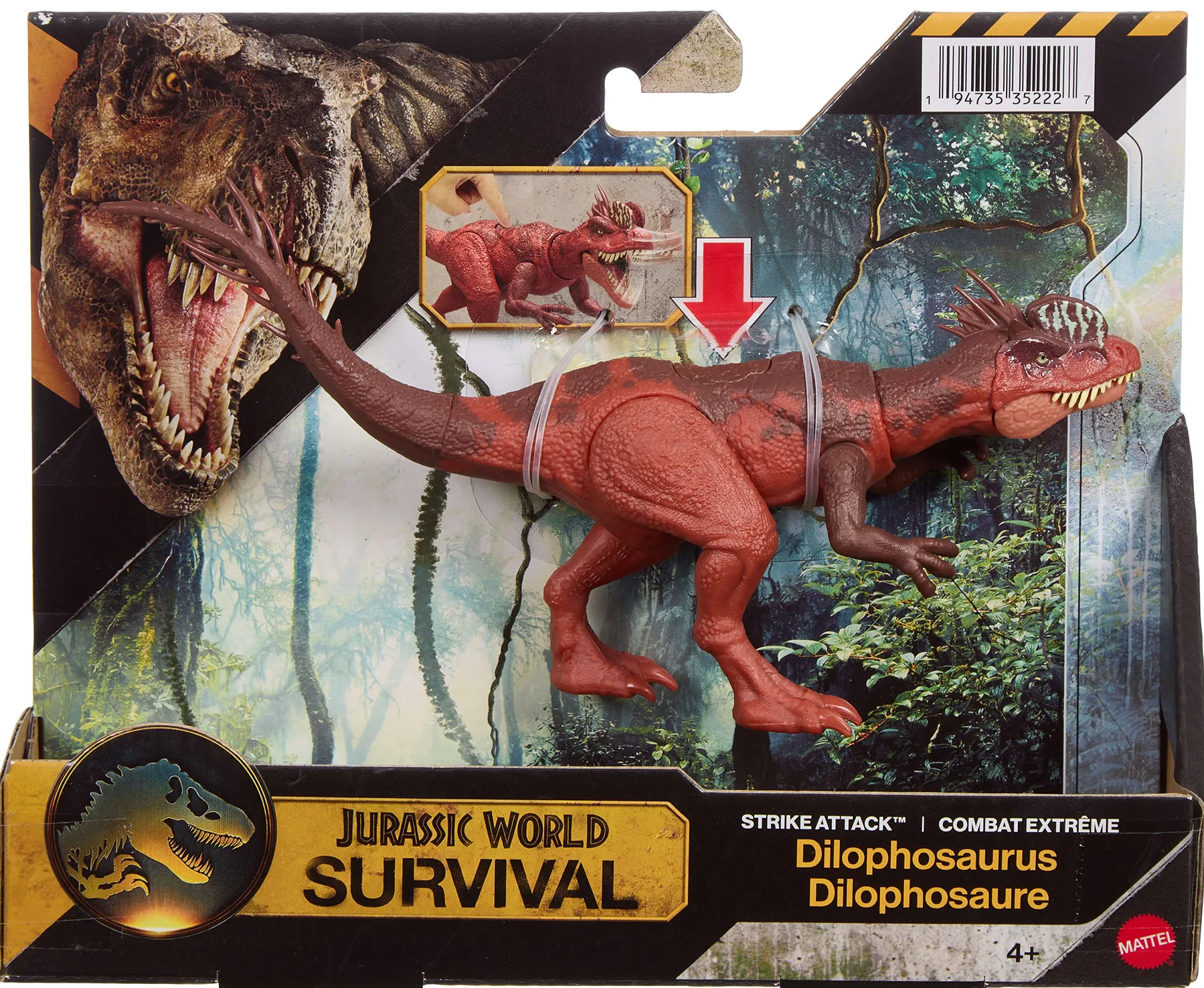
A Survival-line take on the most famous frilled theropod in the franchise — except this one has no frill at all. What it has instead is bulk: a heavy, scarred, scute-armoured body painted in an alarming red, with striped crests and a jaw-snap action feature.
First Dilophosaurus with no frillJaw-snap action featureScute armour along the spineMattel · 2026Scan code included
About the Survival Line
The Jurassic World Survival line, tied to the Survival PS5 game concept, shows mutated versions of familiar creatures: extra armour, exaggerated proportions, unusual colours. On the Dilophosaurus that treatment is unusually heavy-handed. Where the movie animal is slender and delicate, this figure is thick-set and rugged, and its most recognisable feature has been taken away entirely.
The Frill Is Gone
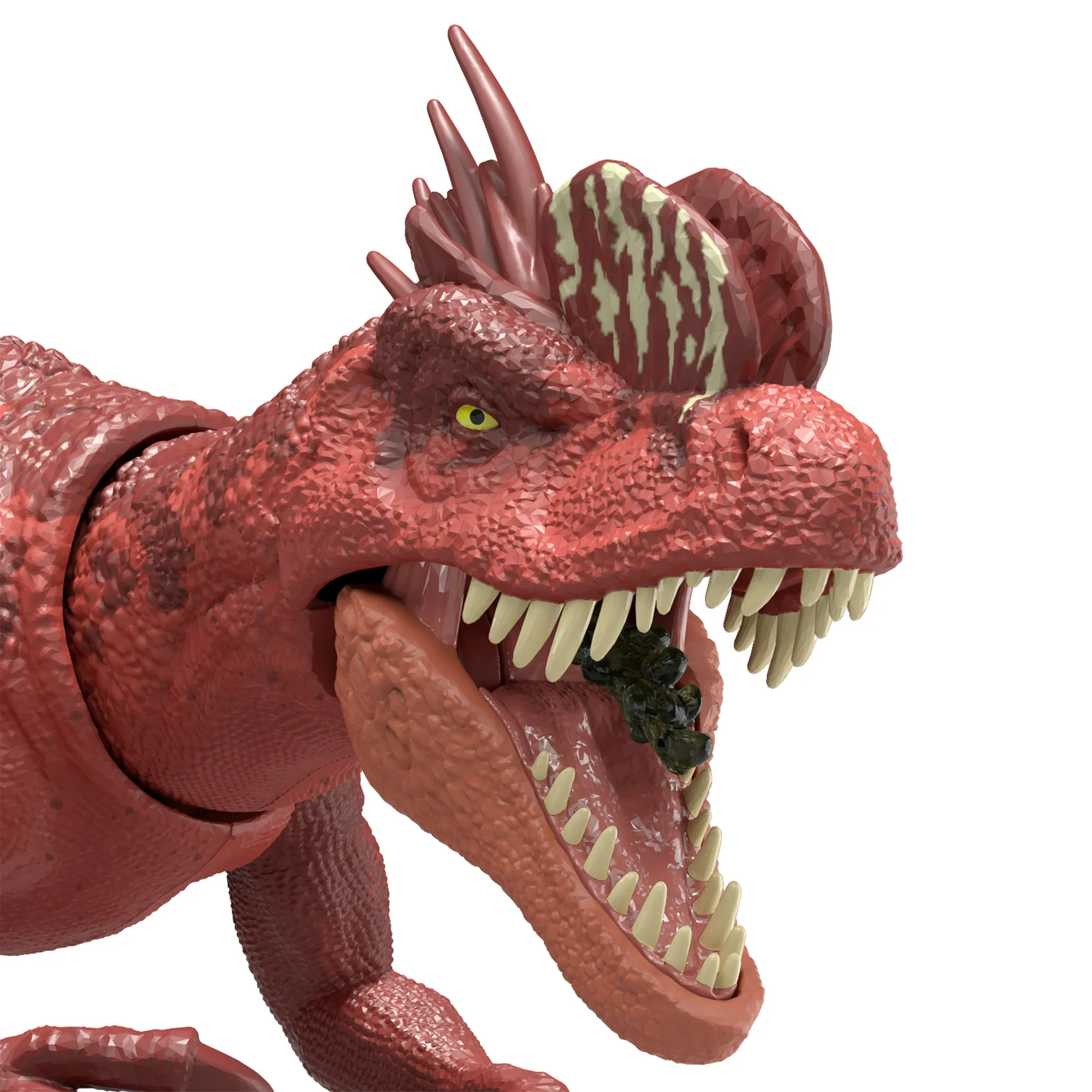
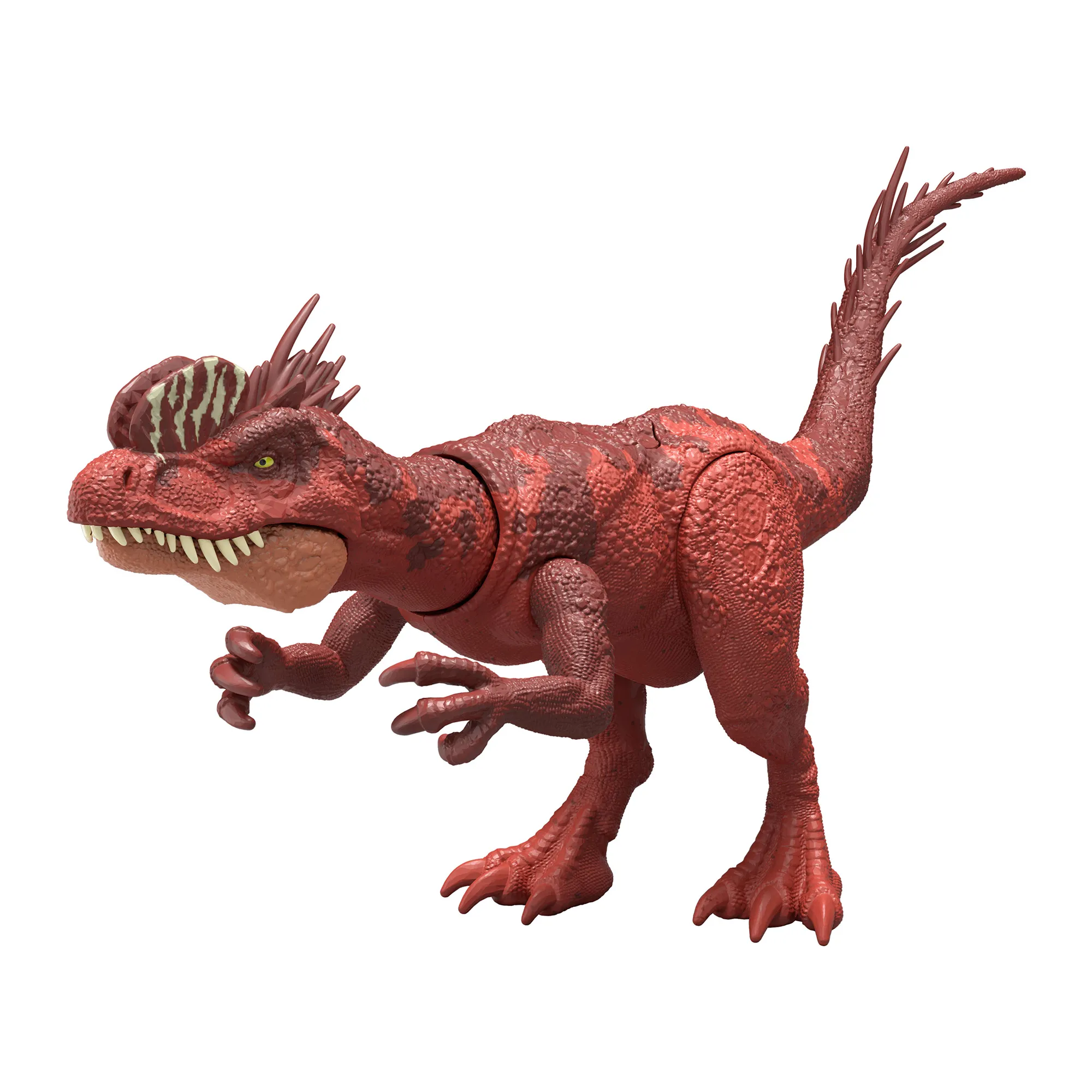
This is the headline: it is the first mutated Dilophosaurus Mattel has made without the signature neck frill. The fan-out frill that every previous Jurassic World Dilophosaurus has carried — the thing that makes the species instantly readable on a shelf — simply is not here. The twin head crests remain, but the neck is bare.
Whether that is a bold redesign or a missed opportunity depends entirely on why you buy Dilophosaurus figures. If it is for the frill, this one will not scratch that itch.
Paint & Colour Scheme
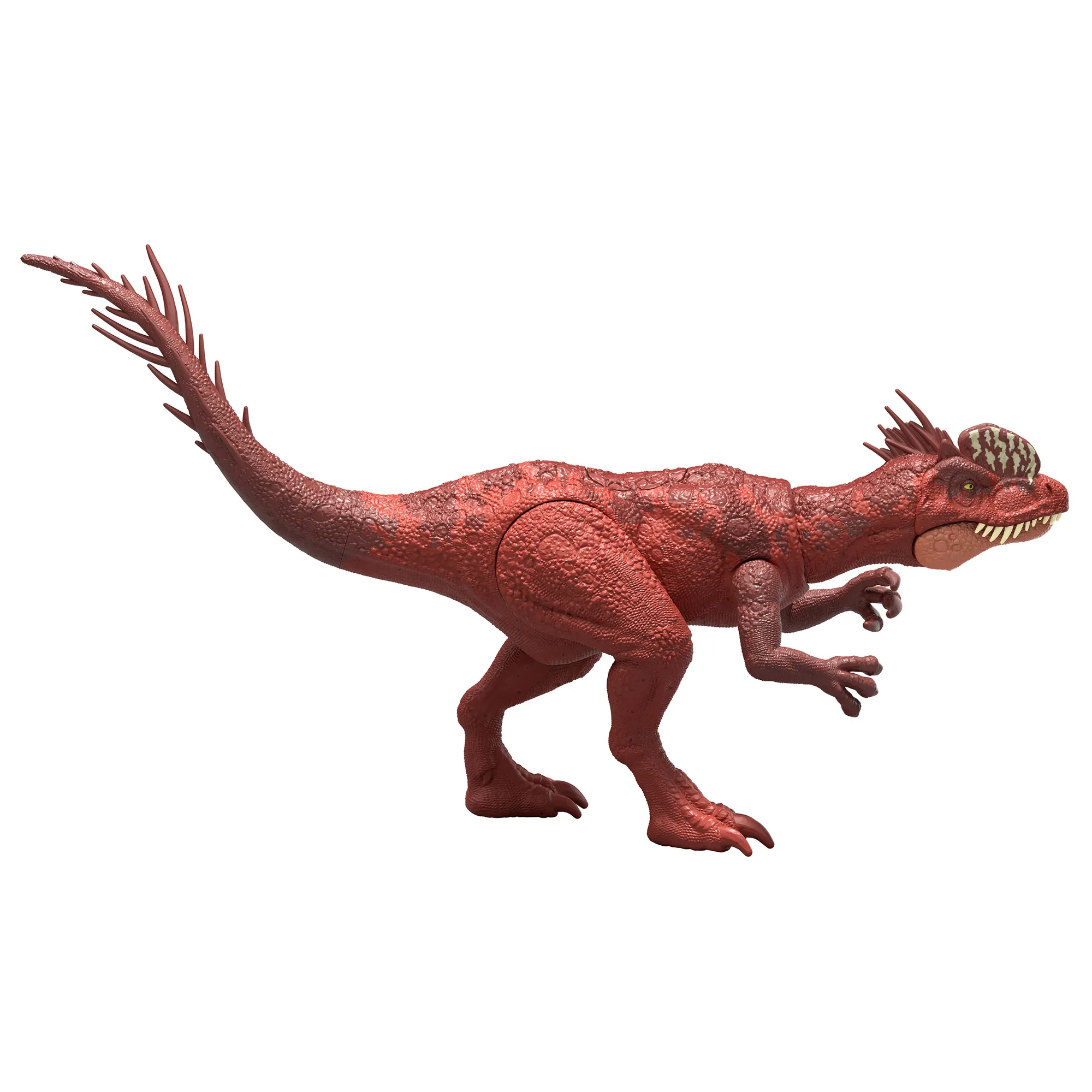
The detailing and the paint work are the strongest things about this figure. It is painted almost entirely in an alarming red — not a naturalistic colour by any measure, but an effective one, and it carries right across the body, limbs and tail rather than stopping at the halfway point the way budget figures often do.
The crests on top of the snout are the exception. They are painted in alternating light and dark stripes, almost like camouflage, and they are the one place on the figure where your eye gets something other than red to look at.
Sculpt & Action Feature
Bulk, Scars and Armour
Unlike the slender movie version, this figure is robust and bulky, and the whole design leans into its enhanced nature. The body is covered in aggressive Survival detailing: scars, bulging muscle mass, and a great many sharp teeth. Heavy scute-like armour plating runs the full length of the neck, back and tail, which gives the figure a genuinely rugged look and a much heavier silhouette than any previous Dilophosaurus release.
The Strike Attack Action
As a Strike Attack figure, the action is driven by a single button on the back, which makes the jaws snap shut. It is the standard Strike Attack mechanism rather than anything bespoke, but on a head this heavily toothed the snap lands well.
✓ Jaw snap — button on the back✗ No neck frill✗ No sounds or lights
At a Glance
Should You Buy It?
It depends on what you want from a Dilophosaurus. The detailing and the paint work here are genuinely outstanding for a Strike Attack figure — the scarring, the muscle mass, the scute armour down the spine and the striped crests all read clearly, and the red coverage is complete rather than half-hearted.
But it is the first Dilophosaurus Mattel has released without the frill, and for a lot of collectors that frill is the character. If you already own a frilled version and want a bulkier, angrier companion piece on the shelf, this is an easy pick. If this would be your only Dilophosaurus, you will probably want one with the frill first.
✦ What Works
- Outstanding detailing for the price point
- Full red paint coverage, head to tail
- Striped crests break up the monochrome
- Scars and bulging muscle sculpted in
- Scute armour runs neck to tail tip
- Much heavier build than the movie version
- Jaw snap suits all those teeth
✦ What Doesn't
- No neck frill — the species' signature
- Almost entirely one colour
- Standard Strike Attack jaw snap, nothing new
- No sounds or light effects
About the Dilophosaurus
“This is the Dilophosaurus, our ‘spitter.’ For the Survival line, we’ve… enhanced its… ‘charm.’ It’s bulkier, spikier, and the crests are now 100% more intimidating. We’re pretty sure it still spits, but frankly, no one has been brave enough to get close enough to find out.”
— InGen Asset Handler (from a safe distance)
Dilophosaurus — the name means “two-crested lizard” and is said die-LOF-oh-SOAR-us — was an Early Jurassic theropod from what is now Arizona, living roughly 193 million years ago. It is named for the pair of thin, parallel bony crests running along the top of its skull, which were almost certainly display structures rather than weapons: too fragile to fight with, too eye-catching to be anything else.
The real animal was a good deal larger than the film suggests. Estimates put it at around 6 to 7 metres (20 to 23 feet) long and 400 to 500 kg (880 to 1,100 pounds), which makes it one of the largest known predators of its time. It had no neck frill and it did not spit venom — both of those are inventions of the first Jurassic Park film, and both have stuck to the species ever since. The Survival version quietly drops the frill while keeping the crests, which lands it in the odd position of being more anatomically honest than the design it replaced.
How to Unlock Dilophosaurus
How do you unlock Dilophosaurus in the Jurassic World Survival collection?
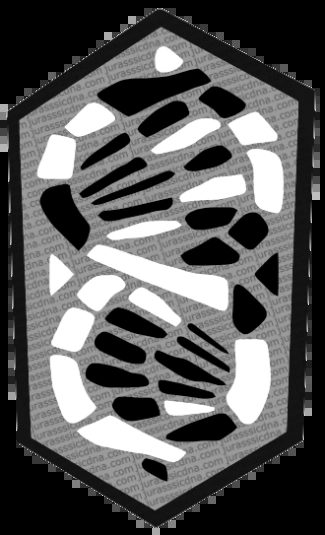
Open your Jurassic World Play App (previously the Jurassic World Facts App), press the Scan button and point it at the DNA code below.
Gallery
Frequently Asked Questions
No. This is the first mutated Dilophosaurus Mattel has released without the signature neck frill. The twin bony crests on top of the snout are still there, but the fan-out frill that every previous Jurassic World Dilophosaurus has carried is absent.
A single button on the back activates a jaw snap. It is the standard Strike Attack mechanism, with no sounds or light effects on this figure.
Almost the entire figure is painted in an alarming red. The only break in it is the pair of crests on top of the snout, which are painted in alternating light and dark stripes, almost like camouflage.
Neither. The neck frill and the venom spitting were both invented for the first Jurassic Park film. The real Dilophosaurus had a pair of thin parallel crests on the skull, almost certainly for display, and no evidence of any venom. It was also considerably larger than the film version, at roughly 6 to 7 metres long.
Open the Jurassic World Play App, tap the Scan button, and point it at the DNA barcode on the figure or at the code shown on this page.