
Home › Jurassic World Rebirth › Tapejara Strike Attack
Strike Attack Figure Guide
Tapejara Strike Attack
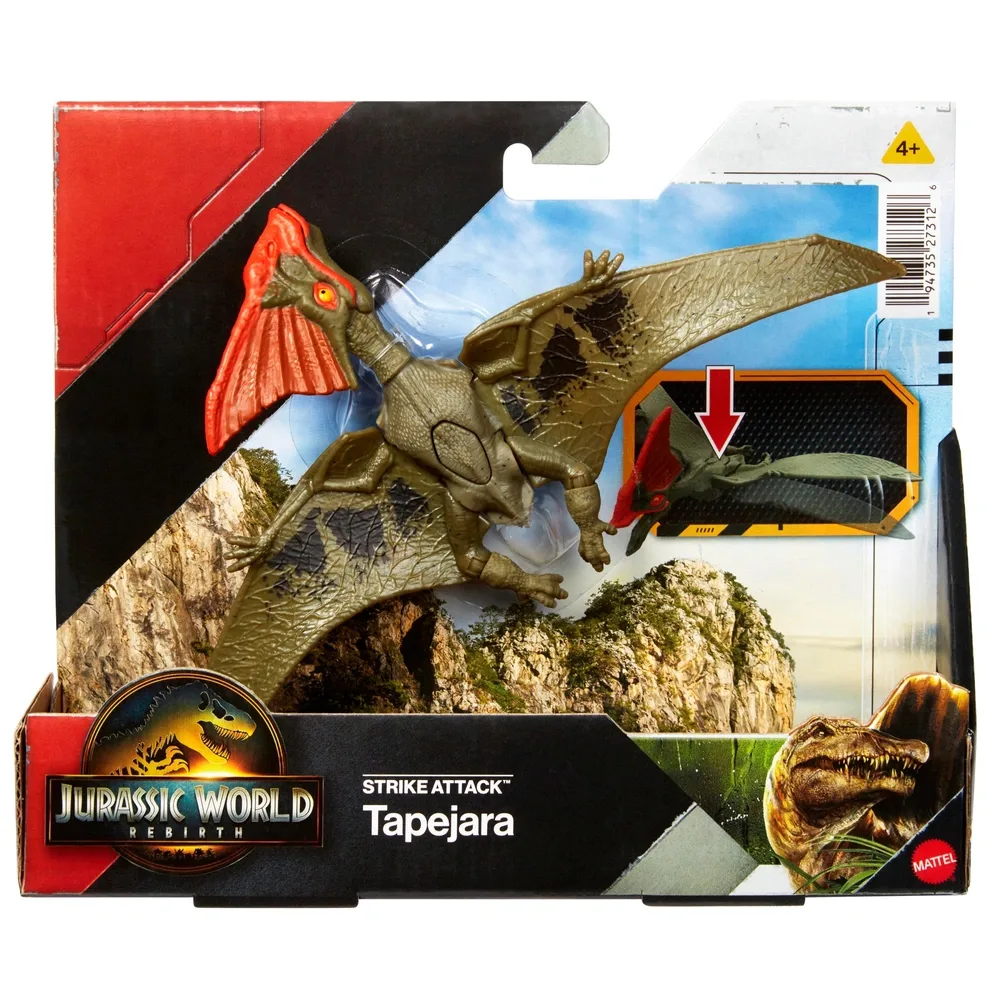
Tapejara is the pterosaur with the tall, sail-like crest, and it is one of the most colourful flying reptiles in the Jurassic World films. Mattel put it in the first Jurassic World Rebirth Strike Attack wave with spread wings, a bold red crest and a strike move. Here is what the figure looks like, where the real animal lived, and how to unlock it in the Jurassic World Play App.
PterosaurCrested headNo batteries🧬 DNA scan code
Fossil Spot: The Santana Fossils of Brazil
Tapejara comes from north-east Brazil, where nodules of limestone preserve pterosaurs in amazing 3D detail.
Tupandactylus, with an even bigger crest, was once thought to be a species of Tapejara.
What Is Strike Attack?
Strike Attack is the action assortment of Mattel’s Jurassic World Rebirth toy line. Each figure has one built-in strike move, usually worked from the tail, plus movable joints and a DNA code that unlocks the animal in the Jurassic World Play App. No batteries needed.
It came in the first Rebirth Strike Attack wave with Inostrancevia, Monolophosaurus, Tapejara and Yuxisaurus.
Paint and Colours
Body and wings
Crest
Pattern on the wings
Beak tip and eyes
A natural scheme with a bright finish. The body and wings are olive brown with darker markings, and the tall crest is a bold red orange that catches the eye.
Sculpt and Detail
Head and crest
The short, toothless beak sits under a tall crest that sweeps up and back.
Wings and body
The wings are spread wide with membrane texture, and the body is compact.
Figure vs fossil
Action Features and Articulation
✓ Tail-activated strike move✓ Movable joints✓ No batteries needed✗ No sounds or lights
Like every Strike Attack figure, Tapejara has a built-in strike move: work the tail and it lunges into an attack. It also has movable joints and needs no batteries.
Size and Specs
Mattel product code JCL63, for ages 4 and up, in a Jurassic World Rebirth branded box.
Is It Worth Buying?
Tapejara is a fan favourite from the films, and the bright crest makes this one of the most colourful figures in the Rebirth line.
It came out in 2025 in the first Rebirth Strike Attack wave, product code JCL63.
What we like
- Bright red crest
- Spread wing pose
- Strike move
- No batteries needed
Good to know
- No sounds or lights
- Wings do not flap
- Small figure
About Tapejara
Tapejara wellnhoferi was named in 1989 by Alexander Kellner from fossils found in the Romualdo Formation of north-east Brazil.
It lived in the Early Cretaceous, about 112 million years ago, with a wingspan of about 1.5 m.
Its name comes from the Tupi language and means old being. It may have eaten fruit as well as small animals.
How to Unlock Tapejara in the Jurassic World Play App
Open the Jurassic World Play App (it used to be called the Jurassic World Facts App), tap Scan and point your camera at the DNA code below.

Frequently Asked Questions
JCL63.
Move the tail and the figure lunges into its strike. No batteries are needed.
Old being, in the Tupi language of Brazil.
No. It was a pterosaur, a flying reptile related to dinosaurs.
Its wingspan was about 1.5 m.
Open the Jurassic World Play App, tap Scan and point your camera at the DNA code on the figure or at the copy on this page.