
Home › Jurassic World Rebirth › Inostrancevia Strike Attack
Strike Attack Figure Guide
Inostrancevia Strike Attack
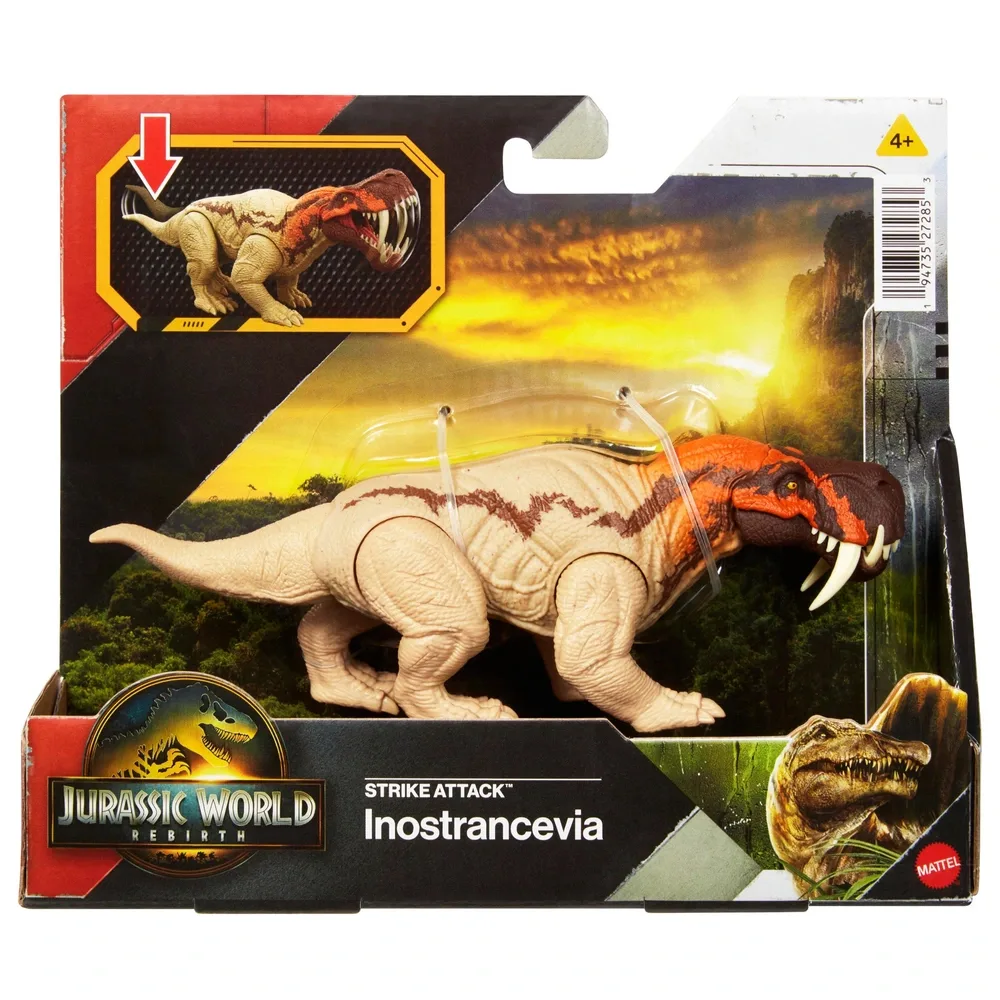
Inostrancevia is not a dinosaur at all. It was a sabre-toothed predator from the Permian, more closely related to mammals than to reptiles, and it lived millions of years before the first dinosaurs. Mattel put it in the first Jurassic World Rebirth Strike Attack wave with long sabre teeth, a cream body and a strike move. Here is what the figure looks like, what the real animal was, and how to unlock it in the Jurassic World Play App.
Sabre-toothedPermian predatorNo batteries🧬 DNA scan code
Deep Time: Before the Dinosaurs
Inostrancevia lived in the Permian, the age just before the dinosaurs, and was one of the top predators of its world.
Inostrancevia survived until the great Permian mass extinction, which wiped out most life on Earth.
What Is Strike Attack?
Strike Attack is the action assortment of Mattel’s Jurassic World Rebirth toy line. Each figure has one built-in strike move, usually worked from the tail, plus movable joints and a DNA code that unlocks the animal in the Jurassic World Play App. No batteries needed.
It came in the first Rebirth Strike Attack wave with Inostrancevia, Monolophosaurus, Tapejara and Yuxisaurus.
Paint and Colours
Body and legs
Head and back stripes
Sabre teeth
Markings on the head
A pale, earthy scheme. The body is cream with orange brown stripes down the back and a darker head that frames the long white sabre teeth.
Sculpt and Detail
Head and sabres
The big head has a wide mouth and long sabre teeth that hang below the jaw.
Body and legs
It stands on four sprawling legs, with a stocky, low body.
Figure vs fossil
Action Features and Articulation
✓ Tail-activated strike move✓ Movable joints✓ No batteries needed✗ No sounds or lights
Like every Strike Attack figure, Inostrancevia has a built-in strike move: work the tail and it lunges into an attack. It also has movable joints and needs no batteries.
Size and Specs
For ages 4 and up, in a Jurassic World Rebirth branded box.
Is It Worth Buying?
Inostrancevia is a rare chance to own a Permian predator, and the sabre teeth make it stand out from every dinosaur in the line.
It came out in 2025 in the first Rebirth Strike Attack wave.
What we like
- Not a dinosaur, a real surprise pick
- Long sabre teeth
- Strike move
- No batteries needed
Good to know
- No sounds or lights
- Scaly skin is guesswork
- Small figure
About Inostrancevia
Inostrancevia was named in 1922 by Vladimir Amalitsky after the Russian geologist Alexander Inostrantsev. Its fossils come from northern Russia, and more were reported from South Africa in 2023.
It lived in the Late Permian, about 259 to 252 million years ago, and was about 3.5 m long.
It was a gorgonopsian, a group of therapsids, the line that later led to mammals.
How to Unlock Inostrancevia in the Jurassic World Play App
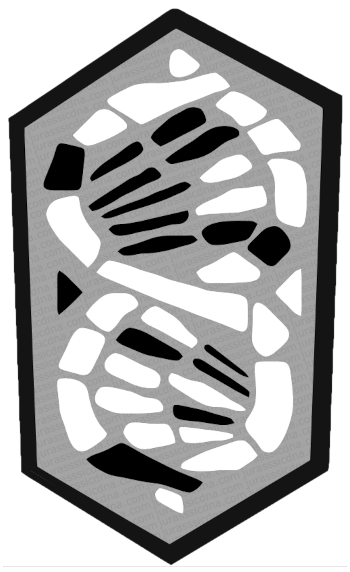
Open the Jurassic World Play App (it used to be called the Jurassic World Facts App), tap Scan and point your camera at the DNA code below.
Frequently Asked Questions
No. It was a gorgonopsian, a mammal relative that lived before the dinosaurs.
Move the tail and the figure lunges into its strike. No batteries are needed.
Inostrantsev’s creature, after the geologist Alexander Inostrantsev.
In the Late Permian, about 259 to 252 million years ago.
About 3.5 m long.
Open the Jurassic World Play App, tap Scan and point your camera at the DNA code on the figure or at the copy on this page.