

Home › Jurassic World Rebirth › Purussaurus Gigantic Thrashers
Gigantic Thrashers Review
Purussaurus Gigantic Thrashers
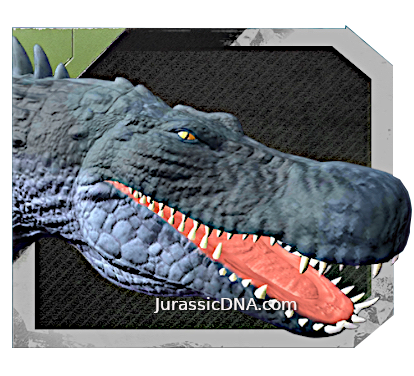
A bus-length Miocene caiman, shrunk to 14.7 inches and powered entirely by its tail. We have collected Jurassic World figures for more than five years, and this one went straight into heavy rotation: my son took to it immediately and still reaches for it more than almost anything else on the shelf. The first thing that strikes you is how much it looks like a massive crocodile rather than another dinosaur, and once you remember the real animal was the length of a bus, it becomes genuinely unsettling.
🐊 Giant Miocene caiman📏 ~37 cm / 14.7 in🔁 Two tail-driven attacks🔋 No batteries neededMattel · Jurassic World RebirthScan code included
🎮 The Playroom Report
We judge every figure partly by how it survives real play, and the Purussaurus has had plenty of it. My son loved it from day one, and it has become the big boss of the playroom: the predator every other figure has to get past. Here is how it has done in our house.
Both tail attacks get used constantly, and he worked them out within seconds. Its other job is ambushing the rest of our crocodilians and marine reptiles when they stray too close to the “river”. After a lot of play there are no loose joints, and the mechanism still works exactly as it did out of the box.
What Is Gigantic Thrashers?
Gigantic Thrashers is the large-format tier of Mattel’s Jurassic World range. The figures are big, the action features are mechanical, and everything runs off the tail: move it and the head attacks. There are no buttons, lights, sounds or batteries, which makes them simple, tough and perfect for rough play.
In the Rebirth wave the Purussaurus sits alongside the Eotriceratops, Tyrannotitan and Chilantaisaurus. Earlier Gigantic Thrashers releases on the site include the Liopleurodon, Torvosaurus, Stegosaurus and Gorgosaurus from Survival.
Paint & Colour Scheme
Back, flanks & tail
Belly, throat & legs
Teeth, both jaws
Eyes
The scheme is a simple two-tone: dark slate blue over the back and flanks, fading to a pale blue-grey on the belly, throat and legs. The teeth are picked out in cream and the eyes in orange, which gives the head a mean, watchful look. It is a believable colour for a river predator, and it suits the moody Rebirth palette.
The claws are left in the base colour, and there is no wash over the body. On a figure with this much sculpted texture that is the one place it holds back.
The Sculpt
A crocodile, not another dinosaur
This is a really detailed figure. Every plate along the flanks is sculpted individually, the scales change size between the armoured back and the softer belly, and the feet have spread toes and sculpted claws. The legs splay out to the sides in a proper crocodilian crouch, so on the shelf it reads as a massive crocodile rather than one more dinosaur, and that is exactly what makes it stand out in a big collection.
There are seams where the head meets the neck and where the tail joins the body. They are the price of the attack mechanism and they are typical of the line; on our copy they are tight and clean.
The head gets the science right
The head is the best part of the figure and, happily, also the most accurate. The real Purussaurus had a snout much broader and shorter than those of other giant crocodilians such as Sarcosuchus and Deinosuchus, and the toy gets that right: the muzzle is wide and rounded at the tip, with a long row of cream teeth showing along both jaws and a raised brow ridge above each eye.
The spikes are pure Jurassic World
Articulation & Action Features
★ Tail up and down: vertical chomp★ Tail twist: side to side thrash✓ Shoulders✓ Hips✗ No lights or sounds
Both attacks run off the tail. Lift and lower it and the head lunges up and down in a biting motion; twist it and the head swings to either side for a thrashing chomp. My son had both moves figured out within seconds, and he uses them constantly. The mechanism on our copy still feels firm after a lot of play.
The legs move at the shoulders and hips, enough to plant it in a low crouch or a lunging pose. Beyond that, this line is built around the action feature rather than articulation: you pose it by its legs and play with it by its tail.
Size & Specs
At 14.7 inches this is already one of the bigger figures on our shelf, and next to our other large figures it looks big and imposing. Now put it in perspective. Scale depends on which size estimate you trust for the real animal, and for Purussaurus the estimates have moved a lot:
The largest estimates make the real Purussaurus more than thirty times longer than this toy, with a skull alone about 1.4 metres long. That is when the figure stops looking like a toy crocodile and starts looking terrifying.
Its natural shelf partner is the Gryposuchus Wild Roar from Primal Ambush. The pairing has real science behind it: both animals are known from the same Miocene rocks in Brazil, Peru and Venezuela, and the long, narrow snout of the gharial-like Gryposuchus is the perfect contrast to the wide jaws of the Purussaurus.
Verdict: 4.5 / 5
The Gigantic Thrashers Purussaurus is one of the most played-with figures in our house, and it earns that spot. For kids it is a big, sturdy predator with two simple, satisfying attacks. For collectors it gets the right head shape for a famously wide-jawed animal and carries a level of sculpted detail that makes it a centrepiece.
The only real criticisms are the invented back spikes and a paint job that is plainer than the sculpt deserves. Neither stopped it becoming a favourite, and our copy has come through heavy play without a single fault.
✦ What Works
- Broad, short snout that matches the real Purussaurus
- Really detailed sculpt, every flank plate picked out
- Looks like a massive crocodile, not another dinosaur
- Big and imposing at 14.7 inches
- Two simple, satisfying tail attacks
- No batteries, nothing electronic to fail
- Survives heavy play with no faults
✦ What Doesn't
- Tall back spikes a real caiman never had
- Plain two-tone paint, no wash over the scales
- Claws left in the base colour
- Seams at the neck and tail from the mechanism
- Limited posing beyond the legs
About the Purussaurus
Purussaurus was a giant caiman, a relative of today’s alligators and caimans, and not a dinosaur at all. It lived in South America during the Miocene, with fossils from Brazil, Peru, Colombia and Venezuela, and the oldest material is around 13 million years old. Its name means lizard from the Purus River, where the first fossils were found.
Size estimates have changed a lot. A 2015 study put a large Purussaurus brasiliensis at about 12.5 metres and 8.4 tonnes, a later critique brought that down to about 10.9 metres, and a 2025 study using head width suggests closer to 8 metres on average. Whichever is right, its skull could reach about 1.4 metres, and its bite force has been estimated at between 52,500 and 69,000 newtons, among the strongest of any animal known.
Purussaurus ruled the vast Miocene wetlands that came before the modern Amazon. Researchers suggest adult prey included giant turtles, sloths and hoofed mammals, along with other crocodilians such as Gryposuchus. Its great size may also have been its weakness: as the wetlands changed, smaller and more adaptable caimans survived while the giant did not.
Unlock the Purussaurus in the Jurassic World Play App
Code worn off the foot?
The DNA scan code is printed on the sole of one of the feet. Scan it with the Jurassic World Play App to unlock the Purussaurus in your collection.
Feet take the most wear in play, so if the code on your figure is scratched, rubbed off or hidden under a price sticker, scan the copy below straight from your screen. That is exactly what JurassicDNA is for: the complete free scan code database is right here, no sign-up, no paywall.
Purussaurus Gigantic Thrashers Gallery
Frequently Asked Questions
It is 14.7 inches, about 37 cm, from nose to tail and weighs a little under half a kilo. Next to our other large figures it looks big and imposing, and it easily holds its own beside the Gigantic Thrashers dinosaurs.
No. Purussaurus was a giant caiman, a relative of today’s alligators and caimans. It lived in South America during the Miocene, tens of millions of years after the last non-bird dinosaurs died out.
No. Both attacks are mechanical and run off the tail: lift and lower it for an up and down chomp, or twist it side to side for a thrashing chomp. There are no lights or sounds, so there is nothing to run flat.
On the sole of one foot. Scan it with the free Jurassic World Play App to unlock the digital Purussaurus. If the printed code is worn or hard to read, scan the copy on this page instead.
A 2015 study estimated a bite force of about 69,000 newtons for a large Purussaurus brasiliensis. A later critique of its size estimate brings that down to roughly 52,500 newtons. Either figure puts it among the strongest bites known for any animal.
Yes. Both are known from the same Miocene rock formations in South America, including the Solimoes Formation in Brazil, the Pebas Formation in Peru and the Urumaco Formation in Venezuela. Gryposuchus, the long-snouted gharial relative, is listed among the animals Purussaurus may have eaten.