
Home › Jurassic World Rebirth › Abelisaurus Wild Roar
Jurassic World Rebirth · Wild Roar
Wild Roar Abelisaurus Review The arms problem — some of the crispest scale work in the whole Rebirth assortment, wearing a pair of forearms that belong on an entirely different animal
The short version: a species worth celebrating, executed with real care almost everywhere, and then handed the one anatomical feature its entire family is famous for not having. Full review, DNA scan code, and the science of the dinosaur that named a dynasty.
⭐ 3.9 / 5📏 ~31 cm / 12.25 inMattel · Wild RoarScan code included
▲ Very Nearly Right
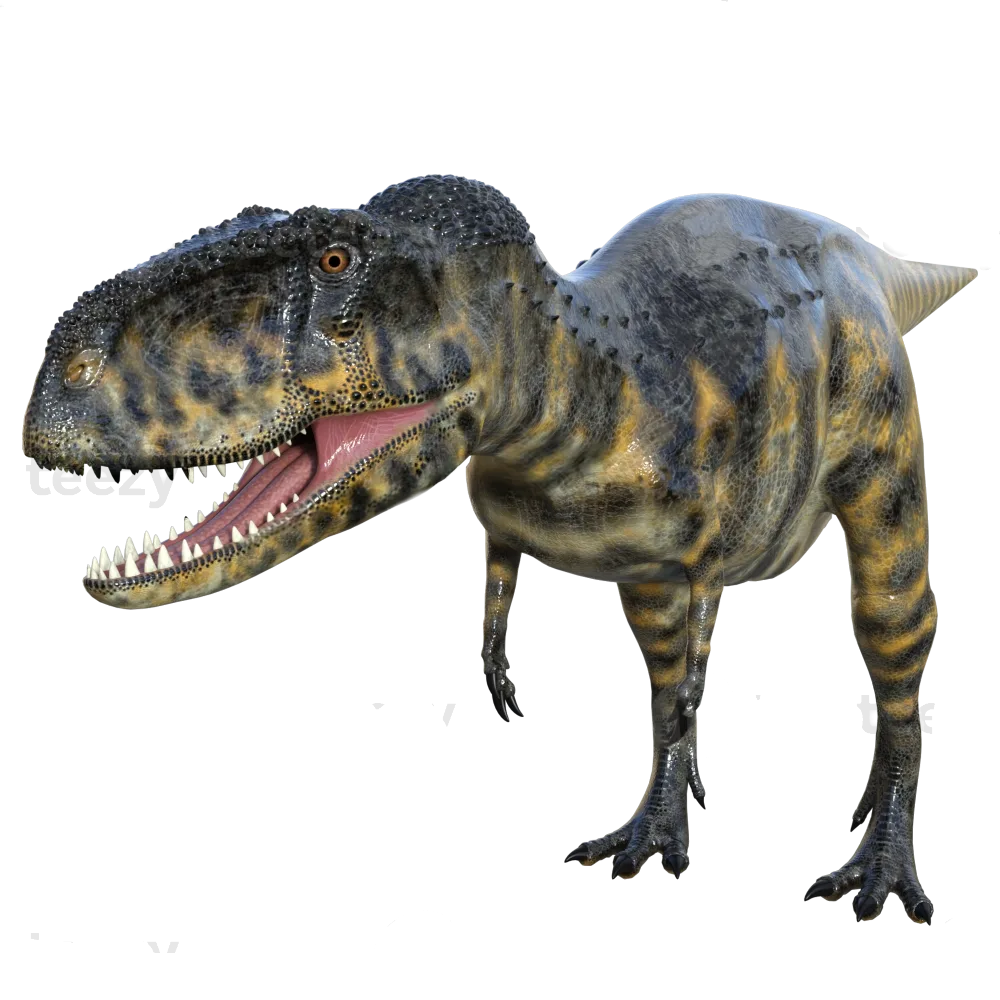
There is a specific kind of frustration that comes from a figure being very nearly right. A bad toy is easy to dismiss and a great one is easy to praise. This Abelisaurus sits in the awkward middle, where the skin texture is excellent, the colour choices are bold and successful, the sculpted scarring is a lovely touch, and then your eye reaches the shoulders and stops.
We will get to everything else, because there is plenty to like. But the arms have to come first, because once you have noticed them you cannot stop noticing them.
🔬 Let Us Talk About Those Arms
Abelisaurids are not just another group of large meat-eaters. They are the group that took forelimb reduction further than anybody else. Where Tyrannosaurus gets endlessly mocked for its two-fingered arms, those arms were at least muscular and capable of holding something. Abelisaurid arms were shorter, weaker and effectively non-functional, with stubby fingers that could not grip and joints that barely moved. In the best known members of the family the forelimb is little more than a decorative stump hanging off a very powerful shoulder.
The figure does not reflect this. The upper arms are long, the hands are broad, and the fingers are well developed and clearly separated, closer in build to what you would expect on a mid-sized allosauroid than on a Patagonian abelisaurid. Held at arm’s length the silhouette still reads as the right family, but bring it closer and the proportions pull the whole figure toward generic large theropod.
📊 Accuracy Scorecard
The arms take the headline, but they are not the whole story, and it would be unfair to let one call define a figure that gets a lot right. Here is how the major features stack up against what we understand of the real animal and its close relatives.
Abelisaurus itself is known from skull material only, so most of this is judged against its better documented relatives rather than against the animal directly.
Paint Scheme
Head, back & stripingEmber
Lower jaw & throatBlue
Body stripingUnpainted base
UndersidePink
Mouth & tongueYellow
Eyes
The colour concept is the best thing about this release after the texture. The head is predominantly black, an unusual and confident choice, set against a warm red orange that covers the lower jaw and floods down across the throat and hanging skin fold. The contrast between the two is genuinely striking and gives the figure real presence from across a room.
The eye is picked out in yellow and works better than it has any right to. There is no separately painted pupil, but because the surrounding head is already black, the base colour shows through the centre and does the job for free. Moving back, the black breaks apart into striping down the neck and body, with a cooler blue tone weaving through it before both fade out toward the belly — and the blue plays nicely against the ember at the front.
Inside the mouth the news is good. The tongue is well textured and painted pink, and unlike many figures at this size the pink carries across the whole interior rather than stopping at the tongue. The upper teeth use the newer, sharper tooling and look excellent; the lower set is a little more generic but still clean.
The cheapest possible upgrade: two small jobs would move this figure up a full point. Paint the foot claws black to match the hands, and run a thin ember wash along the underside from the throat toward the belly. Neither needs skill beyond a steady hand, and together they fix the two complaints that keep coming up.
Sculpt & Detail
Scales and Throat Fold
Set the forelimbs aside and the surface work here is among the better efforts in the Rebirth assortment. The scalation is not one repeated pattern stamped across the body but a genuine gradient, with large plate-like scales clustered through the centre of the belly, finer and denser texture along the underside and back, and a different grade again along the flanks. Skin wrinkles gather where you would expect them, around the shoulder and at the base of the neck.
The throat is the standout region. A loose fold of hanging skin sits beneath the jaw, sculpted with its own scale detail and moulded in a slightly flexible material so it gives a little under a fingertip. It costs nothing to leave out and adds a great deal when included — it immediately makes the head look like it belongs to something that breathes.
The Spinal Ridge
Along the back runs the figure’s most distinctive feature: a raised ridge following the spine that climbs, dips into a shallow divot, rises again, briefly vanishes and then reappears further down the tail. It is not something the fossil record demands, but it breaks up the dorsal profile and stops the silhouette from being another smooth-backed carnivore.
Scars, Legs and Claws
Lower down, armoured scutes run up the front of each shin before fading out around the knee, the foot sculpt is clean with scute detail continuing across the toes, and dewclaws are present. The claws themselves are shaped competently but carry no fine surface detail, which is the one place the sculpting effort visibly relaxes.
Articulation & Action Feature
✓ Arms — full swivel✓ Neck — via action feature✓ Both legs — forward and back✓ Tail swivel✓ Flexible arms & throat fold✗ Leg travel limited and uneven✗ No independent head turn
The arms are the best joints on the figure, rotating through a full circle and swinging clear of the body — a small irony given they are also the part that should not be there. The legs are far more restricted, moving forward and back only, and the range is not symmetrical: one side travels further rearward than the other. Neither leg wants to be pushed beyond its stop, and it is not worth forcing. Head movement exists but belongs to the action mechanism rather than to you, so posing the head independently is not really on the table.
The Wild Roar feature, tested. Everything runs off one mechanism. Trigger it and the figure produces a roar and delivers a chomping bite, which can be driven downward or upward. Twisting the tail rotates the neck and head, so the bite can also be thrown out to the side — the most genuinely playable part of the setup. It works cleanly and it is fun. It is also the same mechanism running through the rest of the Wild Roar class, and nobody should buy this figure expecting the feature to surprise them.
Size & Specs
Dimensionally it sits exactly where the Wild Roar class expects, with no surprises in either direction. Displayed with its wave-mates it neither towers nor shrinks, which matters if you are building a shelf rather than collecting individual figures.
Against the Wild Roar Aucasaurus: its closest relative in reality and its closest match on the shelf. The two land in effectively the same size bracket and share the identical mechanism, so the choice comes down to finish. This one has the stronger, more confident paint scheme. The Aucasaurus has the better tail.
Verdict — Should You Buy It?
Yes, with one caveat — 3.9 / 5. A species choice worth applauding, given a sculpt that mostly deserves it. The scale work is dense and varied, the throat fold and the sculpted scarring show real thought, the raised spinal ridge gives the figure an identity of its own, and the black head running into an ember jaw is one of the more memorable colour schemes in the Rebirth range.
What stops it short is one significant miss and two easy ones. The forelimbs are too large for the family this animal literally gave its name to — the kind of error a collector notices immediately and cannot unsee. The ember paint abandons the figure at the neck, the claw finish disagrees with itself between front and back, and the tail could stand to be longer. Worth owning, particularly if you are building out the abelisaurid side of the shelf. Just be ready to be mildly annoyed every time you look at its hands.
✦ What Works
- Dense, genuinely varied scale texture
- Flexible hanging throat fold with its own detail
- Raised, interrupted spinal ridge
- Sculpted scars and osteoderm clusters
- Black head against an ember jaw
- Yellow eye works without a painted pupil
- Pink covers the entire mouth interior
- Sharper upper tooth tooling
- Armoured shin scutes and dewclaws
- A species that genuinely deserved a figure
✦ What Doesn't
- Forelimbs, hands and fingers far too large
- Ember stops at the neck, underside bare
- Hand claws painted, foot claws not
- Tail shorter than the animal calls for
- Leg articulation limited and uneven
- Head movement belongs to the mechanism
- Action feature identical to the rest of the class
- Claws carry no fine sculpted detail
About the Abelisaurus
It is the dinosaur that named a dynasty. Abelisaurus comahuensis was described in 1985 from Patagonian rock, and the family Abelisauridae, along with the wider group Abelisauroidea, takes its name from this animal. Every time anyone discusses Carnotaurus, Majungasaurus, Skorpiovenator or Aucasaurus, they are using a label that traces back here. The name honours Roberto Abel, who was connected with the discovery.
We have found astonishingly little of it. Abelisaurus is known from a single incomplete skull. No arms. No legs. No tail. Nothing below the neck has ever been assigned to the genus, so every restoration of its body — in books, in games and on this toy — is inference drawn from better preserved relatives. When we say the arms on this figure are wrong, we are strictly comparing them to its cousins, because nobody has ever dug up an Abelisaurus arm.
Built like a wrecking ball. That skull is around 85 centimetres long, deep and short-snouted rather than long and narrow, giving a total body length usually estimated at seven to nine metres. Abelisaurids appear to have used powerful neck muscles and a reinforced, impact-resistant skull to batter and hold prey rather than relying on slicing bites.
Southern specialists. While tyrannosaurs dominated the northern continents in the Late Cretaceous, abelisaurids held the top predator role across the southern landmasses, turning up in South America, Africa, Madagascar, India and Europe. Their forelimbs were reduced past the point of usefulness — short upper arms, shorter lower arms and stubby fingers with no real claws. Whatever these animals did for a living, they did it entirely with the head and the legs.
How to Unlock
How to unlock Abelisaurus Wild Roar in Jurassic World Rebirth Collection?
Open up your Jurassic World Play App (previously known as the Jurassic World Facts App), press the Scan button and point it towards the DNA code here:
The code is printed on the underside of the figure. If yours is worn, scratched or hidden beneath a price sticker, scan this copy instead — or browse the full Rebirth scan code collection.
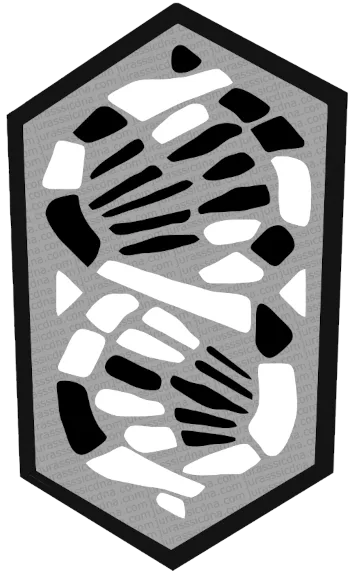
Photo Gallery
Frequently Asked Questions
About 12.25 inches long, which is just over 31 cm from snout to tail tip, and roughly 5 inches or 12.5 cm tall. That places it exactly where a Wild Roar class figure should sit, and it matches its wave-mate Aucasaurus almost precisely.
Abelisaurids are the group of predatory dinosaurs famous for the most extreme forelimb reduction of any large theropod, shorter and far less capable than the arms of Tyrannosaurus. The arms, hands and fingers on this figure are considerably larger and more developed than the family allows, which makes it the most noticeable deviation on an otherwise well observed sculpt.
Very little. The genus is known from one incomplete skull recovered in Patagonia and described in 1985. No arms, legs, ribs or tail bones have ever been assigned to it. Every reconstruction of its body, including this figure, is built by inference from better preserved relatives such as Carnotaurus and Aucasaurus.
One mechanism drives everything. It produces a roar along with a chomping bite that can be aimed downward or upward, and twisting the tail rotates the neck and head so the bite can be thrown sideways too. It works well, but it is the same feature used throughout the Wild Roar class rather than anything new.
They are close relatives in reality and near twins on the shelf, sharing a size bracket and an identical mechanism. The Abelisaurus has the stronger and more confident paint scheme of the two. The Aucasaurus has the better proportioned tail. Neither makes the other redundant.
Partly, and inconsistently. The hand claws are moulded in black with a gloss finish, which reads convincingly as painted nails. The foot claws receive no equivalent treatment and sit in plain base colour. Painting the foot claws black to match is the single easiest improvement anyone could make to this figure.
On the underside of the figure. Scan it with the Jurassic World Play App to unlock the creature. If your printed code is worn, scratched or covered by a sticker, you can scan the free copy hosted in our database instead.