
Home › Jurassic World Primal Ambush › Berberosaurus Strike Attack
Strike Attack Review
Berberosaurus Strike Attack
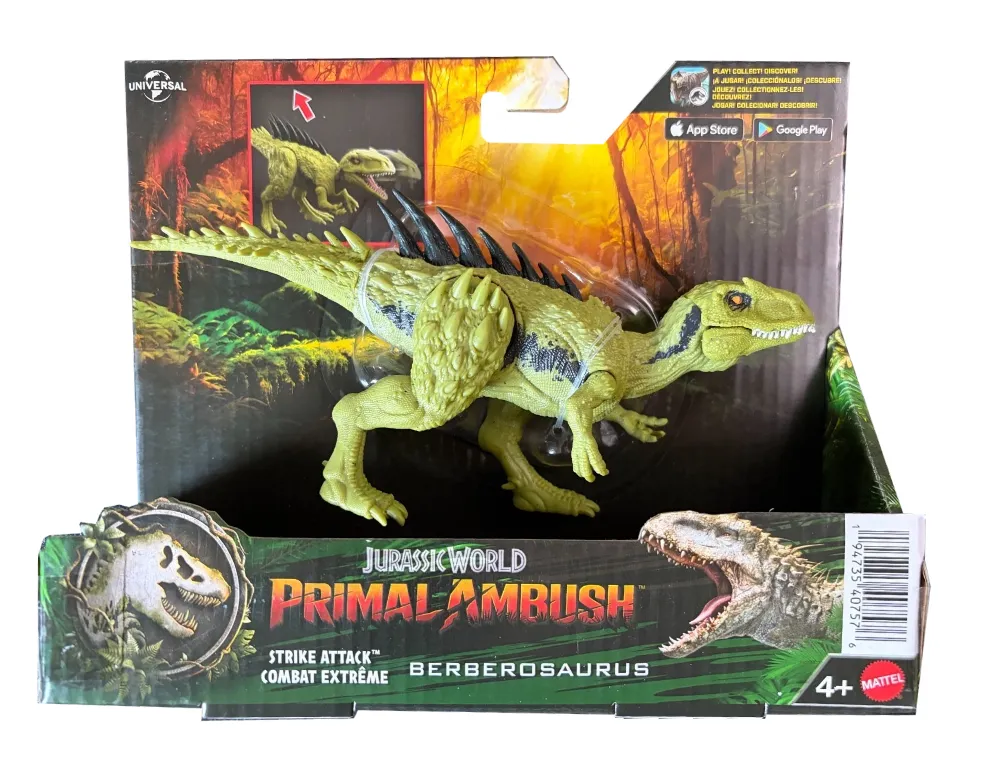
Berberosaurus is a brand new species for Mattel, and that alone makes it worth a look. The figure itself is a different story. With huge black spikes down its back, more spikes on the thighs and quills along the tail, it looks like it escaped from the old Survival line, where the dinosaurs were mutated on purpose. It does not sit easily next to the rest of Primal Ambush. And yet it has become one of the most played-with figures in our house, because those same spikes are exactly what kids love.
⭐ First Mattel Berberosaurus🦔 Heavily stylised⚡ Lift-and-snap biteStrike Attack · Wave 1Product code JPG94DNA scan code included
🔍 Two Ways to See It: Shelf vs Playroom
How you feel about this figure depends a lot on what you buy dinosaur toys for. Here is how it looks from both sides.
Some people buy these figures to display, and some buy them to be played with hard. This Berberosaurus is firmly in the second group.
Why It Feels Out of Place
Primal Ambush has mostly brought back a more traditional Mattel look, with bold but believable animals. Berberosaurus breaks from that and goes back to the extreme style of the previous line.
It shares the first Strike Attack wave with Eustreptospondylus, Utahceratops and Pteranodon. The packaging is the standard Primal Ambush box, with the rest of the wave shown on the back.
Colours & Paint
Base colour for the whole body
Back spikes, stripes, eye patch and speckles
Eyes
Tongue and inside the mouth
Teeth
The paint scheme is simple but works. The whole figure is a bright olive green, with a black patch around each orange eye and black stripes and squiggles running from the neck along the sides and onto the thighs. Fine black speckles cover almost the entire body, which adds a lot of texture up close.
The big back spikes are black, which makes them stand out even more against the green. Inside the mouth the tongue and the skin at the corners are pink.
The weak spots are the teeth and claws. The teeth have a heavy, slightly messy coat of paint that makes them look a bit odd compared with other Mattel figures, and the claws on the hands and feet are left bare, without even a gloss coat.
Sculpt Breakdown
Head and neck
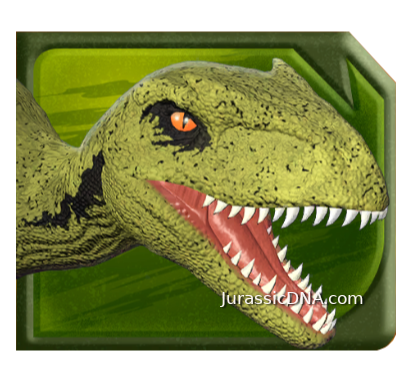
The head has a slightly different look from the usual Mattel theropod, which keeps it interesting. The scales are crisp, larger on top of the head and finer along the lower jaw, with a few bony studs mixed in. The teeth are exposed, with no lips, and the tongue is sculpted but fairly plain. A row of short, fuzzy proto-feathers starts on the top of the head and runs down the back of the neck, along with small crests. One awkward spot is a visible gap at the back of the head where the neck joint sits.
Body, spikes and tail
This is where the figure gets wild. Very large black spikes rise from the back, with cracks and texture carved into them. More big spikes stick out of the tops of both thighs, and smaller spikes and quill-like points line the spine and the sides of the tail. Underneath it all the sculpt is good: feathers along the top, scales on the belly and sides, solid muscle in the legs and scutes on the fingers and toes. The wrists are bent upward as if it is holding something, which looks a little strange.
How to use the strike
Strike Feature & Articulation
✓ Lift-and-snap bite✓ Opening jaw✓ Arms move forward and back✓ Legs move forward and back✓ Swivel tail✗ Unpainted claws✗ Odd wrist pose
The Strike Attack feature is worked by the spikes on the back. Lift them and the head and neck draw back with the jaw open, then the whole front end lunges forward and snaps shut. It is simple, it works well and it is very easy for a child to repeat over and over. The Utahceratops in the same wave works in a similar way, with its back quills lifting to rear the head up.
Articulation is standard for this size. The jaw opens, the arms and legs swing forward and back, and the tail swivels. The neck moves as part of the strike feature.
Specs at a Glance
At about 18 cm long and 7 cm tall at the head, Berberosaurus is a small figure, roughly the size of a standard Mattel Velociraptor or a little smaller. The back spikes add some height, reaching about 8.5 cm at their tallest point.
Final Verdict
As a collector, this is not one I would have chosen. Berberosaurus is a great new species, and it deserved a more traditional figure. Instead it got a spiky, mutated look that belongs in the Survival line and makes it stand out from the rest of the wave for the wrong reasons. The messy paint on the teeth and the bare claws do not help.
My son sees it completely differently. He loves the spikes on the back, and this little Berberosaurus gets played with far more than I would like to admit. The lift-and-snap bite is simple and fun, and the figure is tough enough to survive some serious battles.
And that is the point of a toy. Some people buy these figures to put on a shelf, and some just want to watch the world burn and play with them as hard as they can. If you are in the first group, this one is probably a skip. If you are buying for a child, it is a great pick.
✦ The Good
- First Mattel Berberosaurus
- Crisp scale and feather detail
- Fun, easy lift-and-snap bite
- Kids love the spikes
- Speckled paint adds texture
✦ The Not So Good
- Mutated look out of place in Primal Ambush
- Nothing like the real animal
- Messy paint on the teeth
- Unpainted claws
- Gap at the back of the head
Meet the Real Berberosaurus
Berberosaurus is one of the oldest known relatives of Ceratosaurus and Carnotaurus, from a time when very few big predators are known from Africa.Why this species is worth knowing
Where and when. Berberosaurus lived in the Early Jurassic, roughly 185 to 180 million years ago. Its fossils were found near the village of Toundoute in the High Atlas Mountains of Morocco.
Named in 2007. A team led by the French palaeontologist Ronan Allain named it Berberosaurus liassicus. The name means Berber lizard, after the Berber people of North Africa, and liassicus refers to the Lias, an old name for the Early Jurassic.
A partial skeleton. It is known from one incomplete skeleton of an animal that was not fully grown, including a neck bone, part of the hips and several leg bones. From these it is estimated at around five metres long.
An early ceratosaur. It was first described as the oldest abelisauroid, and later studies have moved it around the family tree. It is usually placed among the early ceratosaurs. Nothing suggests it had giant spikes on its back.
Unlock the Berberosaurus
How to unlock Berberosaurus from Primal Ambush?
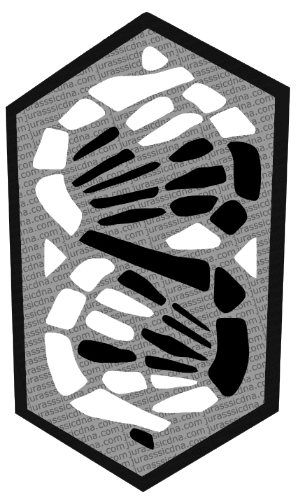
The DNA scan code is printed on the Berberosaurus figure. Scan it with the Jurassic World Play App to add the Primal Ambush Berberosaurus to your digital collection.
If the code on your figure is worn or hard to read, scan the copy on this page straight from your screen.
Berberosaurus Gallery
Berberosaurus FAQ
Yes. The Primal Ambush Strike Attack Berberosaurus, product code JPG94, is the first Berberosaurus figure Mattel has made for the Jurassic World line.
Lift the spikes on its back. The head and neck pull back with the jaw open, then snap forward with a bite when you let go. Pushing the spikes down does nothing.
It is about 18 cm (7 in) long, about 7 cm tall at the head and about 8.5 cm (3.25 in) tall at the tallest back spike, close to the size of a standard Mattel Velociraptor.
There is no evidence for it. Berberosaurus is known from a partial skeleton, and nothing in it suggests back spikes. The spikes are a toy design choice.
It means Berber lizard, after the Berber people of North Africa, where its fossils were found.
Open the Jurassic World Play App, tap Scan and point your camera at the DNA code printed on the figure, or at the copy on this page.