
Home › Jurassic World Primal Ambush › Pteranodon Strike Attack
Strike Attack Review
Pteranodon Strike Attack
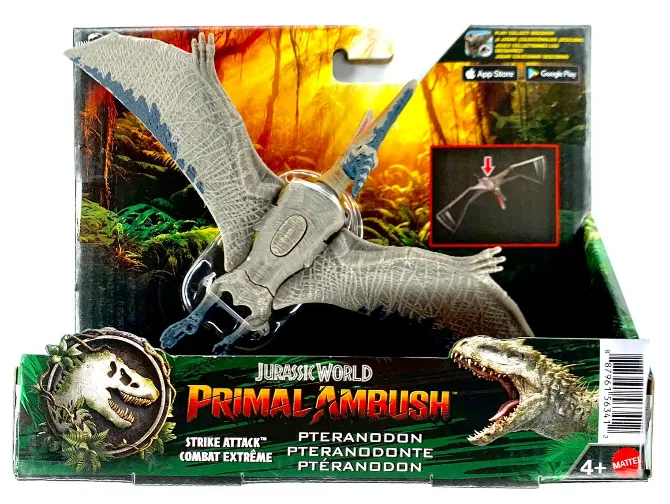
At first glance the Primal Ambush Pteranodon looks like the 2018 Legacy Collection figure in a new box, and plenty of collectors have written it off as exactly that. Put the two side by side, though, and the paint tells a different story. The sculpt and the wing-flap feature are unchanged, but the head, crest, mouth and wings all have new colours. It is not a brand-new figure, but it is not a straight repack either, and with so few flying reptiles in the Jurassic World line, a fresh Pteranodon is welcome.
🔁 Same sculpt as 2018🎨 New paint version🪽 Wing-flap actionStrike Attack · Wave 1Product code FLN67DNA scan code included
🔍 Old or New? Spotting the Differences
The new Pteranodon uses the 2018 mould, so the only way to tell them apart is the paint. Here is what changes when you hold the two next to each other.
None of these changes is dramatic on its own, but together they give the head a warmer, more colourful look. If you already own the 2018 figure, you are buying a paint variant, not a new toy.
Why a Repaint Still Earns Its Place
Flying reptiles are thin on the ground in the Jurassic World toy line. Most waves are packed with walkers and runners, and a Pteranodon that actually flaps is still one of the most fun figures a child can pick up.
In Primal Ambush it is the only flyer in the first Strike Attack wave, next to Eustreptospondylus, Berberosaurus and Utahceratops. The box follows the usual Primal Ambush design, with a checklist of the wave on the back.
Colours & Paint
Body, wings and head
Wing edges, crest and markings
Neck and beak
Beak tip
Inside of the mouth
Eyes
The base colour is still a soft grey, and the overall look stays close to the original. The difference is in the details. The orange running through the neck and beak is noticeably brighter than before, while the very tip of the beak is now a pale ivory instead of orange.
The crest gets the biggest change. Where the 2018 figure had thin stripes, the new one is covered in dark blue, with stripes left only along the top edge. The wings follow the same idea, swapping a dark grey-blue for a deeper, richer blue.
One odd detail: the two sides of the figure are not painted the same. On one side the patterns match the old figure almost exactly, while on the other they are clearly different. It is worth checking both sides if you are comparing photos online.
Sculpt Breakdown
Head and crest
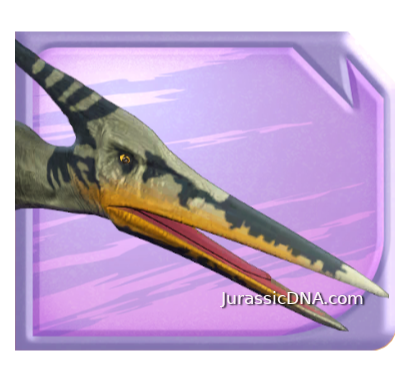
The head is long and narrow, with a sharp beak and a tall crest sweeping back. The skin texture is crisp and vibrant, and the overall look has a strong Jurassic Park III feel. Mattel has not changed a thing here, and it did not need to.
Wings, body and feet
The wings are broad and well textured, with the long finger bones clearly visible along the leading edge. The body is slim and the feet are small, with darker paint on the toes. It is an older sculpt, but it still holds up well next to newer figures in the line.
Collector tip
Wing-Flap Feature & Articulation
✓ Wings flap with the action feature✓ Opening jaw✓ Neck swivel✗ No leg articulation✗ Same feature as 2018
Press the button on its back and the wings flap, the same action as the 2018 figure. It is simple, but it is exactly what a flying reptile toy should do, and it is the part children enjoy most.
The jaw opens and the neck swivels, so you can pose it diving or calling. The legs do not move at all, which limits standing poses, but most of the time this figure is in the air anyway.
Specs at a Glance
Because it uses the 2018 mould, this Pteranodon is exactly the same size as the original and fits right in with the standard Mattel line. Next to the small Strike Attack dinosaurs in its wave, the open wings make it look much bigger.
Final Verdict
It is easy to dismiss the Primal Ambush Pteranodon as a lazy repack, and the sculpt really is unchanged from 2018. But the paint is new: brighter orange on the neck and beak, a crest and wings soaked in dark blue, a darker mouth and patterns that change from one side to the other.
The sculpt still looks great and the wing flap is as fun as ever. In my house that was the end of the discussion: my son loves it and does not care at all that it looks like an older figure. For a line that never has enough flying reptiles, that matters more than a new mould.
If you already own the 2018 figure and only want one Pteranodon, you can skip this one. If you missed the original, collect paint variants or just want a flyer for the Primal Ambush skies, it is an easy recommendation.
✦ The Good
- New, brighter paint on the head and neck
- Bold dark blue crest and wings
- Detailed sculpt that still holds up
- Fun wing-flap action
- A flyer in a wave full of walkers
✦ The Not So Good
- Same sculpt as the 2018 figure
- No leg articulation
- Changes are easy to miss
- Paint differs from side to side
Meet the Real Pteranodon
More than a thousand Pteranodon specimens have been found, making it one of the best-understood flying reptiles that ever lived.Why this species is worth knowing
Where and when. Pteranodon lived in the Late Cretaceous, about 86 to 84 million years ago. Most of its fossils come from the Niobrara Chalk of Kansas, which formed on the floor of the shallow sea that split North America in two.
Named in 1876. The American palaeontologist Othniel Charles Marsh named it, and it was the first pterosaur found outside Europe. The name means toothless wing, and the real animal had a smooth, pointed beak with no teeth.
Males and females. The huge number of fossils shows two size groups. Larger animals, thought to be males, had wingspans of up to about 7 metres and long crests. Smaller ones, thought to be females, were closer to 4 metres across with short crests.
Not a dinosaur. Pteranodon was a pterosaur, a flying reptile closely related to dinosaurs but in a separate group. It soared over the sea and fed mainly on fish.
Unlock the Pteranodon
How to unlock Pteranodon from Primal Ambush?
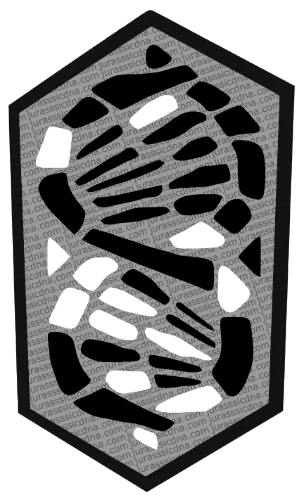
The DNA scan code is printed on the Pteranodon figure. Scan it with the Jurassic World Play App to add the Primal Ambush Pteranodon to your digital collection.
The code on the new release is different from the one on the 2018 figure. If the code on your figure has worn off or is hard to read, scan the copy on this page straight from your screen.
Pteranodon Gallery
Pteranodon FAQ
Not quite. It uses the same sculpt and product code (FLN67) as the 2018 Legacy Collection figure, but the paint is new, with a brighter head, more dark blue on the crest and wings and a darker mouth.
Look at the head. The new version has brighter orange on the neck and beak, a pale beak tip, a dark marking above the eye rather than around it and much more blue on the crest.
Press the button on its back and the wings flap. The jaw also opens and the neck swivels, but the legs do not move.
No. Pteranodon was a pterosaur, a flying reptile. Pterosaurs lived alongside dinosaurs and were close relatives, but they belong to a separate group.
No. Its name means toothless wing, and the real animal had a smooth, toothless beak.
Open the Jurassic World Play App, tap Scan and point your camera at the DNA code printed on the figure, or at the copy on this page.