
Home › Jurassic World Rebirth › Herrerasaurus Strike Attack
Strike Attack Figure Guide
Herrerasaurus Strike Attack
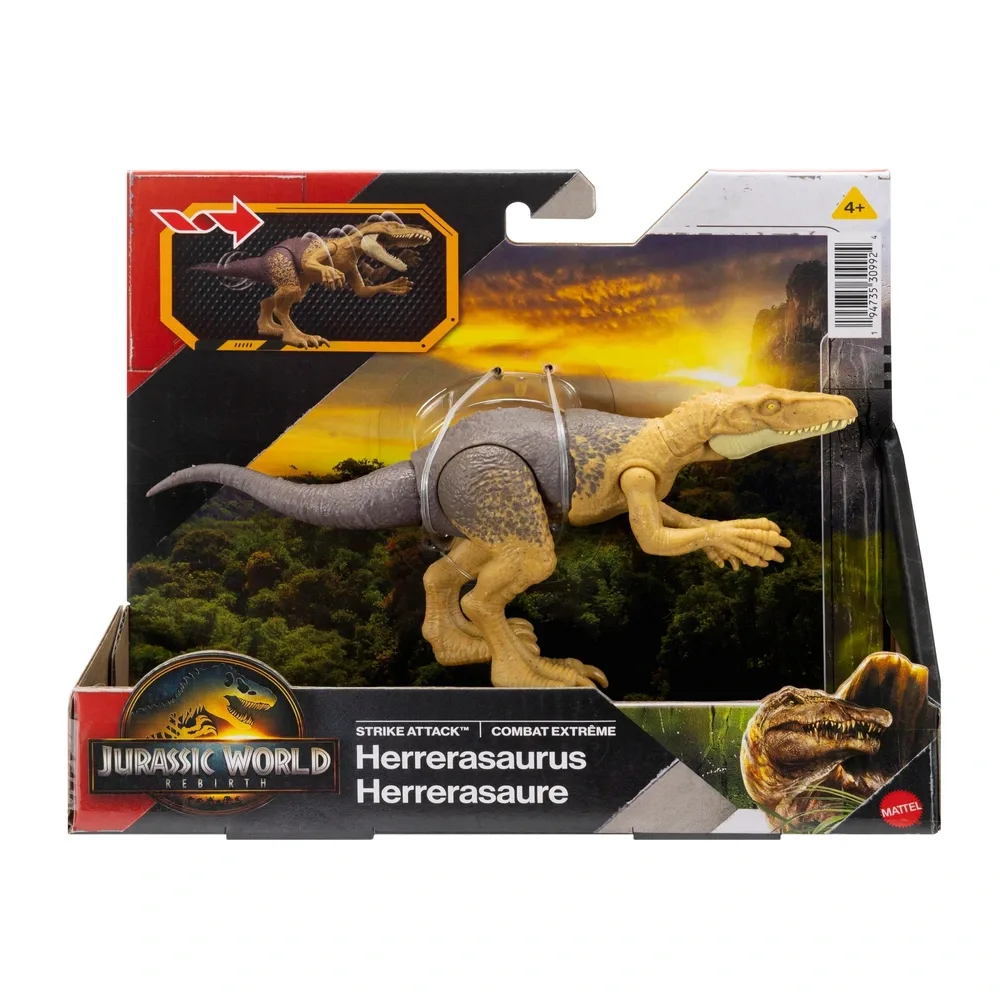
Herrerasaurus is one of the earliest dinosaurs we know, from the Triassic rocks of Argentina, and it was one of the hunters in the original Jurassic Park novel. Mattel put it in the second Jurassic World Rebirth Strike Attack wave as a pale yellow predator with grey markings and a strike move. Here is what the figure looks like, what makes the real animal special, and how to unlock it in the Jurassic World Play App.
Early dinosaurTriassic hunterNo batteries🧬 DNA scan code
Fossil Spot: The Valley of the Moon
Herrerasaurus comes from the Ischigualasto Formation in Argentina, nicknamed the Valley of the Moon.
It lived when dinosaurs were still rare, and was one of the top predators of its time.
What Is Strike Attack?
Strike Attack is the action assortment of Mattel’s Jurassic World Rebirth toy line. Each figure has one built-in strike move, usually worked from the tail, plus movable joints and a DNA code that unlocks the animal in the Jurassic World Play App. No batteries needed.
It came in the second Rebirth Strike Attack wave with Achillobator, Herrerasaurus, Nanotyrannus and Zuniceratops.
Paint and Colours
Body, arms and legs
Back and tail
Stripes and markings
Teeth
A pale, sandy scheme. The body is a light yellow with grey along the back and tail, and darker stripes that break up the shape.
Sculpt and Detail
Head and jaws
A long head with a slightly hinged lower jaw and sharp, curved teeth.
Arms and legs
Long grasping arms with sharp claws, and slim legs for running.
Figure vs fossil
Action Features and Articulation
✓ Tail-activated strike move✓ Movable joints✓ No batteries needed✗ No sounds or lights
Like every Strike Attack figure, Herrerasaurus has a built-in strike move: work the tail and it lunges into an attack. It also has movable joints and needs no batteries.
Size and Specs
For ages 4 and up, in a Jurassic World Rebirth branded box.
Is It Worth Buying?
Herrerasaurus is a must for fans of the original novels and of early dinosaurs, and the pale scheme is different from earlier Mattel versions.
It came out in 2025 in the second Rebirth Strike Attack wave.
What we like
- One of the first dinosaurs
- Fresh pale colour scheme
- Strike move
- No batteries needed
Good to know
- No sounds or lights
- Several earlier versions exist
- Small figure
About Herrerasaurus
Herrerasaurus ischigualastensis was named in 1963 by Osvaldo Reig after Victorino Herrera, the rancher who found the first bones.
It lived in the Late Triassic, about 231 million years ago, in what is now Argentina, and was about 4.5 to 6 m long.
It is one of the oldest known dinosaurs, a fast two-legged hunter.
How to Unlock Herrerasaurus in the Jurassic World Play App
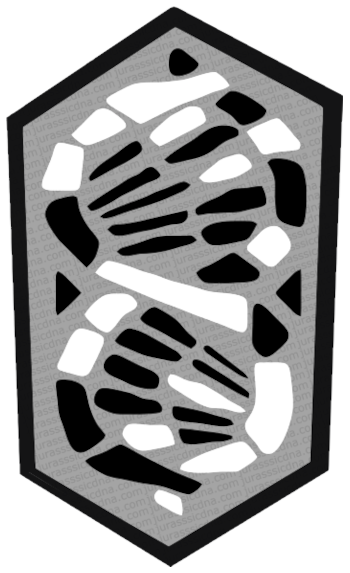
Open the Jurassic World Play App (it used to be called the Jurassic World Facts App), tap Scan and point your camera at the DNA code below.
Frequently Asked Questions
Herrera’s lizard, after Victorino Herrera, who found it.
Move the tail and the figure lunges into its strike. No batteries are needed.
In the Late Triassic, about 231 million years ago.
It appears in the original Jurassic Park novel and in later Jurassic World toys and games.
About 4.5 to 6 m long.
Open the Jurassic World Play App, tap Scan and point your camera at the DNA code on the figure or at the copy on this page.