

Home › Jurassic World Survival › Spectrovenator Frenzy Pack
Frenzy Pack Review
Spectrovenator Frenzy Pack Jurassic World Survival Review
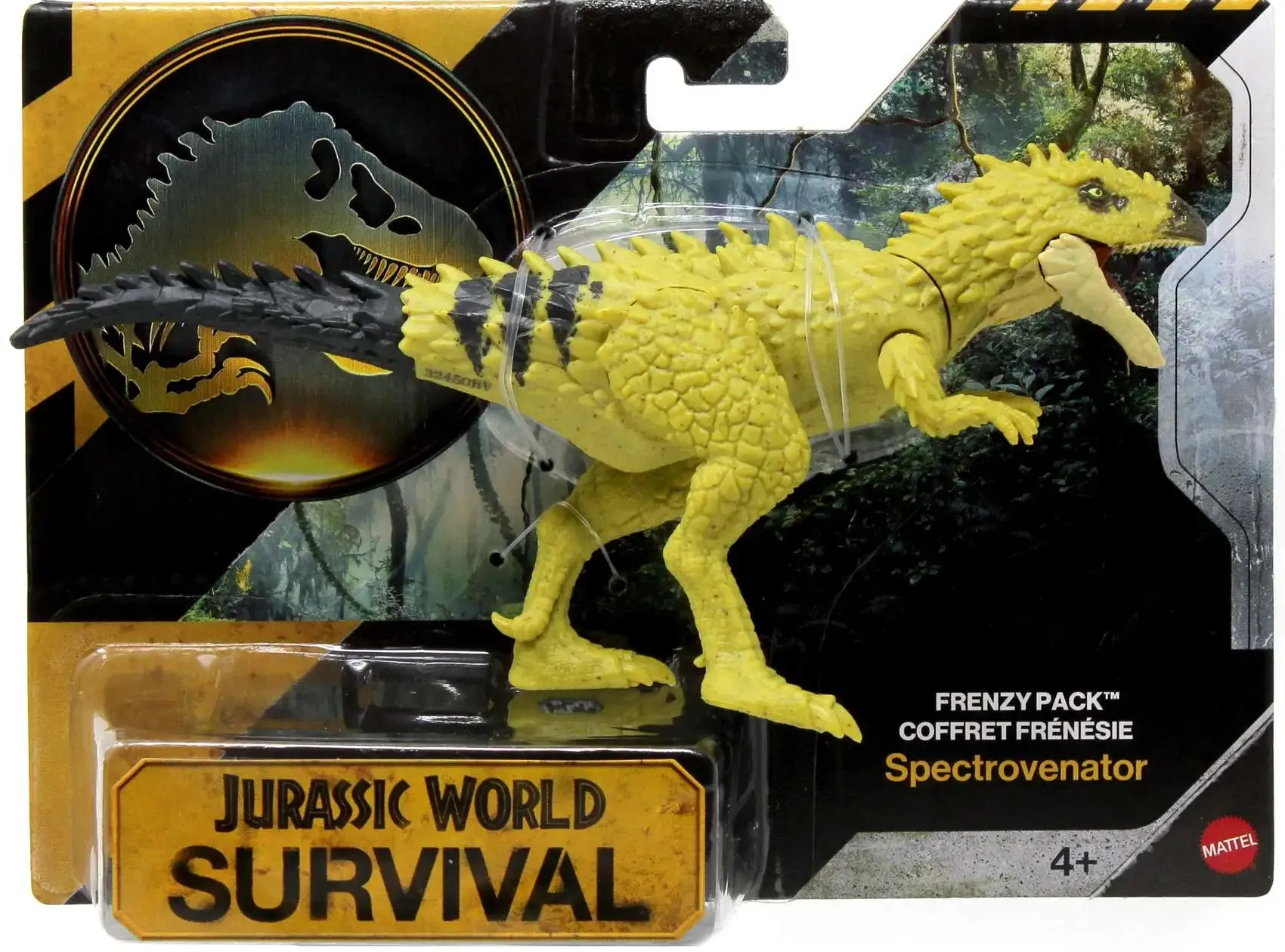
A brand-new species making its Mattel debut, and it arrives in the loudest colours in the line: a neon-yellow body against stark black armour plating, with a row of spikes running from the back of the head to the tip of the tail.
First Mattel SpectrovenatorNeon yellow & blackSpiked armour along the spineMattel · 2026Scan code included
A New Species in the Line
Spectrovenator is a genuinely new species for the Mattel line, making its debut here in Jurassic World Survival. It is a smaller theropod with a very distinctive, aggressive look, and the Survival treatment has pushed that further with extreme armour plating and the highest-contrast colour scheme in the range.
For collectors who value unusual species over another Tyrannosaurus repaint, that alone makes this one worth a look.
Paint & Colour Scheme
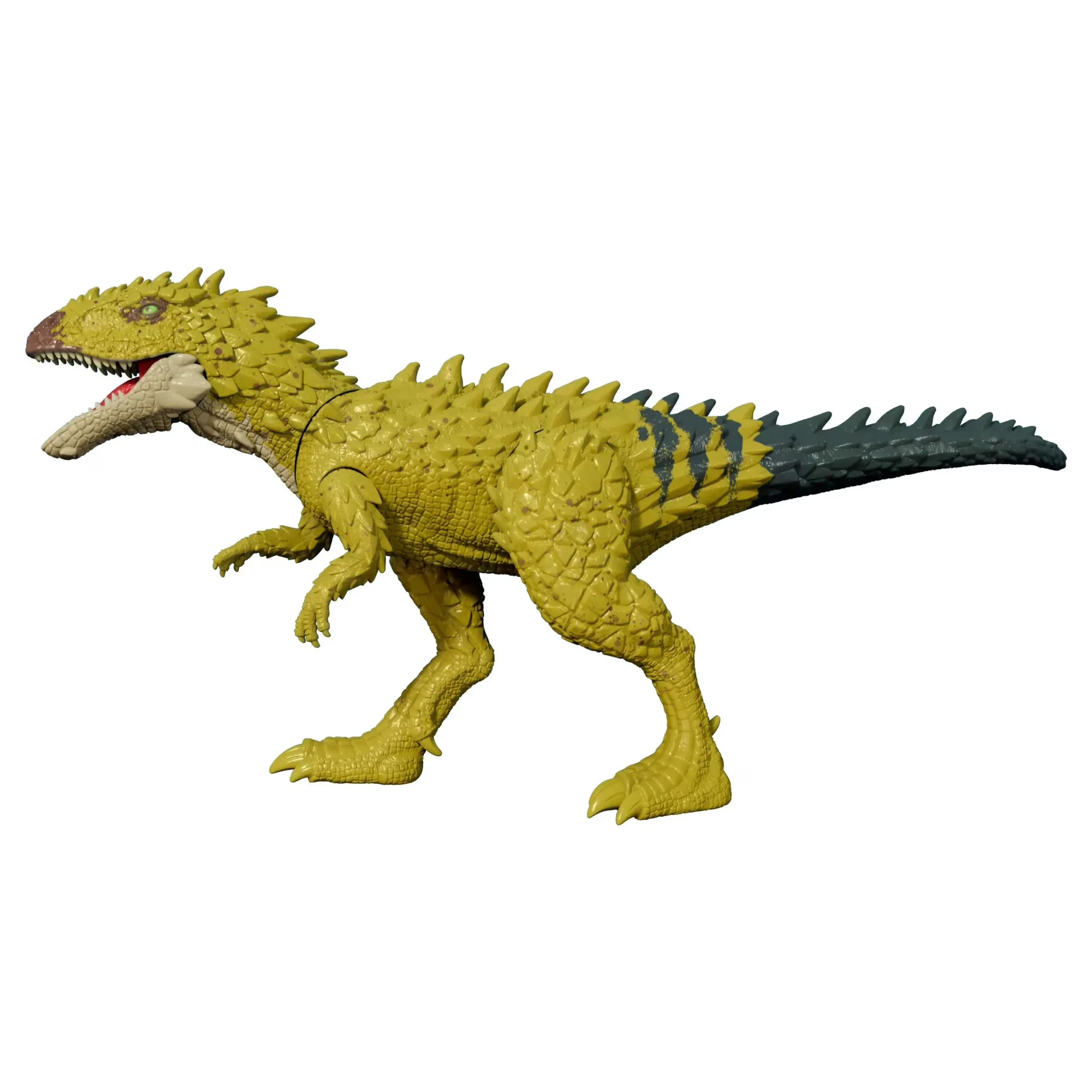
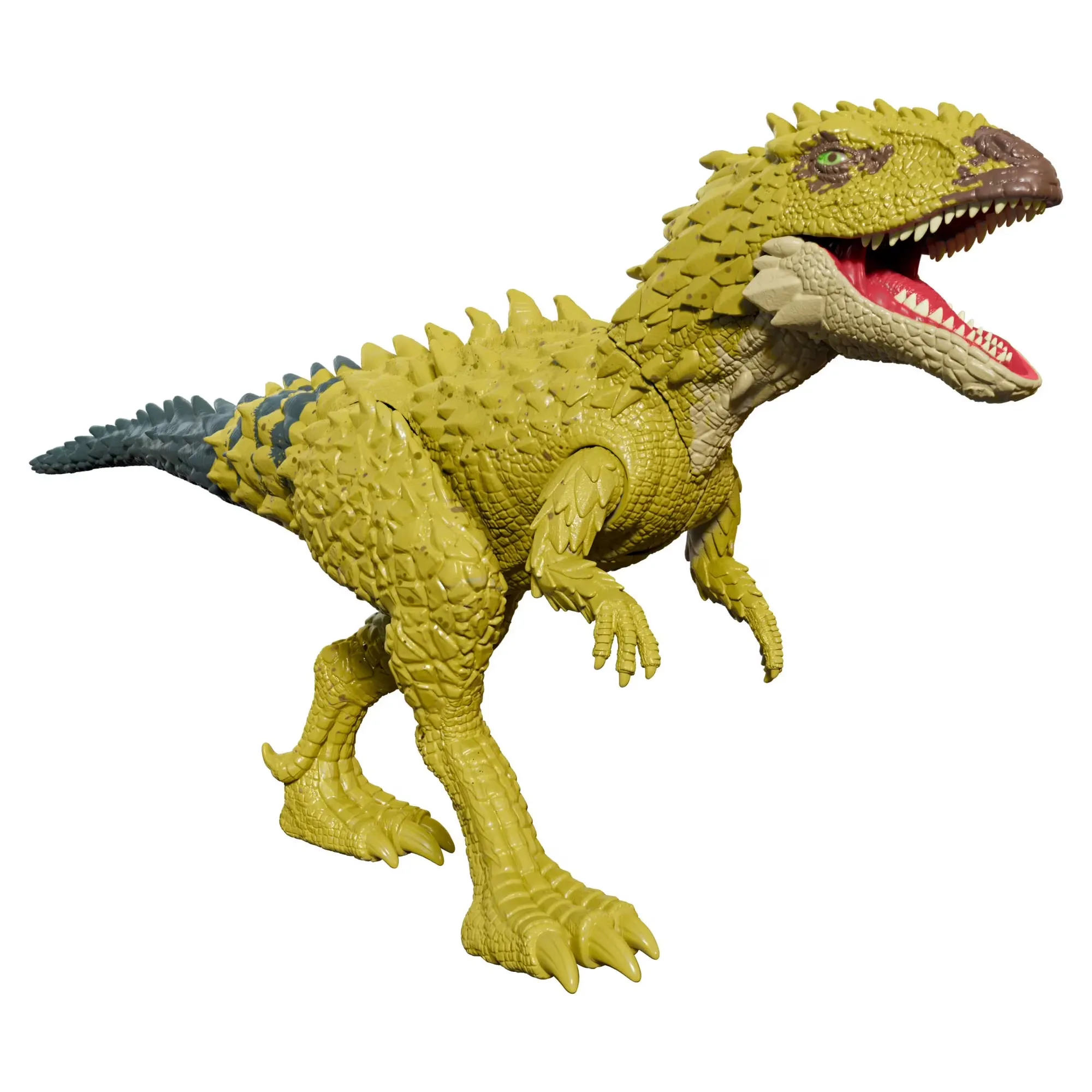
The colour scheme is visually shocking, which by now is typical for the Survival lineup. The entire main body is painted a bright, vibrant, almost toxic neon yellow, set against a stark black that covers the whole tail and all of the armour plating on the back. The black also forms a few tiger-like stripes where the tail meets the body, which is the one place the two colours actually blend rather than collide.
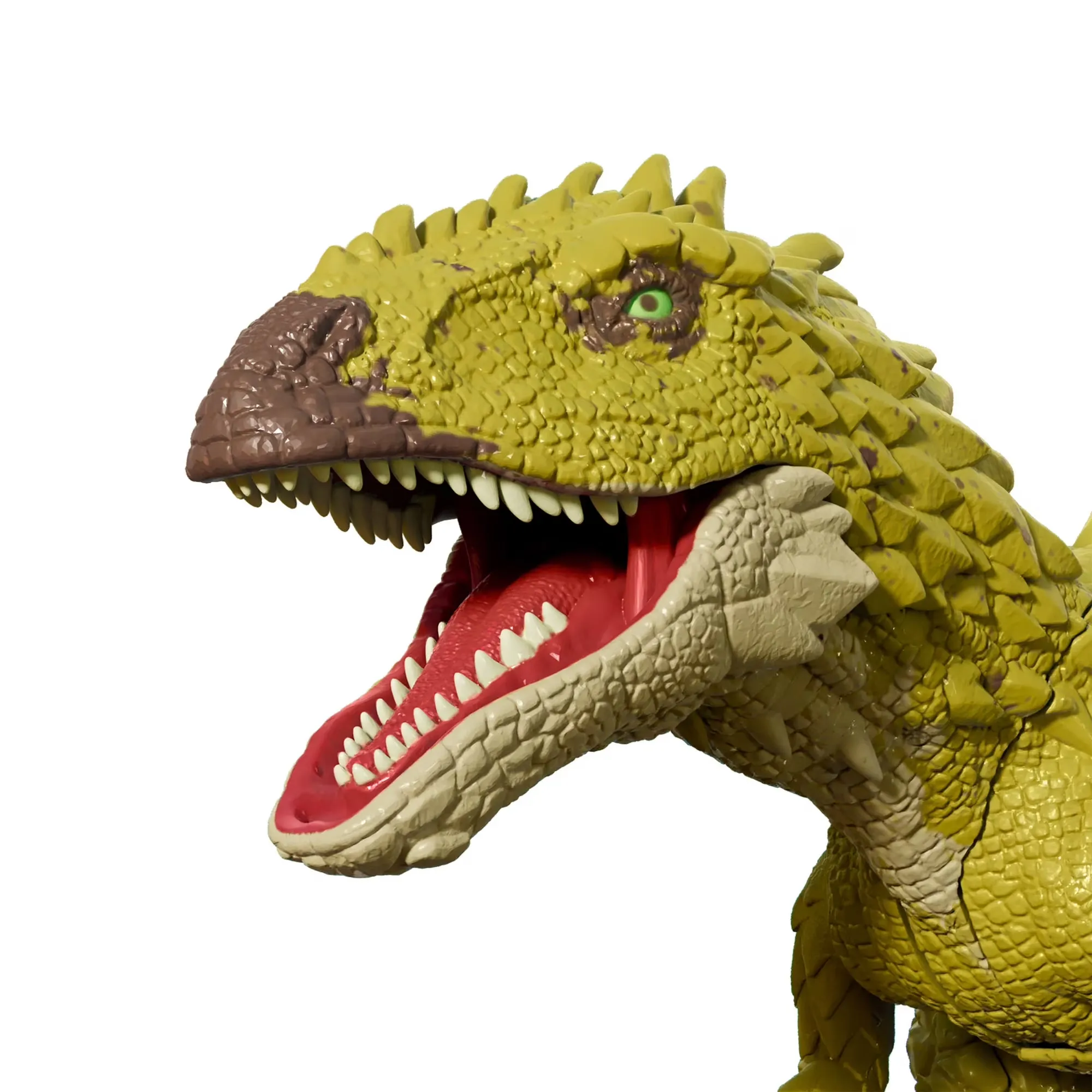
The beak-like snout is picked out in a contrasting off-white or bone colour, and it is the detail that stops the head disappearing into the yellow.
Sculpt & Detail
Spiked Armour Plates
The sculpt is covered in the line’s Survival theme, and the most prominent feature by far is a row of large, spiky, armoured plates running from the back of the head all the way down the spine and along the tail. On a figure this size they dominate the silhouette completely, and painting them solid black against the yellow body makes them read even harder.
The Beak-like Head
The head sculpt is very distinct, with a blunt, almost beak-like snout that sets it apart from every other small theropod in the range. The teeth are small and, at least in my book, thoroughly kid-safe.
Articulation
✓ Jaw — shut or wide open✓ Articulated limbs✗ No button action feature✗ No sounds or lights
As a Frenzy Pack figure this one has no button-driven mechanism. What it has instead is an articulated jaw and articulated limbs, so it can be posed with its mouth shut or wide open. That is standard for the sub-line, and on a figure this size it is arguably the better trade — no mechanism means nothing bulking out the body.
At a Glance
Should You Buy It?
If you collect unusual species, yes — this is the first Spectrovenator Mattel has ever made, and that alone is reason enough. The spiked spine armour gives it a silhouette nothing else in the Frenzy Pack range has, and the beak-like snout is a genuinely distinctive head sculpt.
The colours are the sticking point. Neon yellow against solid black is not subtle, and if you prefer naturalistic paint this one will fight with everything around it on the shelf. If you like the Survival line precisely because it does not care about that, it is one of the boldest things in the range.
✦ What Works
- First ever Mattel Spectrovenator
- Genuinely obscure species choice
- Spiked plates from head to tail tip
- Distinctive blunt, beak-like snout
- Bone-white snout lifts the head
- Tiger-like stripes where tail meets body
- Kid-safe teeth
- Jaw and limbs both articulated
✦ What Doesn't
- Neon yellow will not suit every shelf
- No button-driven action feature
- Nails left unpainted again
- Armour hides most of the body sculpt
About the Spectrovenator
“Yes, we named the bright-yellow, spiky one ‘Ghost Hunter.’ It’s ironic. You don’t need thermal vision to find this asset; you just need to not be looking directly at it, or you’ll burn your retinas. It’s less ‘ghost,’ more ‘high-visibility safety vest with teeth.’”
— InGen Field Biologist
Spectrovenator — the name means “ghost hunter” and is said SPEK-tro-ven-uh-tor — is an abelisaurid theropod from the Early Cretaceous of Brazil, described in 2020. The name is a nod to how it was found: the fossil was hidden underneath a sauropod skeleton that had already been collected, so the animal effectively turned up as a ghost in someone else’s dig.
It is one of the earliest abelisaurids known, which puts it in the same family as Carnotaurus but tens of millions of years earlier and at a fraction of the size. It was a small, lightly built predator — the fact file here puts it at around 4 metres (13 feet) and 300 to 400 kg (660 to 880 pounds) — and it is known from a partial skeleton including a well-preserved skull, which is why its blunt, deep snout is such a recognisable feature. The Survival figure keeps that head shape and then adds armour the real animal never had.
How to Unlock Spectrovenator
How do you unlock Spectrovenator in the Jurassic World Survival collection?
Open your Jurassic World Play App (previously the Jurassic World Facts App), press the Scan button and point it at the DNA code below.

Gallery
Frequently Asked Questions
Yes. The Survival Frenzy Pack Spectrovenator is the first Spectrovenator Mattel has produced for the Jurassic World toy line, which makes it a notable release for collectors who value unusual species.
No. It has standard Frenzy Pack articulation: an articulated jaw that can be posed shut or wide open, plus articulated limbs. There is no button-activated action feature, and no sounds or lights.
The entire main body is a bright, almost toxic neon yellow, set against stark black covering the tail and all the armour plating on the back. The black also forms tiger-like stripes where the tail meets the body, and the beak-like snout is picked out in an off-white bone colour.
Spectrovenator is an abelisaurid theropod from the Early Cretaceous of Brazil, described in 2020. It is one of the earliest abelisaurids known, making it a distant early relative of Carnotaurus. Its name means “ghost hunter”, a reference to the fossil having been found hidden beneath a sauropod skeleton that had already been collected.
Open the Jurassic World Play App, tap the Scan button, and point it at the DNA barcode on the figure or its packaging, or at the code shown on this page.