
Home › Jurassic World Epic Evolution › Gastonia Strike Attack
Strike Attack Figure Guide
Gastonia Strike Attack
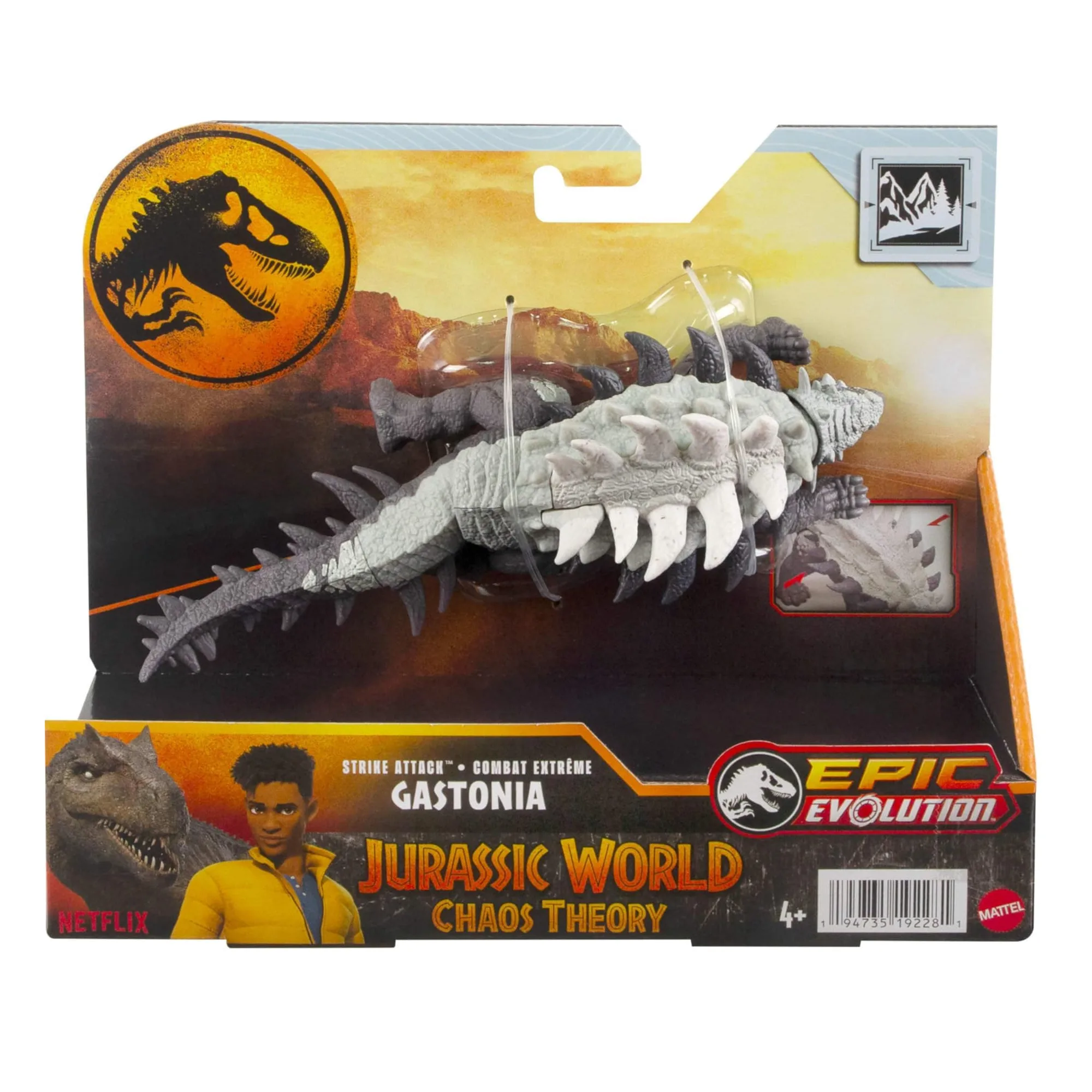
Gastonia is a spiky armoured dinosaur from Utah that was found in the same quarry as the giant raptor Utahraptor. Mattel added it to the second Strike Attack wave of Jurassic World Epic Evolution as a dark grey figure with pale grey spikes and a press-to-strike tail swipe. Here is what the figure looks like, who its dangerous neighbour was, and how to unlock it in the Jurassic World Play App.
Armoured dinosaurStrike actionNo batteries🧬 DNA scan code
Quarry Neighbours: Gastonia and Utahraptor
Gastonia was dug up alongside one of the most dangerous predators of its time.
It is easy to imagine a Utahraptor circling a crouched Gastonia, looking for a gap in its armour.
What Is Strike Attack?
Strike Attack is the action assortment of Mattel’s Epic Evolution line. Each figure has one built-in strike move: press the button on its back and it lunges into an attack, no batteries needed. They also have movable joints and a DNA code that unlocks the animal in the Jurassic World Play App.
Gastonia came in the second Strike Attack wave of Epic Evolution, alongside Chasmosaurus, Monolophosaurus and Dilophosaurus.
Paint and Colours
Body, legs and tail
Spikes and armour plates
Head and underside
Eyes
A stony, armoured look. The body is dark grey, the rows of spikes and plates along the back and tail are a pale grey, and the head is a darker charcoal with yellow eyes.
Sculpt and Detail
Head and armour
The head is low and wide with a small beak. Rows of plates and long spikes cover the neck, back and sides.
Legs and tail
Gastonia stands low on four short legs. The tail is lined with blades along both sides for the strike swipe.
Figure vs fossil
Action Features and Articulation
✓ Press-to-strike action✓ Movable joints✓ No batteries needed✗ No sounds
Like every Strike Attack figure, Gastonia has one action: press the button on its back and it swings its spiky tail. It has posable legs and needs no batteries.
Size and Specs
Medium figure for ages 4 and up. Look for the Epic Evolution logo and the grey body with pale spikes.
Is It Worth Buying?
Gastonia is a sturdy, spiky armoured dinosaur with a great tail-swipe action. The grey paint is plain, but the sculpt is full of detail.
It came out in the second Epic Evolution Strike Attack wave.
What we like
- Spiky armour sculpt
- Tail-swipe strike
- Correct bladed tail
- No batteries
Good to know
- Plain grey colours
- Spikes can bend in packaging
- No sounds
About Gastonia
Gastonia was named in 1998 by James Kirkland from fossils found in the Cedar Mountain Formation of Utah. It honours Robert Gaston, who found the quarry.
It lived in the Early Cretaceous, about 125 million years ago. It was about 5 to 6 m long.
Gastonia was a polacanthid, an armoured dinosaur related to the ankylosaurs. Instead of a tail club, it had sharp spikes and blades along its tail.
How to Unlock Gastonia in the Jurassic World Play App
Open the Jurassic World Play App (it used to be called the Jurassic World Facts App), tap Scan and point your camera at the DNA code below.
Frequently Asked Questions
Press the button on its back and it swings its spiky tail.
No. Strike Attack figures have no electronics.
No. It had blades and spikes along its tail instead.
About 5 to 6 m long.
Robert Gaston, who found the quarry in Utah.
Open the Jurassic World Play App, tap Scan and point your camera at the copy of the code on this page.