
Review
Triceratops Jurassic World Survival Wild Roar Review
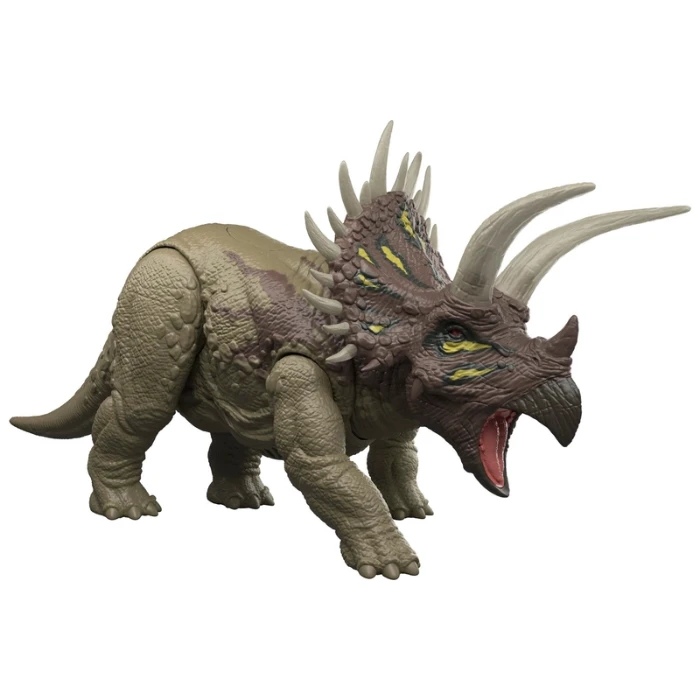
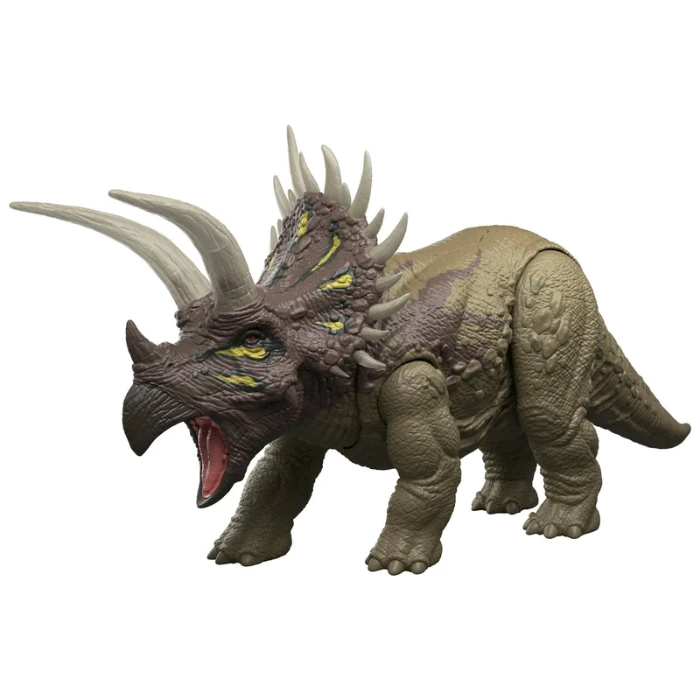
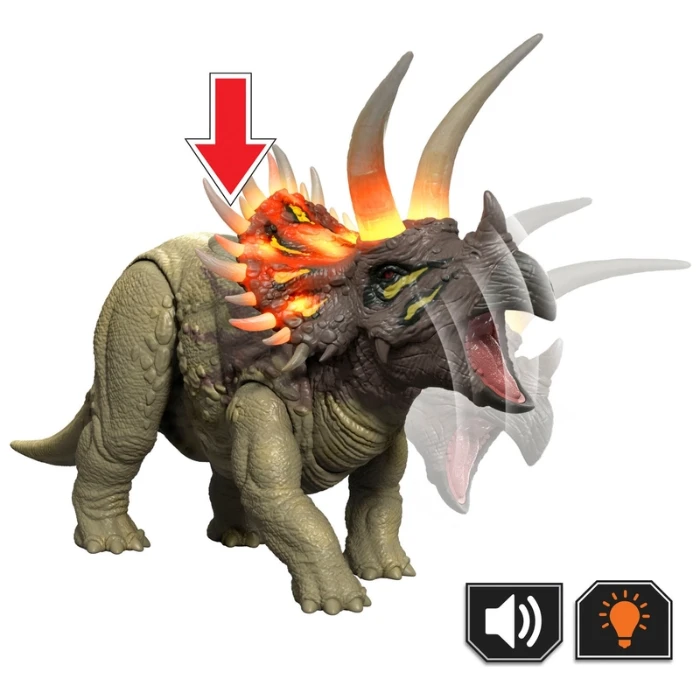
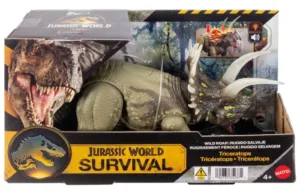
Very untipical figure from Mattel. Maybe the most questionable design choice in the entire Survial line so far at least. I do not like the paint job, I do not like the translucent horns, I do not like the gapped mouth that can not be closed, I do not like the light up feature that makes the horn glow like antenas. Still, I am sure a lot of kids would dig this toy exactly because of these features and maybe this was the effect Mattel were looking for.
⚠️ The Most Significant Flaw: The Permanently Open Jaw
The mouth is fixed permanently wide open with no articulation. There is no way to close it, partially close it, or pose it in any other position.
Since the Triceratops does not have sharp teeth but a beak, the gapped mouth looks just funny and not threatening at all. I mean, how threatened can you be from a parrot?
When you place the figure on the shelf, it still looks funny, and this does not help at all. However, my son liked it, and maybe this is all it matters.
About the toy
1. Paint Scheme and Sculpt
Paint Scheme: Green, Light Green, Yellow, Brown, Dark Gray and Orange
The entire Triceratops looks very tanky in terms of color combinations. The primary body color is a dark green that is also partially translucent, which makes it look different under different lighting or angles.
I can perfectly understand that the light-up feature is the perfect reason for a translucent paint job on some figures and colors, but lets face it just looks wrong on this one. It looks like covered in wet slime, and I can not imagine the majestic Triceratops looking like a frog.
Most colours are concentrated at the front of the figure around the head. And as a crown on top of this head are the horns, which are almost completely clear. At first they look cool, and they kind of fit the non-realistic Survival design. Then the entire figure starts to look gimmicky, which I hate.
Still, the head sculpt of the Triceratops is full of so many little details that it looks gorgeous. Lots of creases and osteoderms throughout. The frill is also really well sculpted and covered in details.
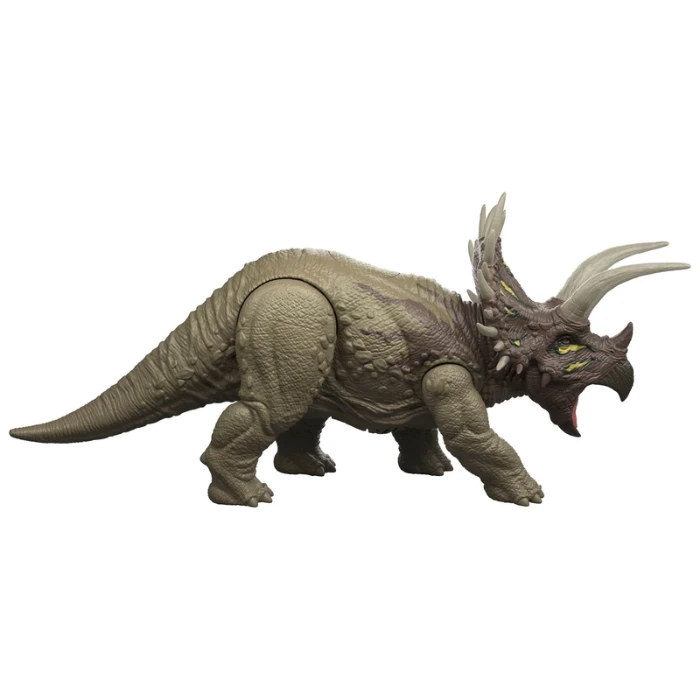
Going past the head into the neck and body, the sculpt quality actually improves. The body carries good skin texture, impressive muscle definition in the thighs and calves, and rocky osteoderms distributed throughout, including along the front and back of the thighs.
Leg articulation covers forward and back on all four legs but does not swing out away from the body.
The tail has a very slight curve and additional bumpy osteoderms along its length.
2. Action Feature, Light-Up and Articulation
The light-up feature in complete darkness is genuinely impressive and is the best thing about this figure. The face and frill illuminate in fiery-looking orange tones, which is dramatically different from the dark green of the figure under normal lighting. The face glows warmly and the frill catches the orange light beautifully, almost giving the impression of a creature that is internally on fire.
In normal lighting the light-up is modest and not especially impressive. In dimmed lighting it definitely improves. The action feature activating the light-up produces a neck-lift attack with sounds, extending the neck upward as the jaw stays permanently open.
- Neck (lift action, action feature)
- Light-up face and frill (orange glow)
- Sound effects
- Jaw (fixed permanently open, no articulation)
- All four legs (forward and back)
- Tail swivel (mid-tail)
Verdict Should I buy it?
I mean, I really do like triceratopses and this one is a nice addition to our collection. However, if it was not for my son I would just purchase the real feel triceratops instead of this one.
The light up feature is the only reason why we bought it and it is indeed spectacular under the correct light or the lack of it.
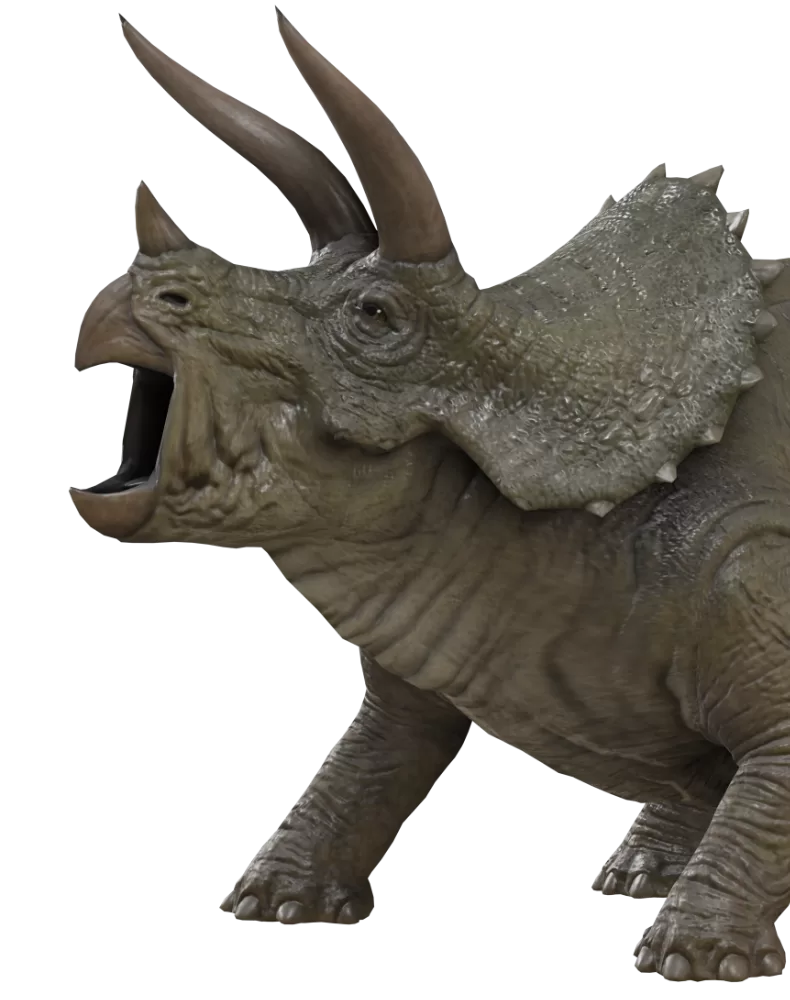
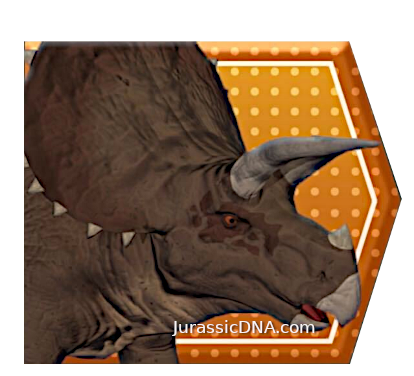
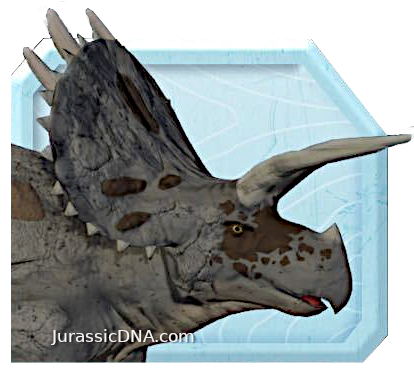
Previous Triceratops Releases
How to unlock
How to unlock Triceratops Wild Roar in Jurassic World Survival Collection?
Open up your Jurassic World Play App (previously known as the Jurassic World Facts App), press the Scan button and point it towards the DNA code here:
3. About the Triceratops
"Why was the Triceratops such a popular dinosaur? Because it was always tri-horny."
Triceratops (meaning “three-horned face”) is a genus of ceratopsid dinosaur that lived during the late Maastrichtian stage of the Late Cretaceous period, approximately 68 to 66 million years ago, in what is now western North America. It was one of the last non-avian dinosaurs to exist before the Cretaceous-Paleogene extinction event. Two valid species are recognized: Triceratops horridus and Triceratops prorsus, which differ primarily in the length of the nasal horn and the shape of the skull. Triceratops is one of the most recognized dinosaurs in the world and has appeared in every major Jurassic Park and Jurassic World film.
Triceratops was a large herbivore estimated at 8 to 9 metres (26 to 30 feet) in length and 6 to 12 metric tons in body mass. Its three horns, consisting of a short nasal horn and two long brow horns, have been interpreted as both display structures and weapons used in intraspecific combat and possibly predator defence. The large bony frill, extending from the back of the skull, is thought to have served multiple functions including thermoregulation, visual signalling to other Triceratops, and as a display of fitness for mate selection. A 2020 study confirmed that Triceratops and the closely related Torosaurus represent distinct genera rather than different growth stages of the same animal, resolving a long-running debate in paleontology. Triceratops shared its Late Cretaceous environment with Tyrannosaurus rex, and bite marks consistent with T. rex teeth have been found on Triceratops frills and horns, confirming direct predator-prey interactions between the two iconic species.
No. The jaw is permanently fixed in an open position and cannot be closed. There is no jaw articulation on this figure. This is its most significant design flaw and affects display in almost every position.
In complete darkness, the face and frill light up in striking fiery orange tones that are dramatically different from the dark military green of normal lighting. The glow is genuinely impressive and is the figure’s standout feature.
It is a step down from previous Wild Roar Triceratops releases. Earlier versions had better facial detail, more impressive sculpt quality overall, and a closing jaw. The Survival version’s main unique feature is the light-up, but the standard sculpt quality does not reach the level of prior releases.
Yes. The Survival Real Feel Reimagined Triceratops is a more traditional, screen-accurate design with a closed mouth and realistic paint, and is a better display piece for most collectors. The Wild Roar version is best suited to collectors specifically completing this wave or interested in the light-up feature.
Open the Jurassic World Play App, tap the Scan button, and point it at the DNA barcode on the Triceratops figure.