

Home › Jurassic World Survival › Metriacanthosaurus Wild Roar
Wild Roar Review
Metriacanthosaurus Wild Roar Jurassic World Survival Review
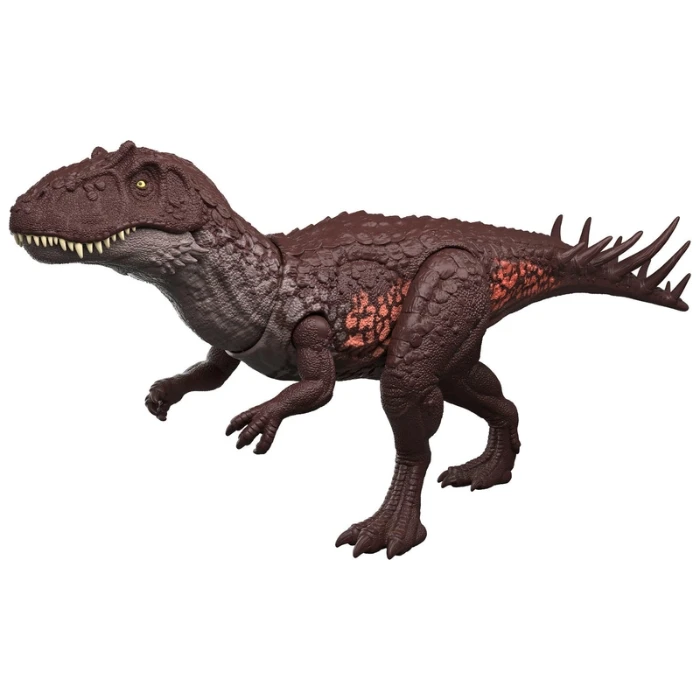
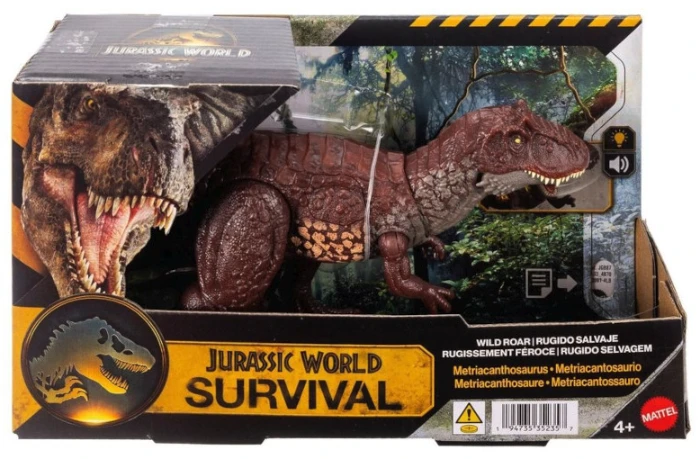
A throwback to 2017: we have had a Metriacanthosaurus in the Mattel Wild Roar line before, but nine years later this Survival version is the best-looking Metriacanthosaurus Mattel have released. A detailed figure like never before, with an amazing light-up feature, a mutated tail and beautiful colouring.
🔥 Amber light-up🗡️ Thagomizer tail🔊 Sound effectsMattel · 2026Scan code included
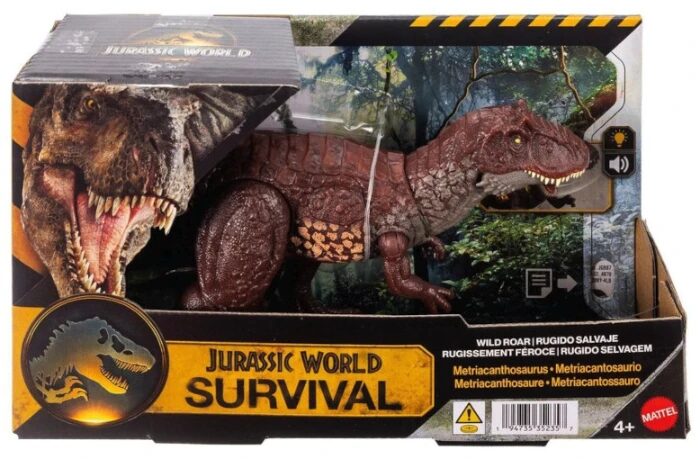
🗡️ The Tail: the Most Divisive Design Choice
The thagomizer-style spikes on the tail are this figure’s defining Survival mutation and the element most likely to decide whether you buy it. They are numerous, prominent and unmistakably unusual for a theropod. The tail is long for a Wild Roar figure, which is genuinely a plus, but the spikes dominate the visual and give the figure almost a Kentrosaurus-tail-meets-theropod look, unlike anything else in the Wild Roar range.
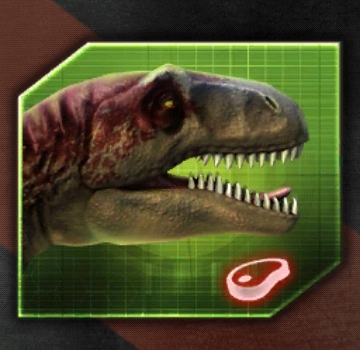
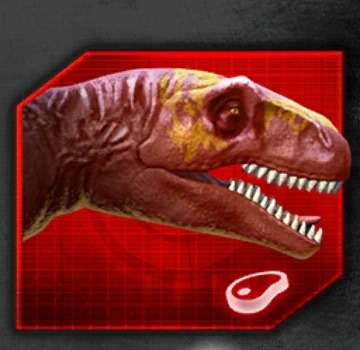
🔁 Previous Metriacanthosaurus Releases

1. Paint Scheme and Sculpt
Primary bodyLight gray
Jaw & throatDark orange
Hip, thigh & tail
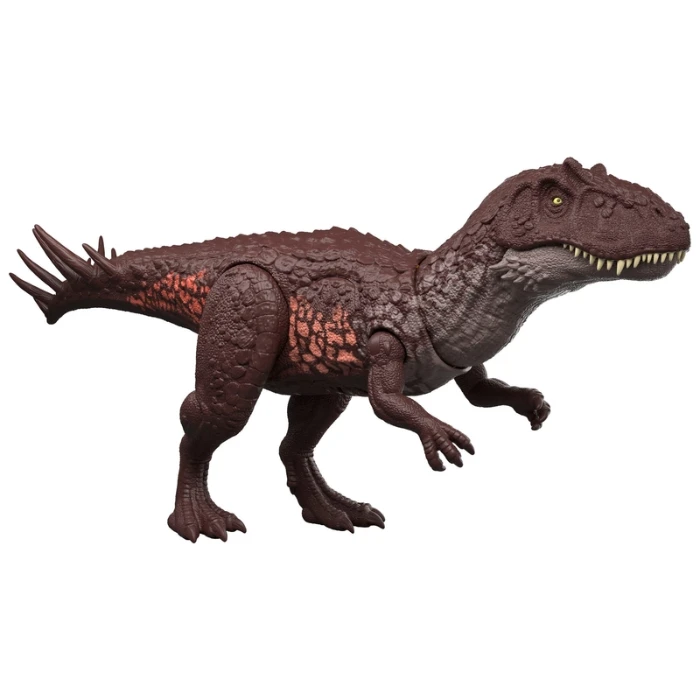
The primary brown runs throughout the body, with a light gray on the lower jaw that leads down along the underside of the throat. Moving further back through the hip and thigh, a dark orange accent appears before tapering off into the tail.
It is not an especially memorable colour scheme overall, but the multiple tones are applied well and the transitions — while not always perfectly gradual — create variety across the figure.
The legs also look pretty tough, covered with armoured scutes and osteoderms. Leg articulation is notably stiff and extends forward and back through a good range, though there is no outward movement away from the body.
Sculpt Detail, Head to Tail
Head and crests
The head sculpt is one of the real strengths of this figure. The scale detail is varied and impressive throughout the face: fine scales and skin texture across most of it, contrasting with larger rocky osteoderms appearing here and there, scutes over the top of the head, and ridges and osteoderms leading off the back of the jaw.
The Metriacanthosaurus crests are clearly visible. The teeth are kid-safe rubber, though they look quite sharp.
Neck, body and arms
The neck transitions from the head with an almost armoured look continuing through the back of the neck, complete with scutes and a scute-like appearance over the top. Moving through the body, the armoured appearance continues with a mix of smaller fine scales and larger rocky osteoderms visible throughout.
The tail
A swivel joint at the base of the tail provides the only tail articulation.
2. Action Feature, Light-Up & Articulation
✓ Head turn + jaw snap (action feature)✓ Amber light-up through the body✓ Sound effects✓ Arms — forward, back, outward✓ Legs — forward and back✗ Legs are stiff✗ Tail swivel at the base only
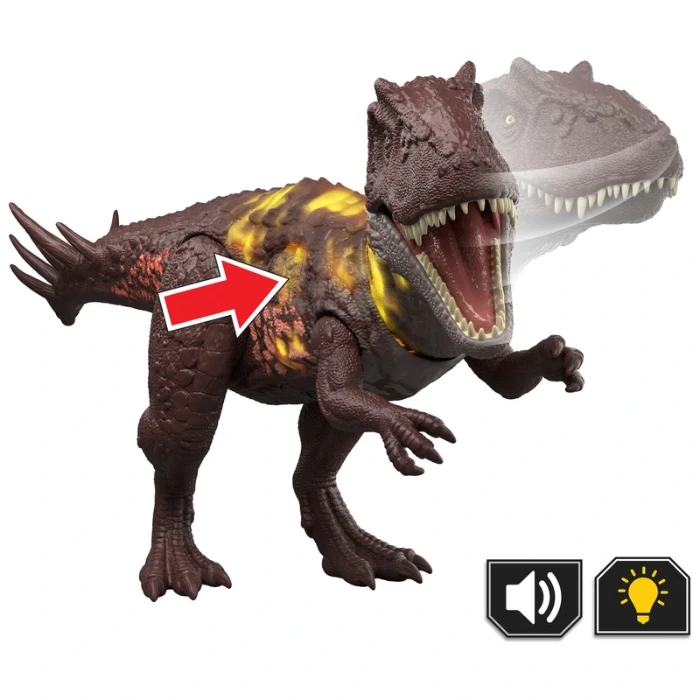
A button activates a head-turning jaw snap with sound effects; the neck articulation is part of that mechanism. The simultaneous inner light-up runs through the body and looks really good under normal lighting, but in a dark room it becomes genuinely impressive — it glows like amber through the body, and is one of the best, if not the best, light-up colours in the Survival Wild Roar range.
Specifications at a Glance
Its wave partners, the Stomatosuchus and Triceratops, display very well alongside it.
Verdict: Should I Buy It?
Yes. Even though I can see a lot of collectors disliking the mutated tail, it has its charm and fits perfectly in the Survival lineup. This is by far the best Wild Roar Metriacanthosaurus Mattel has produced, and for Metriacanthosaurus fans specifically it is the must-have version of the species.
✦ What Works
- Best Wild Roar Metriacanthosaurus Mattel has made
- Amber light-up, arguably the best in the range
- Varied, impressive head scale detail
- Wrists correctly positioned, not pronated
- Long tail by Wild Roar standards
- Armoured neck and body texture
- Head-turn jaw snap with sounds
- Kid-safe rubber teeth that still look sharp
- Well-sculpted claws
- Displays well with the rest of the wave
✦ What Doesn't
- Thagomizer tail divides opinion sharply
- Brown scheme is not especially memorable
- Colour transitions are not always gradual
- Leg articulation is stiff, no outward swing
- Tail swivels at the base only
- Fingers are fairly short
3. About the Metriacanthosaurus
Metriacanthosaurus parkeri (meaning “moderately spined lizard”) is a genus of metriacanthosaurid theropod from the Oxford Clay Formation of Dorset, England, dating to approximately 159 to 154 million years ago during the Late Jurassic. It is the only metriacanthosaurid currently named from outside Asia.
The species name honours fossil collector W. Parker, who first discovered the remains near Jordan’s Cliff at Weymouth in the 19th century. The fossil material consists of an incomplete hip, a leg bone and parts of a backbone — no skull has ever been found, meaning all facial reconstructions, including the one Mattel uses, are based on related Asian species.
The genus takes its name from the Greek metrikos (moderate) and akantha (spine), referring to vertebral spines taller than in many other carnosaurs such as Allosaurus but much shorter than in high-spined dinosaurs like Spinosaurus. At one time Metriacanthosaurus was thought to be the same animal as Megalosaurus, but later studies showed it was different enough to merit its own genus. It is estimated to have reached around 7.5 to 8 metres (25 to 26 feet) in length and over a metric ton in body mass, making it one of the larger predators in the Oxford Clay ecosystem alongside the megalosaurid Eustreptospondylus.
Its closest relatives are Asian metriacanthosaurids including Sinraptor from China. The Survival line’s thagomizer tail is a deliberate mutation, but there is a faint science connection: the real animal’s defining feature is its distinctive vertebral spines, and the Survival designers have taken that spinal theme to an extreme conclusion.
Metriacanthosaurus, known only from fragmentary remains discovered in Dorset, England, remains one of the more enigmatic large theropods of the Late Jurassic. Because no skull has been found, everything about its face is educated guesswork.
How to Unlock
How to unlock the Metriacanthosaurus Wild Roar in the Jurassic World Survival collection?
Open up your Jurassic World Play App (previously known as the Jurassic World Facts App), press the Scan button and point it towards the DNA code here:
Metriacanthosaurus Wild Roar Gallery
Metriacanthosaurus Wild Roar FAQ
The Jurassic World Survival line depicts mutated versions of dinosaurs, and the thagomizer-style spikes on the tail are this figure’s Survival mutation. Interestingly, while no real Metriacanthosaurus tail is known from the fossil record, the real animal is named for its moderately tall vertebral spines. Taking that spinal feature and exaggerating it into a full thagomizer tail is a stretch, but not entirely without inspiration from the actual species.
Yes. The Survival Wild Roar Metriacanthosaurus has the most impressive fine detail, correctly positioned wrists, a particularly effective glossy claw treatment, and an amazing light-up feature not present on earlier releases. The thagomizer tail is the one design element that divides opinion.
A button activates a head-turning jaw snap with sound effects, combined with a light-up in the body. In dimmed or dark conditions the amber glow is particularly impressive, and is one of the more attractive light-up colours in the Survival Wild Roar range.
No. The only known fossils of Metriacanthosaurus consist of an incomplete hip, a leg bone and parts of a backbone. No skull has ever been discovered, meaning all reconstructions of its face — including the version used by Mattel — are educated guesses based on related species from Asia.
Open the Jurassic World Play App, tap the Scan button, and point it at the DNA barcode on the Metriacanthosaurus feet.