
Home › Jurassic World Survival › Stomatosuchus Wild Roar
Wild Roar Review
Stomatosuchus Wild Roar Jurassic World Survival Review
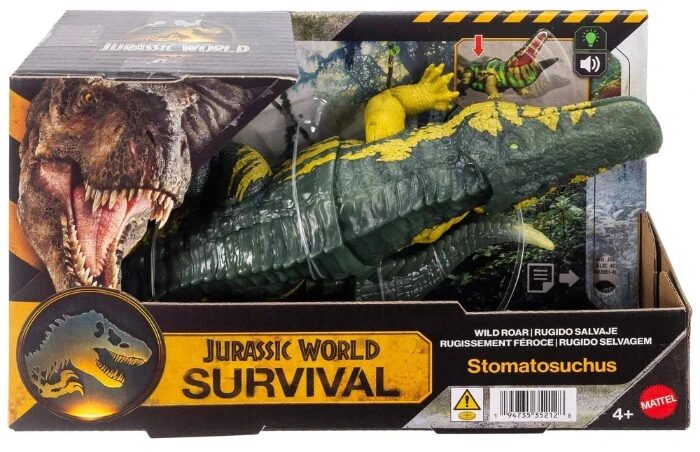
If you know the story behind the only fossil of Stomatosuchus ever found, and how it was lost during the Second World War, you will understand why this is one of the most exciting and anticipated species choices Mattel has made for the entire Survival line. Stomatosuchus was a 10-metre prehistoric crocodilian from Cretaceous Egypt with a possible pelican-like throat pouch — known from a single skull that was destroyed in 1944.
🧬 Fossil destroyed in 1944💡 Light-up through the body🐊 Jaw strike actionMattel · 2026Scan code included
🔬 Why This Species Choice Matters
Stomatosuchus inermis is one of the most unusual and scientifically tragic prehistoric animals Mattel has ever chosen for a toy line. It lived approximately 100 to 94 million years ago in the marshy lowlands of what is now Egypt’s Bahariya Formation, sharing its habitat with Spinosaurus.
It reached an estimated 10 metres in length, with a flat, lid-like skull lined with small conical teeth on the upper jaw. The lower jaw may have been toothless and may have supported a pelican-like throat pouch for filter-feeding.
📋 The Skull That Was Bombed
The only known fossil of this species was a single large skull collected by German paleontologist Ernst Stromer during an Egyptian expedition, housed in Munich’s natural history museum. In 1944 an Allied bombing raid destroyed the museum and the skull with it — taking the original Spinosaurus specimen in the same night.
Everything we know about Stomatosuchus now exists only through Stromer’s drawings and notes. It is a genuinely extraordinary species to find in a toy line.
1. Sculpt and Painting
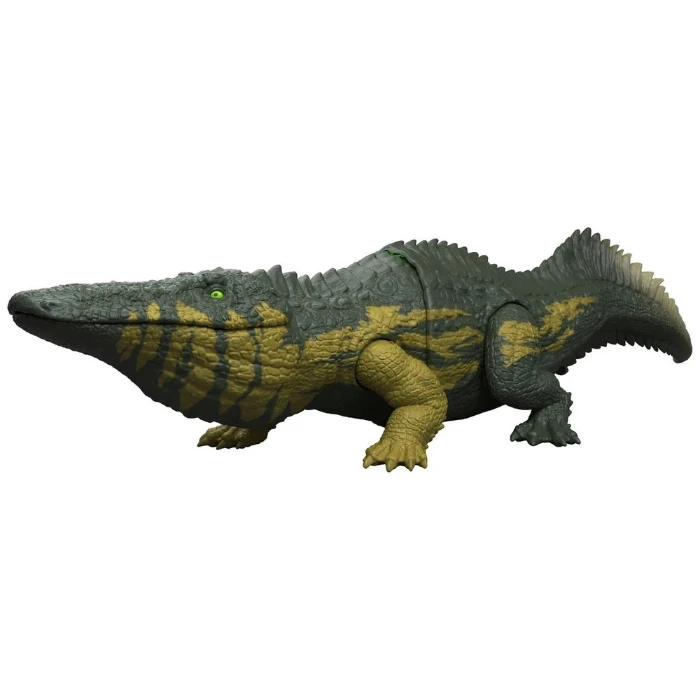
Primary bodyLight green
Face & body stripingLight pink
Tongue
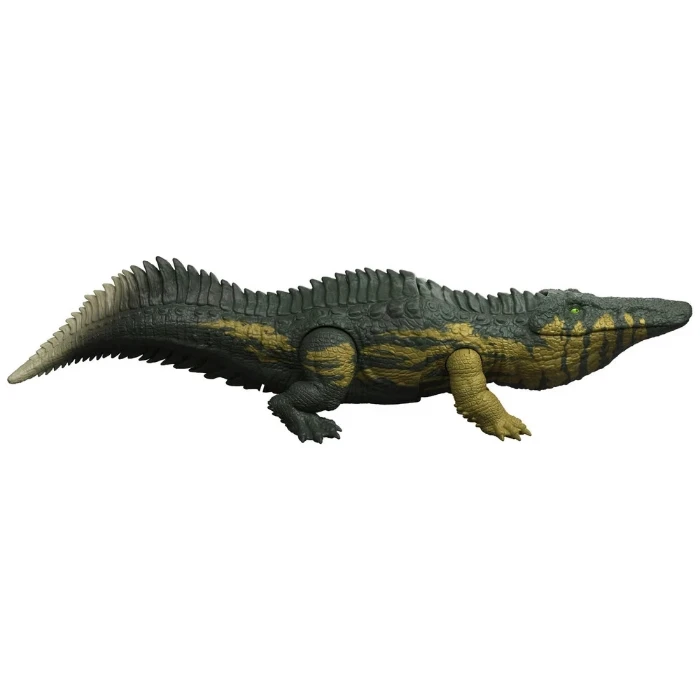
The primary colour is a dark green that runs throughout the figure — a natural, earthy tone that reads convincingly as a crocodilian. A lighter green stripes through the face and continues back through the body, creating a subtle striping effect down the full length of the figure.
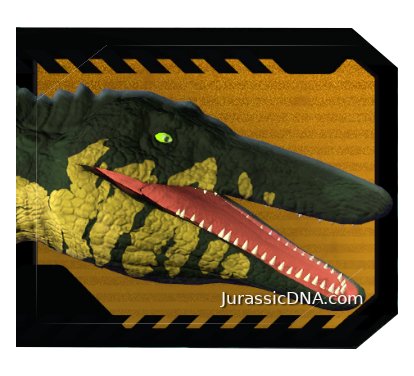
The head sculpt is gorgeous. The flat, lid-like skull shape of the real Stomatosuchus is represented, with the characteristic broad profile of a stomatosuchid. The detail throughout the head is rough and bumpy, with a very well textured skin surface, and the bulkiness of the throat area is an instant visual standout. The teeth use the newer rubber material on both jaws and look genuinely sharp while staying safe for kids. Inside the mouth, the tongue is well textured with a good pink tone and a glossy coat.
Osteoderms follow along the sides of the figure as well.
Sculpt Detail, Head to Tail
Body and belly
The scale detail across the body flanks is impressive, and the lighter green striping through this area adds visual interest to what could have been a flat dark green surface. The rib cage is visible shining through the underside. The belly carries the softer, finer scaling typical of crocodilian bellies, and even the undersides of the feet are sculpted cleanly.
Legs and feet
The legs look great, with a bumpy texture on the back near the elbow. There is even webbing between the toes on both front and rear feet — an accurate and thoughtful detail for a semi-aquatic crocodilian.
The tail
A swivel at the base is the only tail articulation.
2. Action Feature, Light-Up & Articulation
✓ Jaw strike action feature✓ Light-up through body and tail✓ Articulated jaw✓ Front legs — forward, back, outward✓ Rear legs — forward and back✓ Tail swivel
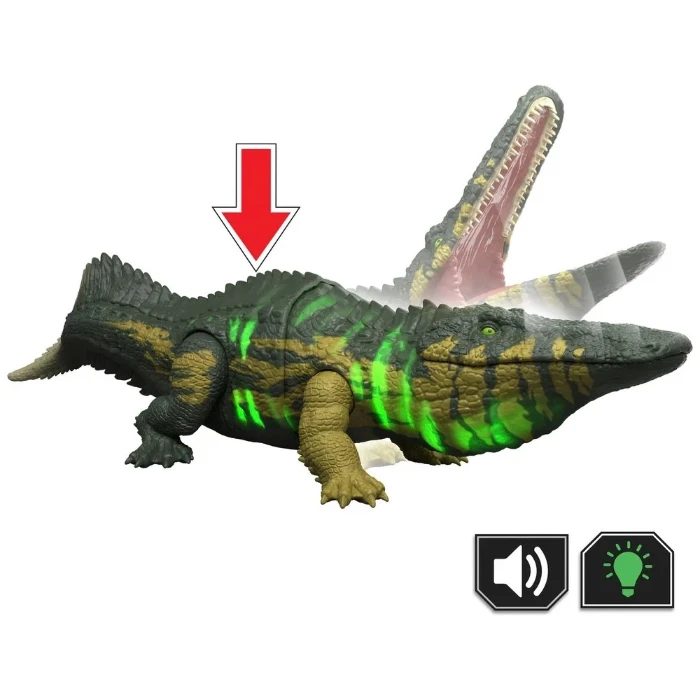
A button at the back triggers both at once: the figure does its signature strike pose with the jaw opening, and the light-up runs through the translucent body. It is just gorgeous — and in a dark room, genuinely spectacular.
Specifications at a Glance
Its wave partners, the Metriacanthosaurus and the Real Feel Reimagined Triceratops, display well alongside it.
Verdict: Should I Buy It?
Most definitely. The Stomatosuchus Wild Roar is exceptional, not only as an extraordinary species choice but because it fits perfectly in the Survival lore so far. The dual-tone green paint running head to tail is natural, convincing and beautifully applied. The jaw strike action feature with simultaneous light-up is the best combination action this Wild Roar lineup has to offer, and in the dark the light-up is genuinely stunning. My son is a big fan of it — as he is of every other crocodilian figure he owns.
✦ What Works
- Extraordinary, genuinely obscure species choice
- Flat, lid-like stomatosuchid skull captured well
- Bulky throat area is an instant standout
- Raised, well-defined scutes the full length
- Convincing natural dual-green paint
- Rib cage visible through the underside
- Webbed toes on front and rear feet
- Osteoderms and spikes along the whole tail
- Jaw strike plus light-up in one button
- Light-up is stunning in a dark room
✦ What Doesn't
- Tail articulation is a base swivel only
- Rear legs move forward and back only
- No throat pouch, despite the science
- Light-up is modest outside a dark room
3. About the Stomatosuchus
Stomatosuchus inermis (meaning “weaponless mouth crocodile”) was a giant stomatosuchid neosuchian crocodyliform that lived during the Late Cretaceous, approximately 100 to 94 million years ago, in the Bahariya Formation of what is now Egypt’s Western Desert. It reached an estimated 10 metres (33 feet) in length and weighed an estimated 2 to 3 tonnes. It shared its ecosystem with Spinosaurus, Carcharodontosaurus and Paralititan, in the marshy deltaic lowlands of what was then the southern coast of the Tethys Sea. Its name combines the Greek stoma (mouth) with suchus, a reference to the Egyptian crocodile god Sobek.
Its most distinctive feature was the flat, lid-like skull with a long broad snout lined with hundreds of small conical teeth on the upper jaw. The lower jaw may have been toothless and is thought to have supported a large throat pouch similar to a pelican’s, leading scientists to suggest it was a filter feeder scooping up fish and other small prey. Exactly what it ate remains unknown.
What makes Stomatosuchus particularly tragic in the history of paleontology is that the only known fossil — a large skull collected by German paleontologist Ernst Stromer during his Egyptian expedition in the early 20th century — was housed in the Munich natural history museum and destroyed on the night of 24 April 1944, when Allied bombing raids damaged the building. The original Spinosaurus specimen was lost the same night. All scientific knowledge of Stomatosuchus now rests entirely on Stromer’s original descriptions, drawings and notes.
Known only from Stromer’s drawings and notes after the original fossil was destroyed in 1944, Stomatosuchus inermis remains one of the most mysterious and tantalising prehistoric crocodilians ever discovered.
How to Unlock
How to unlock the Stomatosuchus Wild Roar in the Jurassic World Survival collection?
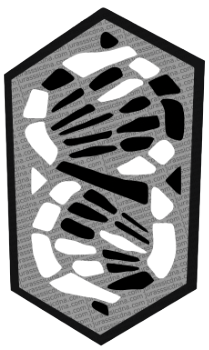
Open up your Jurassic World Play App (previously known as the Jurassic World Facts App), press the Scan button and point it towards the DNA code here:
Stomatosuchus Wild Roar Gallery
Stomatosuchus Wild Roar FAQ
Stomatosuchus inermis was a giant prehistoric crocodilian that lived approximately 100 to 94 million years ago in what is now Egypt, sharing its habitat with Spinosaurus. It reached an estimated 10 metres in length and had an unusually flat, broad skull with small conical teeth on the upper jaw. The lower jaw may have been toothless and may have supported a pelican-like throat pouch, suggesting filter-feeding behaviour. The only known fossil skull was destroyed in 1944 when the Munich museum was bombed during the Second World War.
Yes. The light-up is activated by the same button that triggers the jaw strike action. The light runs through the translucent areas of the body and extends back almost to the tail. In dimmed light it is striking, and in complete darkness it is genuinely spectacular, with a blinking pattern through the body.
A button in the midsection activates a jaw strike where the figure lunges upward with the mouth opening. This simultaneously triggers the light-up that runs through the body and into the tail. The midsection articulation is part of the mechanism.
Because it is extremely obscure and its only fossil was destroyed nearly 80 years ago. Most prehistoric animals in toy lines have at least multiple specimens and ongoing research. Stomatosuchus exists in science only through the drawings and notes of Ernst Stromer, the German paleontologist who discovered and described it. That Mattel chose it for the Survival line alongside Spinosaurus, with which it shared its actual ecosystem, is a genuinely thoughtful selection.
Open the Jurassic World Play App, tap the Scan button, and point it at the DNA barcode sticker on the Stomatosuchus feet.