
Home › Jurassic World Survival › Gorgosaurus Gigantic Thrashers
Gigantic Thrashers Review
Gorgosaurus Gigantic Thrashers Jurassic World Survival Review
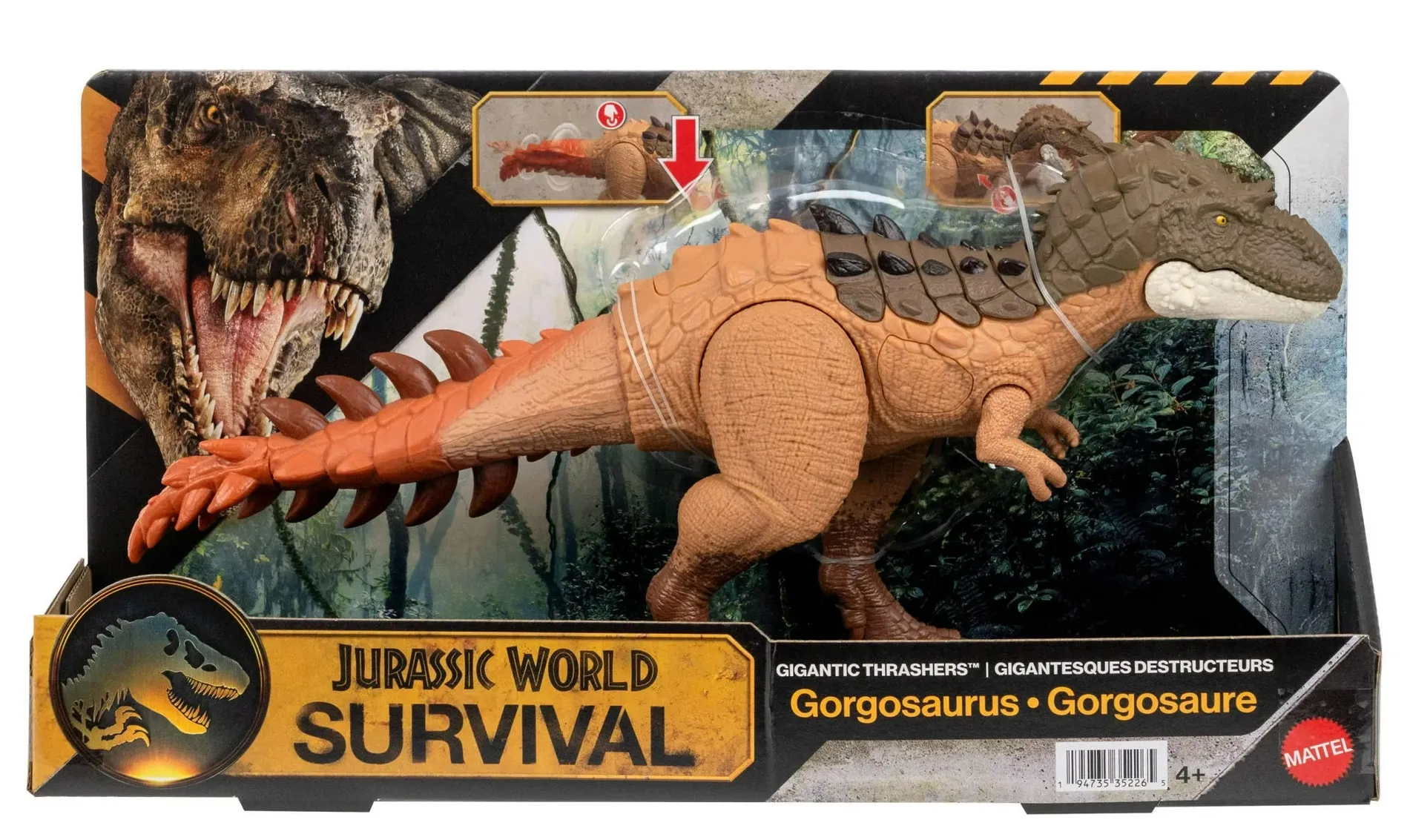
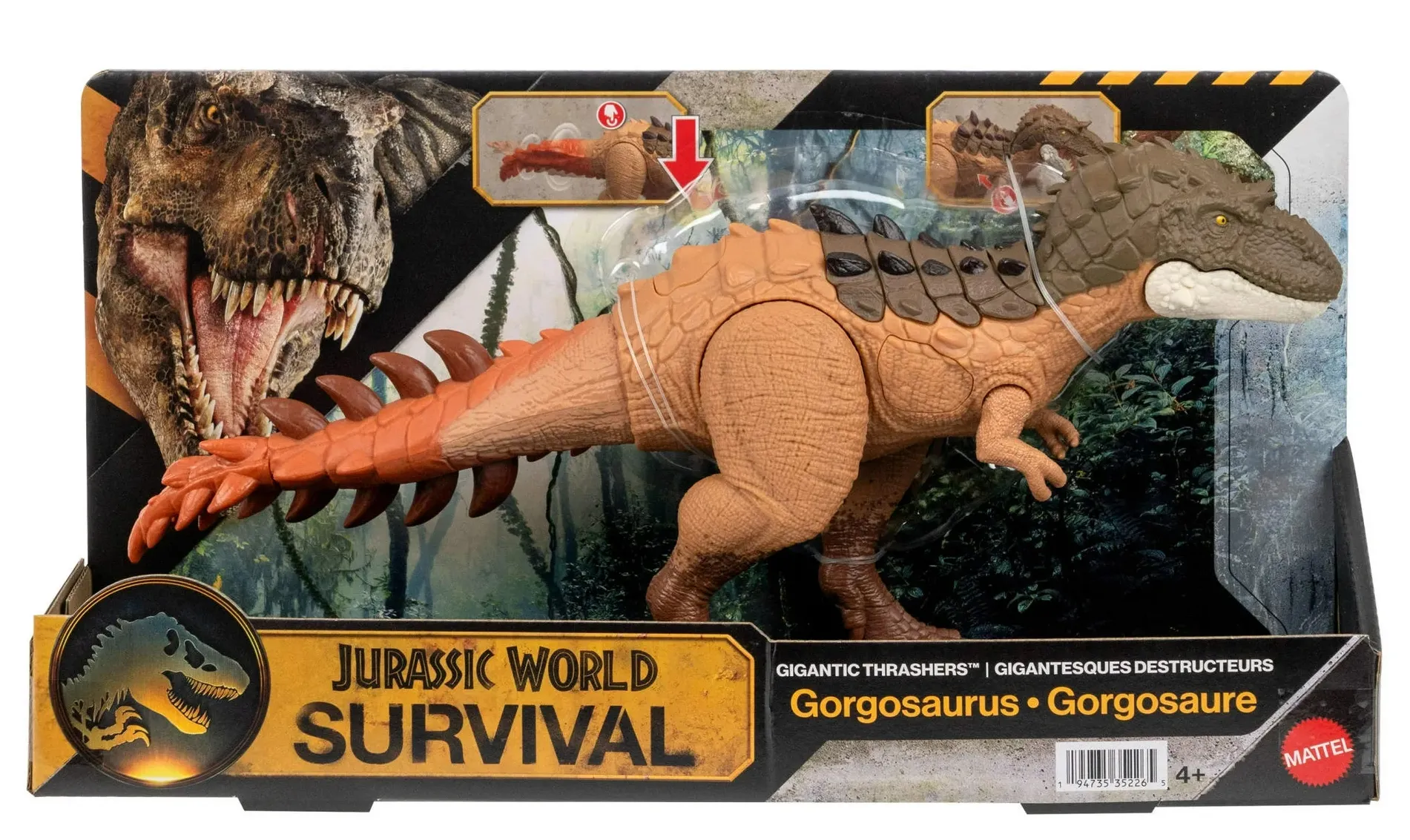
Less a sleek tyrannosaur, more a walking tank. This Gorgosaurus borrows parts from half the Cretaceous — brow horns, ankylosaur-style plating, a spiked tail club — and comes out as one of the most heavily armoured figures in the Gigantic Thrashers range.
Spinning tail actionExpanding back armourSpiked tail clubMattel · 2026Scan code included
A Tyrannosaur Built From Spare Parts
The Jurassic World Survival line mutates familiar dinosaurs for the Survival PS5 game concept, but the Gorgosaurus goes further than most. It does not just get bigger or spikier — it borrows features outright from other dinosaurs. A pair of brow horns that would look at home on a Carnotaurus. Plating down the spine that belongs on an ankylosaur. A tail that ends in a spiked club somewhere between an ankylosaur’s and a stegosaur’s thagomizer.
The result reads less like a tyrannosaur and more like a brawler assembled out of everything that worked on other species.
Paint & Colour Scheme
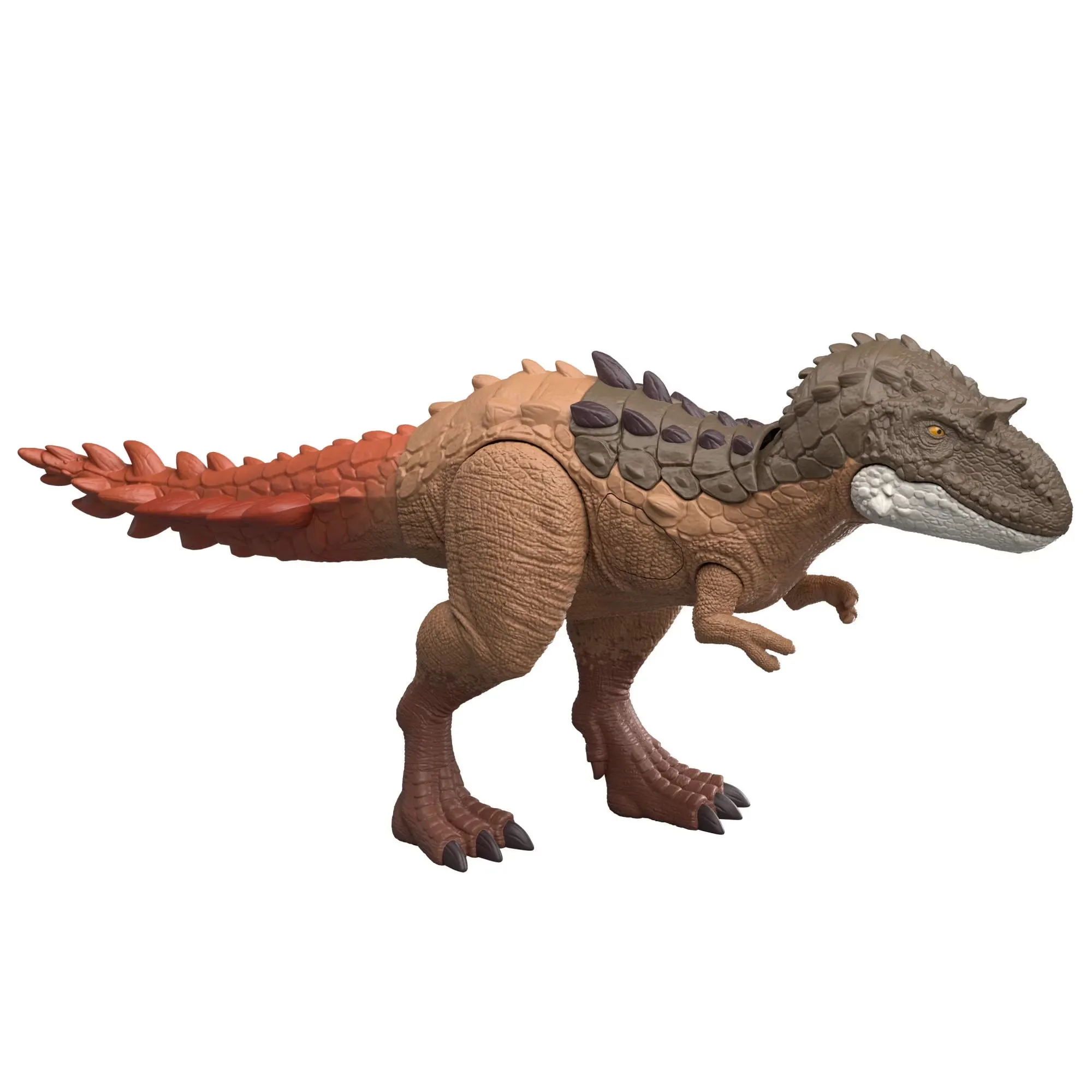
The base colour is orange, sharply contrasted by the dark brown of the heavy armour on the head and back. The spikes and armour plates on the tail sit in a vibrant red-orange that blends out of the main body colour rather than cutting against it, so the tail reads as part of the animal instead of a bolted-on accessory.
Compared with the rest of the Gigantic Thrashers range, this one also gets noticeably more paint detail on the legs, which helps carry the figure’s sheer bulk.
Sculpt & Detail
Horns and Rocky Armour
The figure is completely dominated by its Survival armour. The first surprise is a pair of small brow horns on the head, the kind you would expect on a Carnotaurus rather than a tyrannosaur. From there almost the entire body is covered in a rocky texture, with thick, dark, raised armour plates running down the spine.
The Clubbed Tail
The tail is heavily armoured along its length and ends in a cluster of large spikes — somewhere between an ankylosaur’s club and a stegosaur’s thagomizer. It is the single most un-tyrannosaur thing about the figure, and it is also what the main action feature is built around.
Action Features
✓ Spinning tail action✓ Powerful jaw bite✓ Expanding back armour plates✗ No sounds or lights
As a Gigantic Thrashers figure its primary feature is a powerful spinning tail action, which is exactly what you want given the spiked club on the end of it. Alongside that there is a strong jaw bite, and the armour plates on the back expand when the mechanism fires — a nice touch that makes the figure visibly bulk up as it attacks.
At a Glance
Should You Buy It?
If you want a Gorgosaurus, no — there is very little Gorgosaurus left in here. If you want a big, heavy, armoured brawler with three working features and a spiked tail club, then yes, and it is one of the more entertaining figures in the Gigantic Thrashers range.
The spinning tail suits the sculpt, the expanding back plates are a genuinely clever touch, and the orange-over-dark-brown scheme with the extra leg detailing holds together better than a mash-up of this many borrowed parts has any right to.
✦ What Works
- Three working features on one figure
- Spinning tail suits the spiked club
- Back armour plates expand on activation
- Rocky texture across almost the whole body
- Unexpected brow horns on the skull
- More leg paint than the rest of the range
- Red-orange tail blends out of the body
✦ What Doesn't
- Barely recognisable as a Gorgosaurus
- Borrows features from three other groups
- Armour buries most of the body sculpt
- No sounds or light effects
About the Gorgosaurus
“So, the focus group said the Gorgosaurus wasn’t ‘dreadful’ enough. We fixed that. We took its head, put a pair of horns on it, added some ankylosaur armor, and finished it with a thagomizer. It’s now less of a ‘dreadful lizard’ and more of a ‘dreadful… everything.’ We’re not sure what it is, but we know it’s not happy about it.”
— InGen Asset Designer
Gorgosaurus — the name means “dreadful lizard” and is said gor-go-SOAR-us — was a tyrannosaurid from the Late Cretaceous of western North America, living roughly 76 to 75 million years ago in what is now Alberta and Montana. It is one of the best-known tyrannosaurs in the fossil record, represented by dozens of specimens including several near-complete skeletons and juveniles, which is why palaeontologists understand tyrannosaur growth largely through this animal.
At around 8 to 9 metres (26 to 30 feet) long and 2,000 to 2,800 kg (4,400 to 6,200 pounds), it was smaller and considerably more lightly built than Tyrannosaurus — long-legged, fast, and a pursuit predator rather than a bone-crusher. Which makes the Survival version’s direction fairly ironic: it takes an animal defined by being sleek and quick and turns it into the heaviest, most armour-plated thing on the shelf.
How to Unlock Gorgosaurus
How do you unlock Gorgosaurus in the Jurassic World Survival collection?
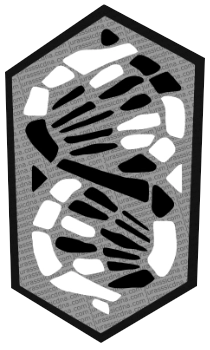
Open your Jurassic World Play App (previously the Jurassic World Facts App), press the Scan button and point it at the DNA code below.
Gallery
Frequently Asked Questions
Its primary feature is a powerful spinning tail action, swinging the spiked tail club. It also has a strong jaw bite, and the armour plates on its back expand when the mechanism is triggered.
The Jurassic World Survival line depicts mutated versions of familiar dinosaurs, and the Gorgosaurus takes that further than most by borrowing features from other groups: a pair of brow horns of the kind seen on Carnotaurus, ankylosaur-style plating down the spine, and a spiked tail club somewhere between an ankylosaur’s club and a stegosaur’s thagomizer.
The base body colour is orange, contrasted against dark brown armour on the head and back. The tail spikes and plates are a vibrant red-orange that blends out of the main body colour. The legs carry more paint detail than most figures in the range.
Gorgosaurus was a smaller, more lightly built tyrannosaurid from the Late Cretaceous of Alberta and Montana, around 8 to 9 metres long and 2,000 to 2,800 kg. It was long-legged and fast, a pursuit predator rather than a bone-crusher, and it lived some 10 million years before Tyrannosaurus.
Open the Jurassic World Play App, tap the Scan button, and point it at the DNA barcode on the figure or at the code shown on this page.