
Home › Jurassic World Survival › Afrovenator Wild Roar
Wild Roar Review
Afrovenator Wild Roar Jurassic World Survival Review
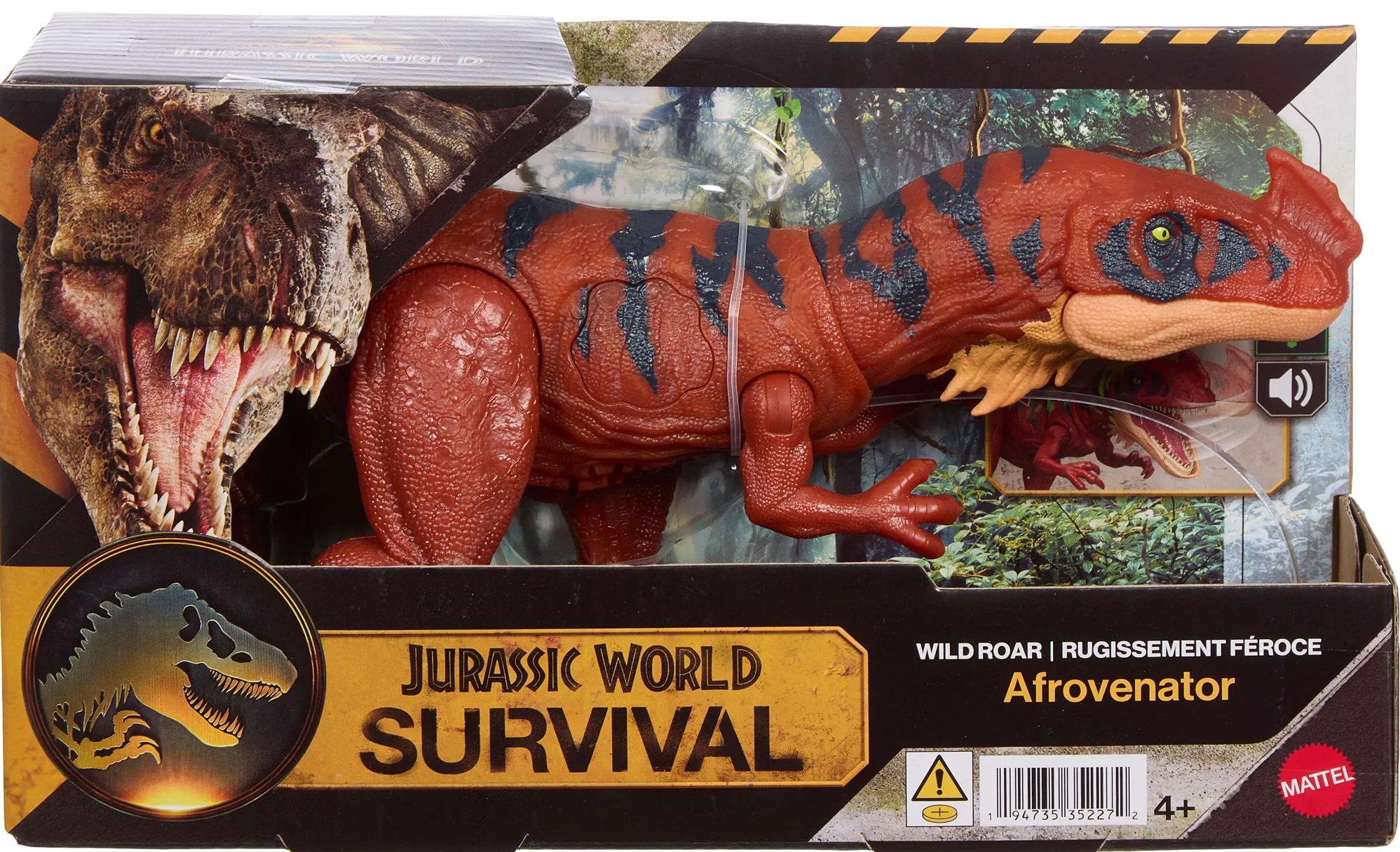
The first Afrovenator Mattel has ever made, and it arrives already mutated: a crest on the snout, flappy skin under the throat and tail, translucent panels for the light, and a green glow that lights the body from the inside.
First Mattel AfrovenatorGreen internal light-upSnout crest & throat skinMattel · 2026Scan code included
A New Species, Already Mutated
This is the first time the mighty Afrovenator has appeared in the Mattel dinosaur toy lineup at all.
It is a little odd to get a brand-new species specifically in the Survival line, where every dinosaur carries exaggerated features — you never get to see the animal straight before it is mutated. Nonetheless, it is a very welcome addition.
Paint & Colour Scheme
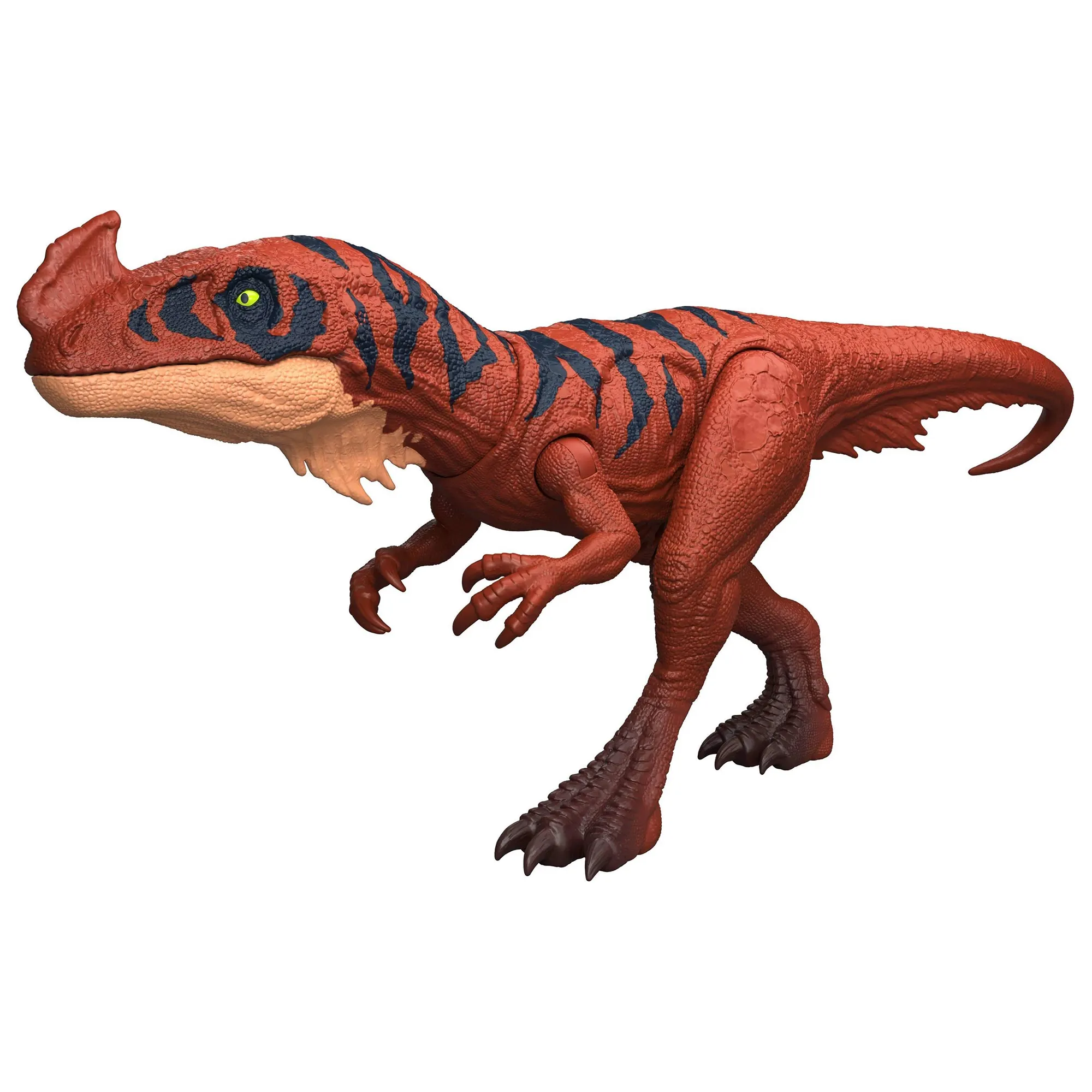
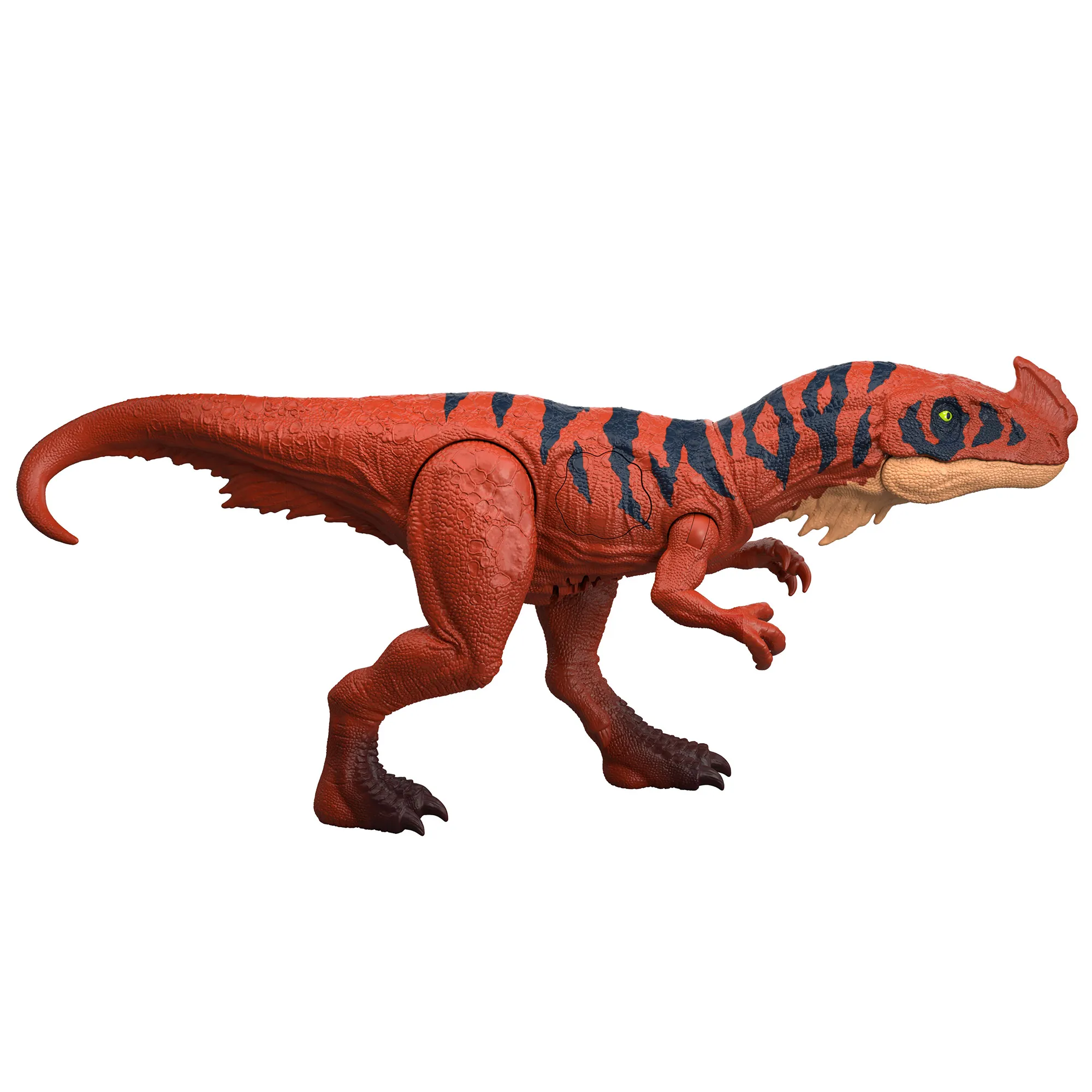
The paint job is quite outstanding. The main body sits in a reddish tone, broken up with dark bluish-grey spots and patterns across the face and back. The feet are painted a dark brown, which reads as camouflage more than decoration.
Sculpt & Detail
Crest, Throat Skin and Scales
The figure is super detailed and very well sculpted. The mutations show up all over it: a prominent crest on the snout, and flappy skin hanging under the throat and along the tail. The skin texture is exceptionally fine, painted with extremely vibrant and crisp scales — the kind of surface work that rewards looking at the figure up close.
Translucent Panels
Parts of the plastic are left translucent by design, so the light-up feature can pop through them. It also does something else: it gives the figure that unhealthy, half-lit look the Survival line is going for. Function and theme landing on the same decision is rarer than it should be.
Wild Roar Features
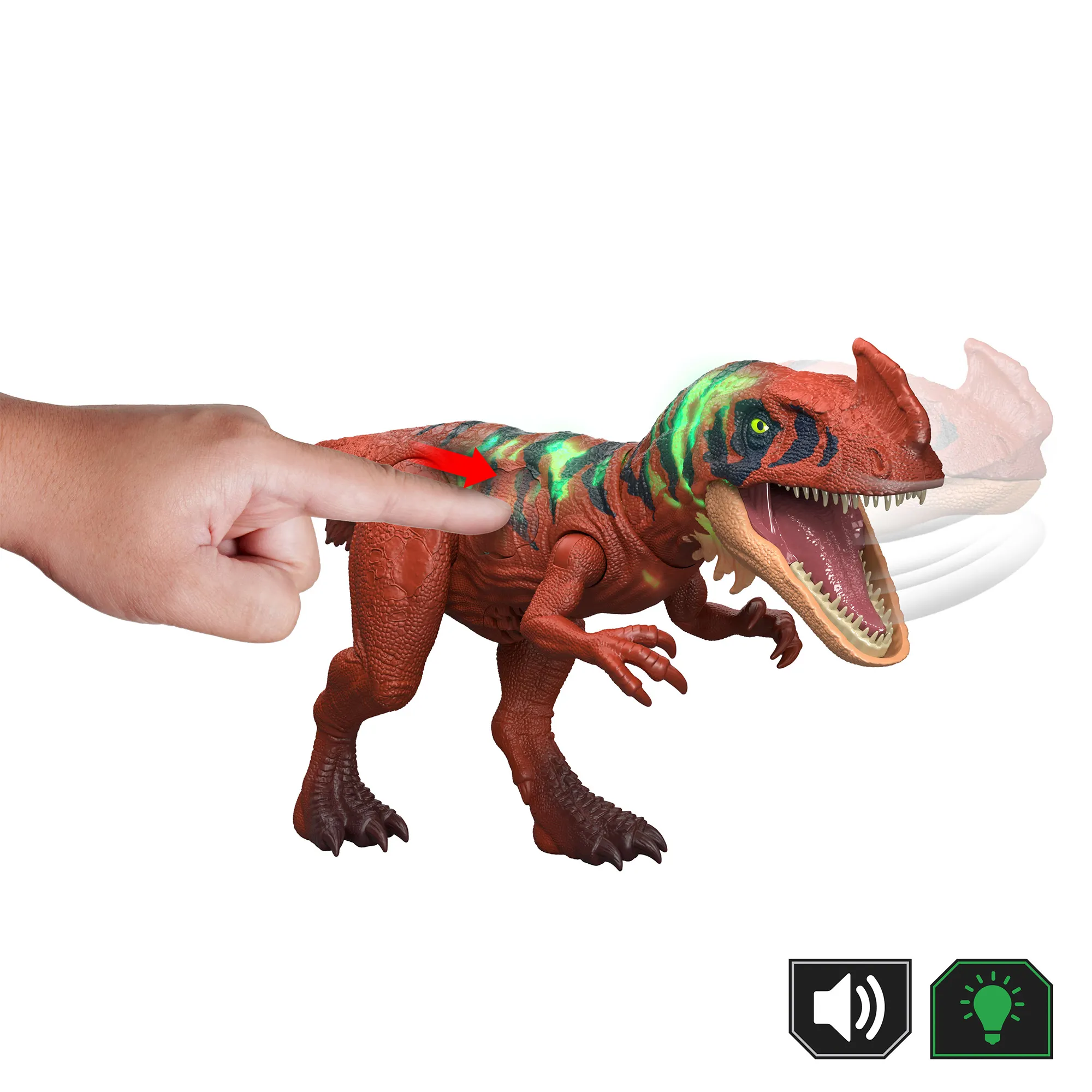
✓ Jaw snap + neck turn✓ Two triggers — side button or neck✓ Unique roaring sounds✓ Green glow from inside the body
As a Wild Roar figure, the action fires either from a button on its side or simply by moving the neck. That triggers a jaw-snapping motion combined with a small turn in the neck, accompanied by roaring sounds unique to this figure.
The best part is the green light-up, which illuminates the body from the inside through the translucent panels. In a dark room it looks, frankly, insane.
At a Glance
Should You Buy It?
Yes. It is the first Afrovenator Mattel has ever produced, the sculpt is one of the most detailed in the Survival line, and the crisp scale painting over that texture is the kind of work that usually costs more.
The Wild Roar package is well judged too — the neck doubles as a trigger, the roars are specific to this figure rather than recycled, and the green glow coming through the translucent panels is genuinely one of the better light effects Mattel has done. The only real gripe is the unpainted claws.
✦ What Works
- First ever Mattel Afrovenator
- Exceptionally fine skin texture
- Vibrant, crisp scale painting
- Green glow lights the body from inside
- Translucent panels serve the theme too
- Action fires from the button or the neck
- Roaring sounds unique to this figure
- Snout crest and throat skin add character
✦ What Doesn't
- Claws left unpainted, again
- Debuts already mutated — no plain version
- Snout crest is pure invention
About the Afrovenator
“This is the Afrovenator, or ‘African Hunter.’ We’ve… ‘enhanced’ this one for the Survival line. That random crest on its nose? That’s for… intimidation. The extra skin on its throat? Also for intimidation. The fact that it glows green? …That’s just so you don’t trip over it in the dark.”
— Jurassic World Park Staff (probably)
Afrovenator — the name means “African hunter” and is said af-row-ven-uh-tor — was a megalosaurid theropod from the Middle Jurassic of Niger, described in 1994 from a single remarkably complete skeleton found in the Saharan sandstone of the Tiouraren Formation. That completeness is why it matters: African theropods of its age are mostly known from scraps, and Afrovenator is one of the few that can be reconstructed with confidence.
At around 7 to 8 metres (23 to 26 feet) long and roughly 1,000 kg (2,200 pounds), it was a lightly built, long-legged predator — closer in build to Torvosaurus’ family than to the bulkier tyrannosaurs. It had no nasal crest and no throat wattles; those are the Survival line’s contribution, as the quote above cheerfully admits.
How to Unlock Afrovenator
How do you unlock Afrovenator in the Jurassic World Survival collection?
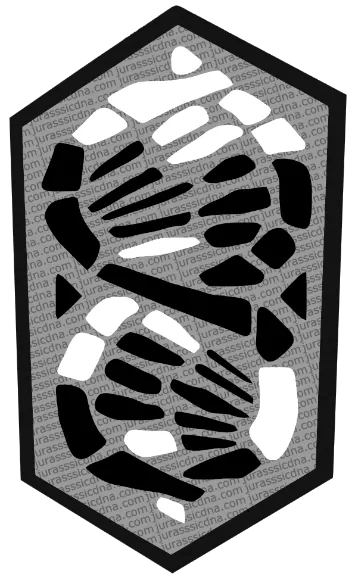
Open your Jurassic World Play App (previously the Jurassic World Facts App), press the Scan button and point it at the DNA code below.
Jurassic World Survival — Afrovenator Wild Roar DNA Scan Code
Gallery
Frequently Asked Questions
It triggers a jaw-snapping motion combined with a small turn in the neck, accompanied by roaring sounds unique to this figure and a green light-up that illuminates the body from the inside through translucent panels. It fires either from a button on the side or by moving the neck.
Yes. This is the first time Afrovenator has appeared in the Mattel Jurassic World toy lineup at all — and unusually, it debuts already mutated, since the Survival line gives every dinosaur exaggerated features.
The main body is a reddish tone with dark bluish-grey spots and patterns across the face and back. The feet are dark brown. Parts of the plastic are left translucent so the green light-up effect can shine through them.
No. The nasal crest and the loose skin under the throat are Survival-line additions. The real Afrovenator was a megalosaurid theropod from the Middle Jurassic of Niger, described in 1994 from an unusually complete skeleton, and had neither feature.
Open the Jurassic World Play App, tap the Scan button, and point it at the DNA barcode on the figure or at the code shown on this page.