
Home › Jurassic World Rebirth › Spinosaurus Tail Thrasher
Tail Thrasher Figure Guide
Spinosaurus Tail Thrasher
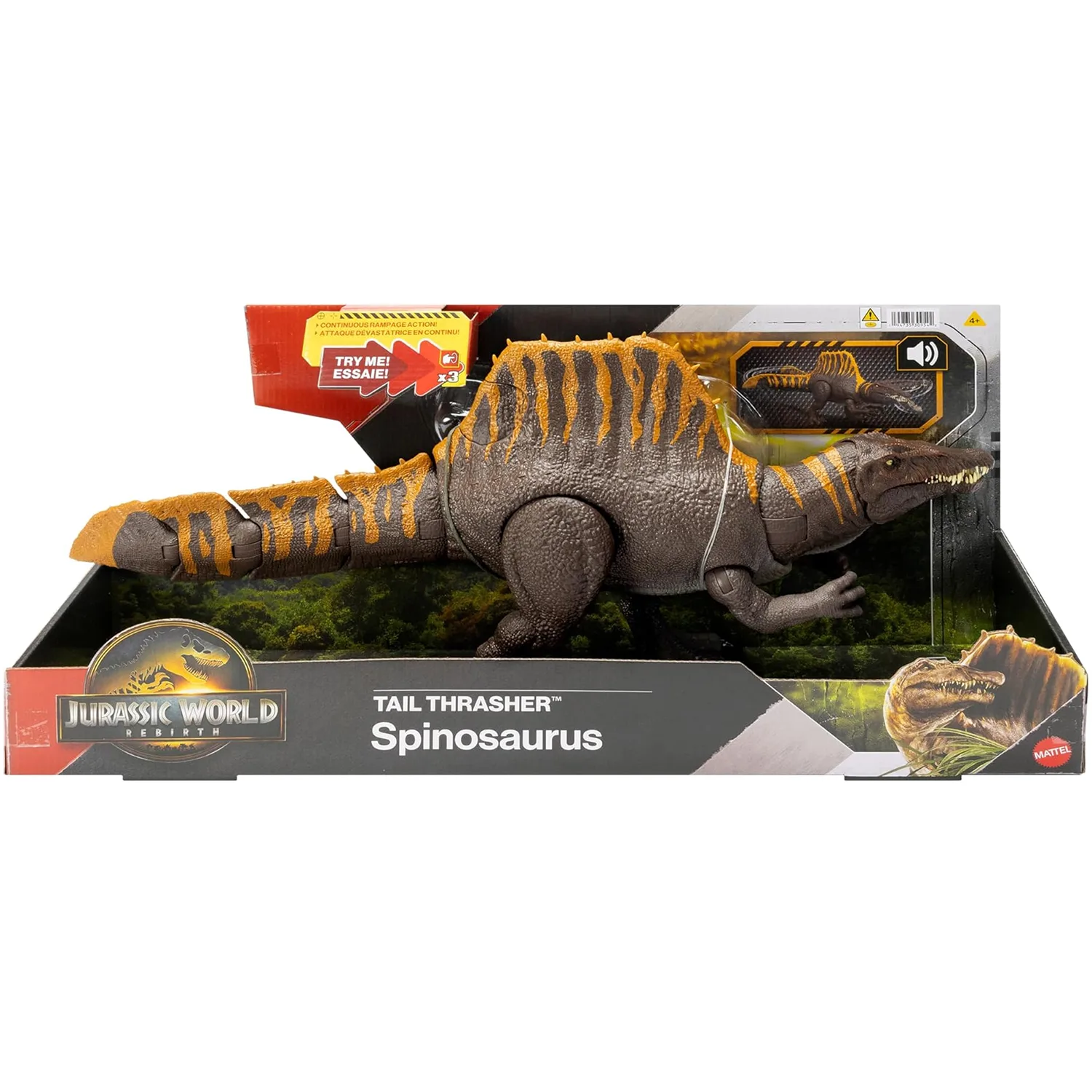
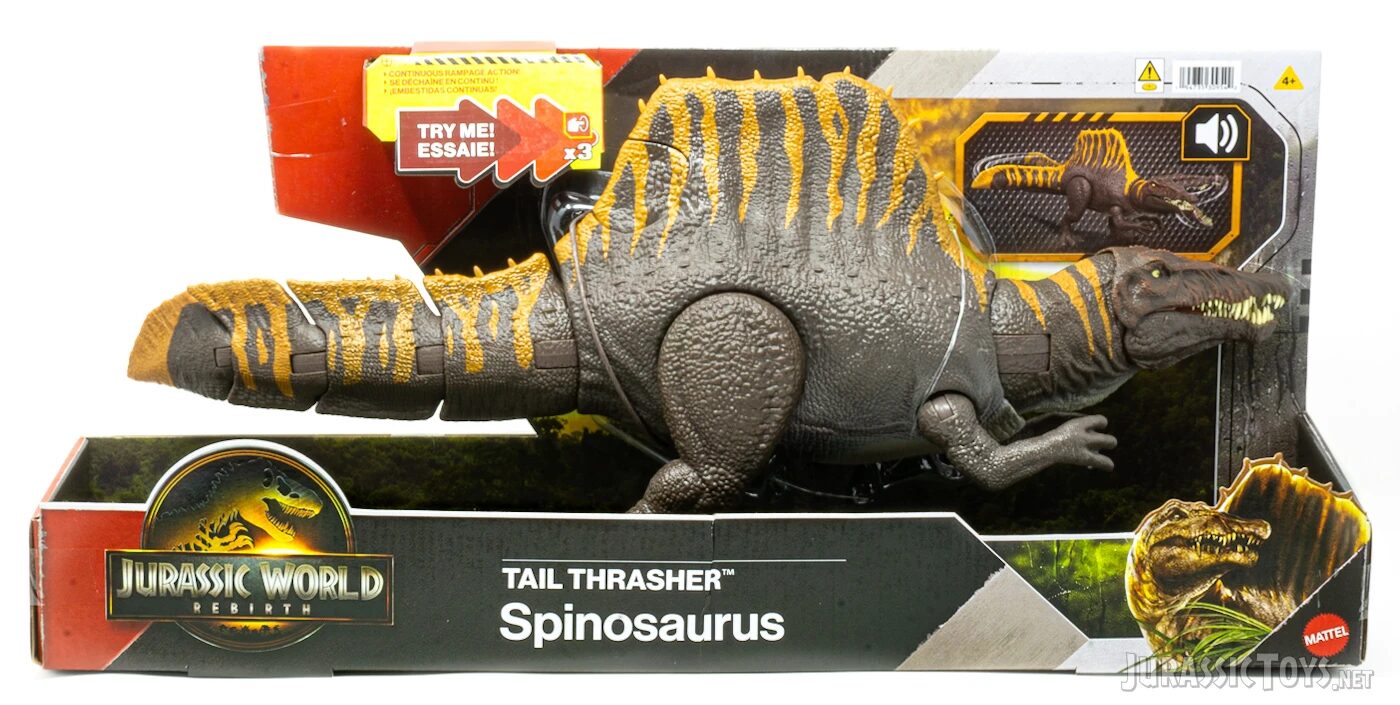
The Tail Thrasher Spinosaurus is the mainline showcase figure for Jurassic World Rebirth: much bigger than the Danger Set version, heavier than you expect, and packed with a dual action feature that sweeps the head and tail side to side with sounds. The face detail, the yellow striping that runs the full length of the body and the skin texture make it one of the most fully painted large Mattel figures in recent years. Here is what the figure looks like and how to unlock it in the Jurassic World Play App.
Rebirth showcase SpinoSoundsHead and tail sweep🧬 DNA scan code
Head to Head: Danger Set vs Tail Thrasher
Placed side by side, the two Rebirth Spinosaurus figures read as different animals.
The Tail Thrasher has full multi-joint tail articulation, though the tail seams are visible.
What Is Tail Thrasher?
Tail Thrasher is the large electronic Spinosaurus of the Jurassic World Rebirth line. Press the button on the sail and the head and tail sweep side to side with chomping sounds.
It forms the large Rebirth trio with the Lab Lockdown and Power Devour T. rex.
Paint and Colours
Body, legs and tail
Stripes from head to tail tip
Belly and throat
Teeth
A darker, richer body than the Danger Set Spino, with yellow striping that runs the full length of the body, all the way to the tail tip.
Sculpt and Detail
Head and crest
The head follows the film Spinosaurus well, with small crest-like structures above the eyes and clearly sculpted nostrils.
Sail and tail
A tall sail with plenty of fine detail, and a multi-joint tail.
Figure vs fossil
Action Features and Articulation
✓ Head and tail sweep✓ Chomping sounds✓ Multi-joint tail✗ Weak leg articulation
Press the button on the sail and the head and tail sweep side to side at the same time, with chomping sounds. The tail has full multi-joint articulation. The leg articulation is genuinely disappointing.
Size and Specs
For ages 4 and up, in a Jurassic World Rebirth branded box. Batteries needed for the sounds.
Is It Worth Buying?
The Tail Thrasher is the Rebirth Spinosaurus to get if you want one big showcase figure: large, heavy, fully painted and fun to play with.
Apart from the legs, everything earns a strong recommendation.
What we like
- Big, heavy showcase figure
- Yellow stripes head to tail
- Dual head and tail sweep
- Chomping sounds
Good to know
- Disappointing leg articulation
- Visible tail seams
- Needs batteries
About Spinosaurus
Spinosaurus aegyptiacus was named in 1915 by Ernst Stromer from fossils found in Egypt, which were destroyed in a bombing raid in 1944.
It lived in the mid Cretaceous, about 100 to 94 million years ago, along the rivers of North Africa, and was about 14 m long.
It was a spinosaurid with a tall sail on its back, a long crocodile-like snout and a diet of fish. Recent research shows it spent a lot of time in water.
How to Unlock Spinosaurus in the Jurassic World Play App
Open the Jurassic World Play App (it used to be called the Jurassic World Facts App), tap Scan and point your camera at the DNA code below.
Frequently Asked Questions
JGB57.
Press the button on the sail and the head and tail sweep side to side with sounds.
Yes, much larger and heavier.
Yes, for the sounds.
Spine lizard.
Open the Jurassic World Play App, tap Scan and point your camera at the DNA code on the figure or at the copy on this page.