

Home › Jurassic World Epic Evolution › Majungasaurus Wild Roar
Wild Roar Figure Guide
Majungasaurus Wild Roar
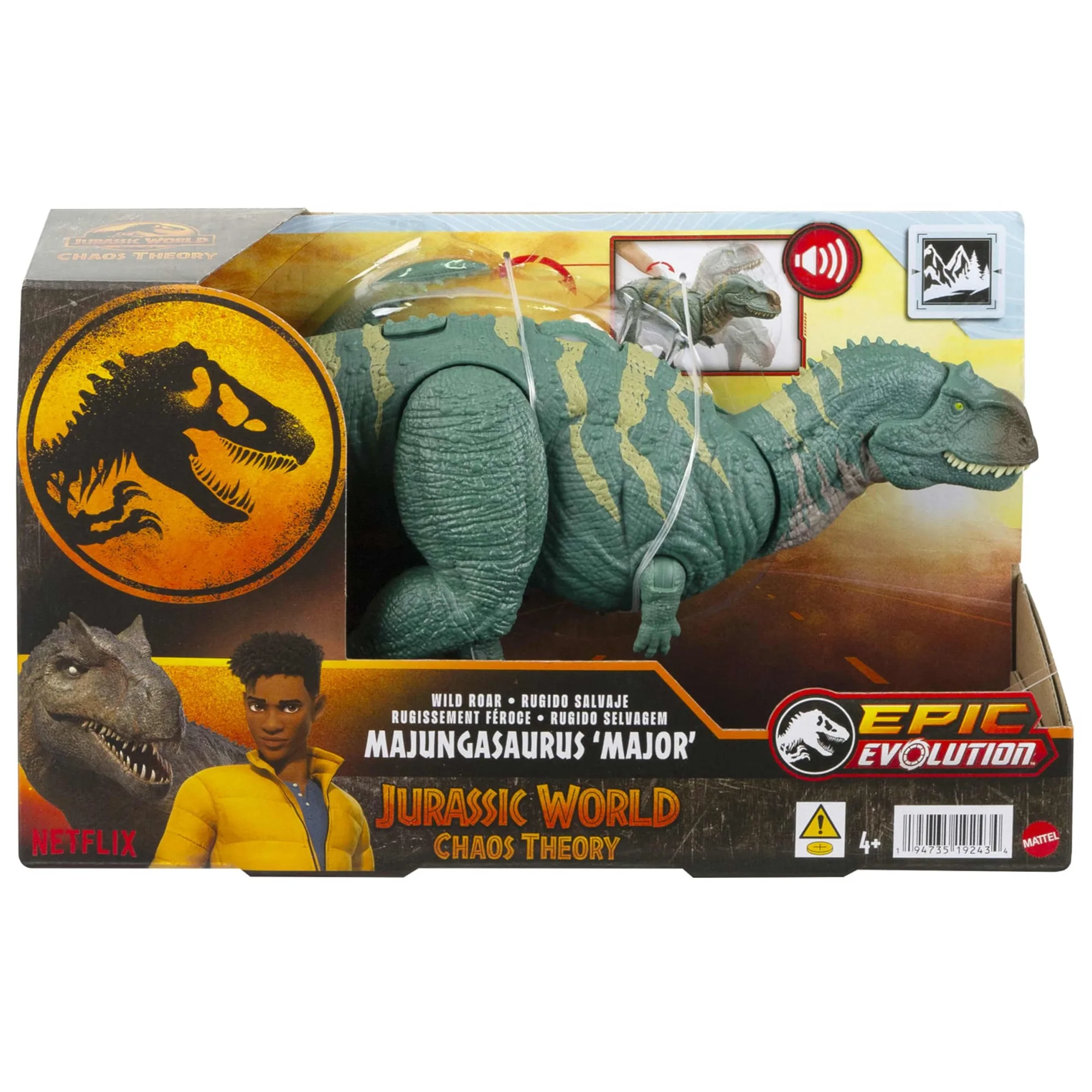
Majungasaurus was the top predator of Late Cretaceous Madagascar, and its bones carry tooth marks from other Majungasaurus. Mattel added it to the second Wild Roar wave of Jurassic World Epic Evolution, named Majungasaurus Major on the box, as a teal figure with pale stripes, a roar sound and an attack motion. Here is what the figure looks like, the cannibal evidence, and how to unlock it in the Jurassic World Play App.
Island predatorRoar soundAttack motion🧬 DNA scan code
Forensic File: Cannibal Evidence
Bones from Madagascar show that Majungasaurus sometimes ate other Majungasaurus.
It is one of the clearest cases of cannibalism known in dinosaurs, though the animals may have been scavenging dead relatives rather than hunting them.
What Is Wild Roar?
Wild Roar is the mid-sized assortment of Mattel’s Epic Evolution line. Each figure has a roaring sound, an attack motion and movable joints, and runs on small button cell batteries. Like every Epic Evolution figure, it comes with a DNA code that unlocks the animal in the Jurassic World Play App.
Majungasaurus came in the second Wild Roar wave of Epic Evolution, alongside Ceratosaurus, Parasaurolophus and Pachyrhinosaurus.
Paint and Colours
Body, legs and tail
Stripes on the back and tail
Head and snout
Bump on top of the head
A cool, ocean-island scheme. Majungasaurus is teal all over with pale blue stripes across the back and tail. The head is darker, with a red bump on top of the skull.
Sculpt and Detail
Head and horn
The skull is short and deep with a single knob on top, typical of Majungasaurus, and an opening jaw.
Arms and legs
The arms are tiny, the legs are short and powerful, and the tail is thick.
Figure vs fossil
Action Features and Articulation
✓ Roar sound✓ Attack motion✓ Movable joints✗ Sound needs batteries
Like every Wild Roar figure, Majungasaurus roars when you trigger it and swings into an attack motion. It has posable limbs and runs on small button cell batteries.
Size and Specs
Mid-sized figure for ages 4 and up, sold as Majungasaurus Major. Look for the Epic Evolution logo and the teal body.
Is It Worth Buying?
Majungasaurus is a strong, stocky predator with an accurate head knob and a cool teal colour. A great alternative to the usual big carnivores.
It came out in the second Epic Evolution Wild Roar wave.
What we like
- Accurate head knob
- Cool teal paint
- Roar and attack
- Tiny arms done right
Good to know
- Needs batteries for sound
- Smaller than big theropods
- Box name Major may confuse
About Majungasaurus
Majungasaurus was named in 1955 by Rene Lavocat, from fossils found in the Mahajanga region of Madagascar. The name means Mahajanga lizard.
It lived in the Late Cretaceous, about 70 to 66 million years ago. It was about 6 to 7 m long and weighed around 1.1 tonnes.
Majungasaurus was an abelisaurid, related to Carnotaurus. It had a short, deep skull and very short arms.
How to Unlock Majungasaurus in the Jurassic World Play App
Open the Jurassic World Play App (it used to be called the Jurassic World Facts App), tap Scan and point your camera at the DNA code below.

Frequently Asked Questions
It roars and swings into an attack motion.
Yes, small button cell batteries power the roar.
Tooth marks on its bones match its own teeth, so it fed on its own kind, at least by scavenging.
About 6 to 7 m long and around 1.1 tonnes.
On the island of Madagascar.
Open the Jurassic World Play App, tap Scan and point your camera at the copy of the code on this page.