
Home › Jurassic World Epic Evolution › Parasaurolophus Wild Roar
Wild Roar Figure Guide
Parasaurolophus Wild Roar
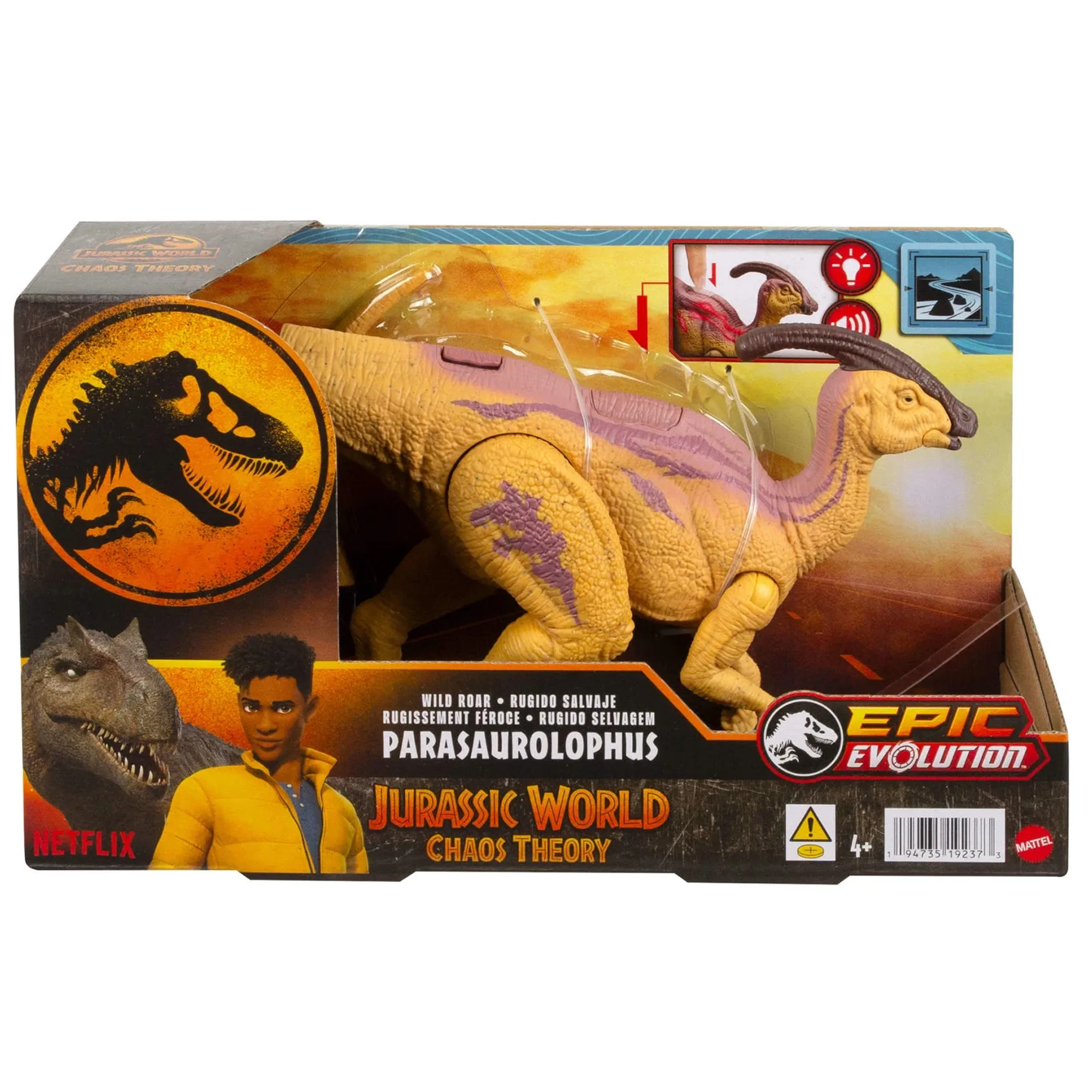
Parasaurolophus is the duck-billed dinosaur with the long, curved tube on its head, and that crest may have worked like a trumpet. Mattel added it to the second Wild Roar wave of Jurassic World Epic Evolution as a golden-yellow figure with a pink back and crest, a sound and an attack motion. Here is what the figure looks like, how the crest made sound, and how to unlock it in the Jurassic World Play App.
Crested duckbillCall soundAttack motion🧬 DNA scan code
Sound Lab: The Trumpet Crest
The Parasaurolophus crest was hollow, with air tubes running from the nose up into the crest and back.
The calls may have helped herds keep in touch, and the crest itself was probably also a display.
What Is Wild Roar?
Wild Roar is the mid-sized assortment of Mattel’s Epic Evolution line. Each figure has a roaring sound, an attack motion and movable joints, and runs on small button cell batteries. Like every Epic Evolution figure, it comes with a DNA code that unlocks the animal in the Jurassic World Play App.
Parasaurolophus came in the second Wild Roar wave of Epic Evolution, alongside Ceratosaurus, Pachyrhinosaurus and Majungasaurus.
Paint and Colours
Body, legs and tail
Back and crest
Squiggly markings on the back
Crest tip
A soft, sunny scheme. The body is golden yellow, while the back, neck and crest are pink with purple squiggles. The crest darkens to a deep red at the tip.
Sculpt and Detail
Head and crest
The long, curved crest sweeps back from the head, and the duck-like beak can open.
Body and legs
Parasaurolophus stands on strong back legs with shorter arms that could also touch the ground. The tail is long and deep.
Figure vs fossil
Action Features and Articulation
✓ Call sound✓ Attack motion✓ Movable joints✗ Sound needs batteries
Like every Wild Roar figure, Parasaurolophus makes a sound when you trigger it and swings into an attack motion. It has posable limbs and runs on small button cell batteries.
Size and Specs
Mid-sized figure for ages 4 and up. Look for the Epic Evolution logo and the yellow body with a pink crest.
Is It Worth Buying?
Parasaurolophus is a fan favourite and this version has a lovely colour scheme and a sound feature. A great plant eater to balance out the predators.
It came out in the second Epic Evolution Wild Roar wave.
What we like
- Classic crested duckbill
- Pretty yellow and pink paint
- Sound and attack
- Great herd animal
Good to know
- Needs batteries for sound
- Plant eater with an attack motion
- Several other versions exist
About Parasaurolophus
Parasaurolophus was named in 1922 by William Parks from a skeleton found in Alberta, Canada. The name means near crested lizard.
It lived in the Late Cretaceous, about 76 to 73 million years ago, in western North America. It was about 9.5 m long and weighed around 2.5 tonnes.
Parasaurolophus was a hadrosaur, a duck-billed plant eater. Its hollow crest may have been used for calls and display.
How to Unlock Parasaurolophus in the Jurassic World Play App
Open the Jurassic World Play App (it used to be called the Jurassic World Facts App), tap Scan and point your camera at the DNA code below.

Frequently Asked Questions
It makes a sound and swings into an attack motion.
Yes, small button cell batteries power the sound.
It was hollow and may have worked like a trumpet for calls, as well as a display.
About 9.5 m long and around 2.5 tonnes.
Near crested lizard.
Open the Jurassic World Play App, tap Scan and point your camera at the copy of the code on this page.