
Home › Jurassic World Epic Evolution › Lystrosaurus Danger Pack
Danger Pack Figure Guide
Lystrosaurus Danger Pack
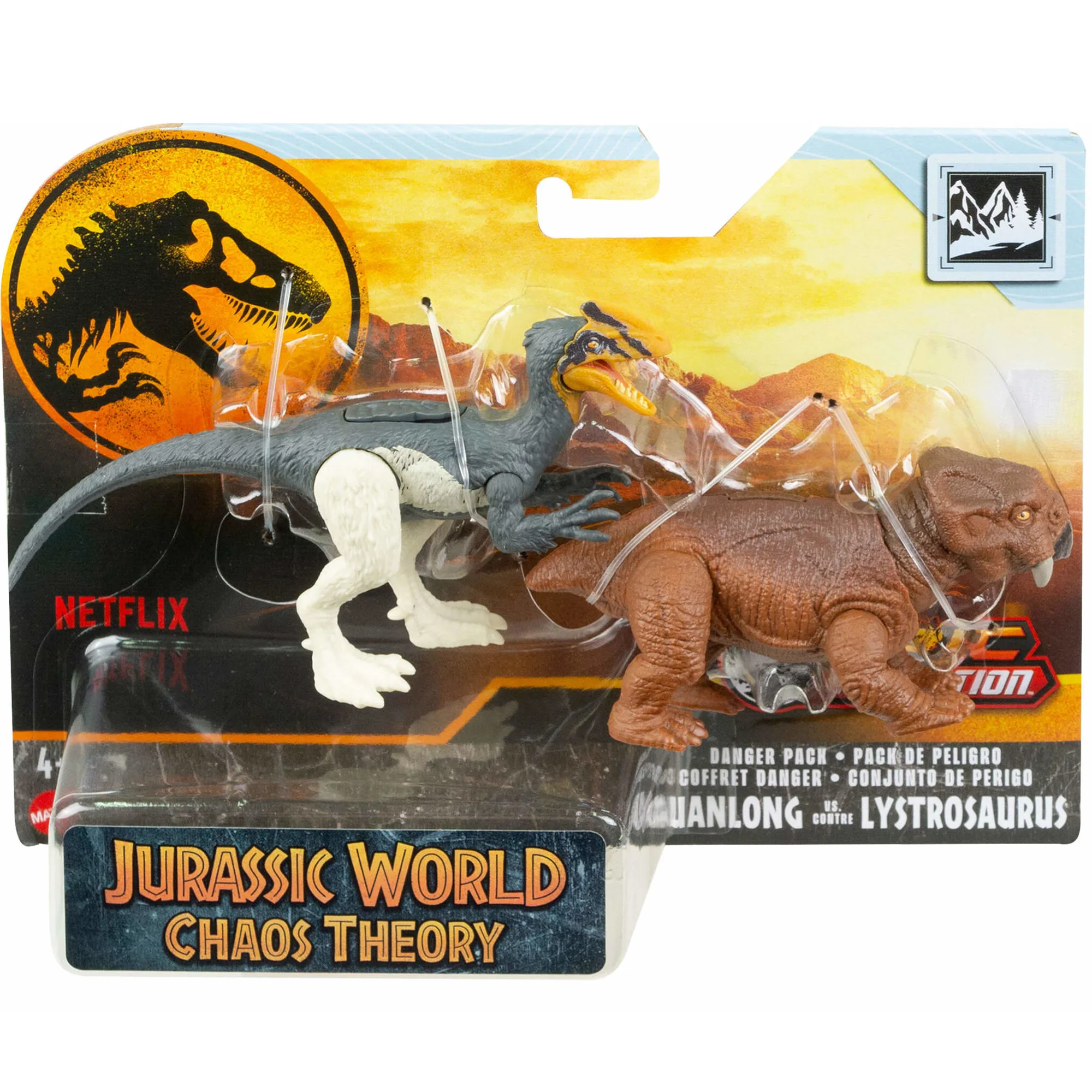
Lystrosaurus is not a dinosaur but a tusked, pig-sized relative of mammals, and one of the great survivors in the history of life. In Jurassic World Epic Evolution it comes in the Guanlong vs Lystrosaurus Danger Pack, a two-pack from the third wave in 2024, as a small reddish-brown figure with two tusks. Here is what the figure looks like, how Lystrosaurus survived the end of the Permian, and how to unlock it in the Jurassic World Play App.
Mammal relativeTusksNo batteries🧬 DNA scan code
Survivor Report: The Great Dying
About 252 million years ago, most life on Earth was wiped out. Lystrosaurus made it through.
Its fossils in Antarctica helped show that the southern continents were once joined together.
What Is Danger Pack?
Danger Pack is the smaller, battery-free assortment of Mattel’s Epic Evolution line, the 2024 follow-up to Dino Trackers. The figures have movable joints and a DNA code that unlocks the animal in the Jurassic World Play App, but no sounds or motorised attacks.
Lystrosaurus came in the third Danger Pack wave of 2024 in a two-pack with Guanlong, alongside Apatosaurus, Gallimimus and a repack of the Velociraptor. Wave 3 boxes carry Jurassic World Chaos Theory branding from the Netflix series.
Paint and Colours
Body and legs
Back and head
Tusks
Eyes
Simple and earthy. Lystrosaurus is a warm reddish brown all over, slightly darker on the back and head, with two cream tusks pointing down from the upper jaw.
Sculpt and Detail
Head and tusks
The head is short and blunt with a beak and two tusks. The face is sculpted with wrinkles and folds.
Body and legs
The body is barrel-shaped and low to the ground on four short, sprawling legs, with a stubby tail.
Figure vs fossil
Action Features and Articulation
✓ Small and sturdy✓ Tusks sculpted on✓ No batteries needed✗ No articulation to speak of
Lystrosaurus is the small bonus figure in the two-pack. It is a solid, simple sculpt with no electronics.
Size and Specs
Sold in the Guanlong vs Lystrosaurus two-pack with Chaos Theory branding, for ages 4 and up.
Is It Worth Buying?
Lystrosaurus is a very rare animal to see as a toy, and a great way to show kids that life before dinosaurs was full of strange creatures. As a figure it is small and simple, so it works best as part of the two-pack.
It came out in 2024 in the third Danger Pack wave.
What we like
- Very rare animal as a toy
- Great survival story
- Comes with Guanlong
- No batteries
Good to know
- Not a dinosaur
- Small, simple figure
- Little or no posing
About Lystrosaurus
Lystrosaurus was named in 1870 by Edward Drinker Cope. The name means shovel lizard, after its blunt, shovel-like face.
It lived from the latest Permian into the Early Triassic, about 255 to 248 million years ago, and was about 1 m long, roughly the size of a pig.
Lystrosaurus was a dicynodont, a plant-eating synapsid. Synapsids are the group that later gave rise to mammals, so Lystrosaurus is a distant cousin of us.
How to Unlock Lystrosaurus in the Jurassic World Play App
Open the Jurassic World Play App (it used to be called the Jurassic World Facts App), tap Scan and point your camera at the DNA code below.

Frequently Asked Questions
No. It is a dicynodont, a synapsid related to the ancestors of mammals.
The Guanlong vs Lystrosaurus Danger Pack, a two-pack from the third wave in 2024.
About 1 m long, roughly the size of a pig.
It survived the end-Permian mass extinction and became one of the most common land animals afterwards.
Plants, which it cropped with its beak.
Open the Jurassic World Play App, tap Scan and point your camera at the copy of the code on this page.