
Home › Jurassic World Survival › Pteranodon Wild Roar
Wild Roar Review
Pteranodon Wild Roar Jurassic World Survival Review
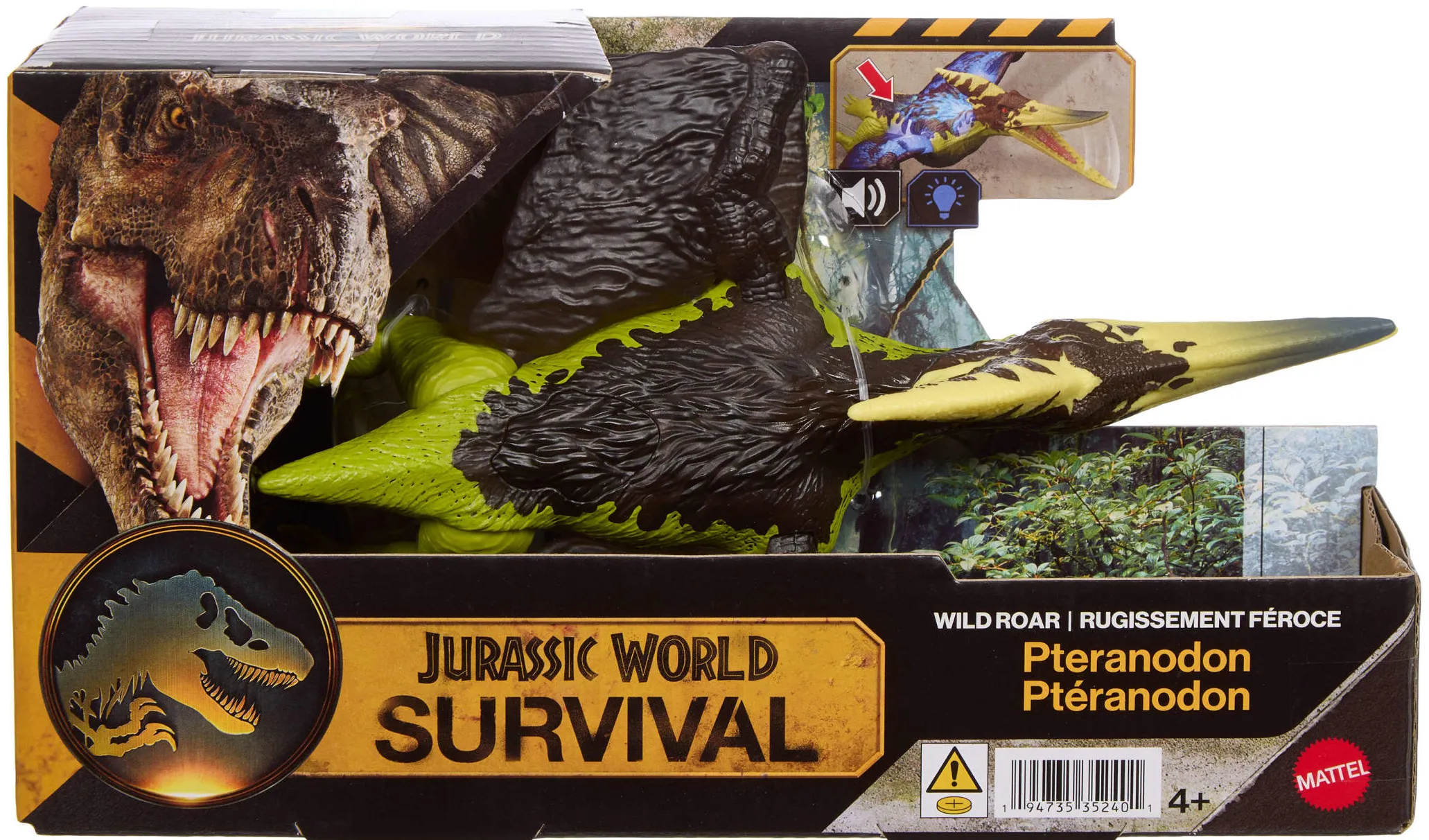
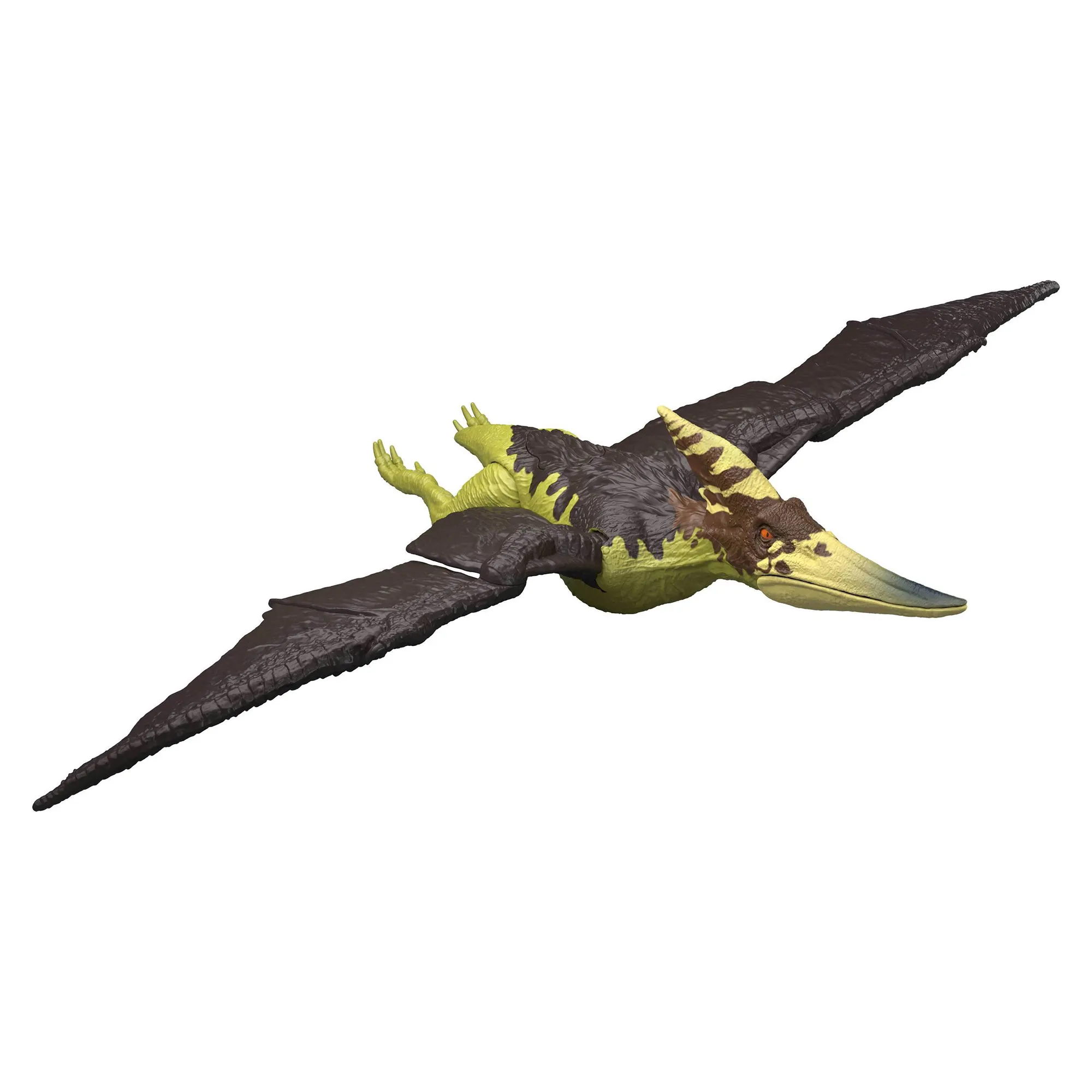
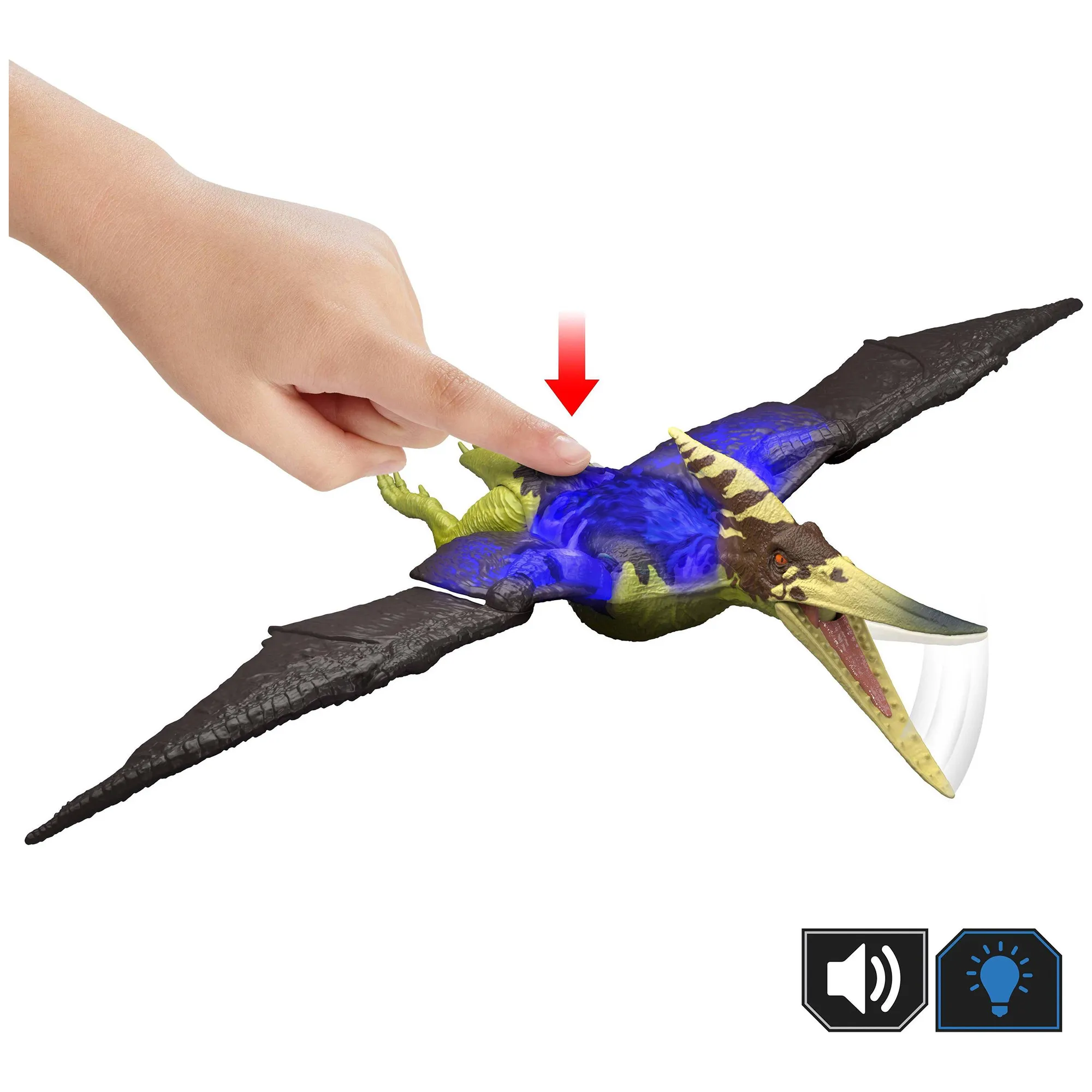
The Survival theme screams at you from the first look. A long, toxic-yellow head crest, translucent wing membranes, a detailed sculpt that puts most recent Mattel releases to shame — plus jaw snap, pterosaur screams and a blinking light that glows from inside the body.
Sounds + blinking lightTranslucent wing membranesToxic-yellow head crestMattel · 2026Scan code included
About the Wild Roar Line
Wild Roar is the sound-and-light sub-line within Jurassic World Survival: one button on the back drives a jaw motion, a set of species-appropriate calls, and a light effect. The Survival treatment then adds mutated proportions and colour on top.
What stands out here is the sculpting effort. Personally I was getting tired of the recycled models in the most recent series, where you needed a wild imagination to spot the differences from previous releases. The Survival line has largely broken that habit, and this Pteranodon is one of the better arguments for it.
Paint & Colour Scheme
The paint job is genuinely colourful. There is a beautiful fade from dark up into a toxic bright yellow, which also carries onto the lower jaw and parts of the crest. Across the face and crest those yellows mix with brown, which stops the whole thing turning into one flat block of highlighter.
The mutated scheme is exceptionally well done and it suits the animal — a pterosaur is exactly the kind of creature you would expect to advertise itself.
Sculpt & Detail
The Head Crest
The most in-your-face mutated feature is the head crest. Long and toxic yellow, it carries a lot of intricate detail and very dark camouflage markings, and it is the thing that fixes the figure’s identity from across the room.
The figure has also clearly gained some weight compared with previous Pteranodons. It no longer looks like something you could win a bare-handed fight with.
Translucent Wings
The standout material choice is translucent plastic for the wing membranes and the finger bones, which gives them a genuinely distinct look and lets light through the way real pterosaur wing skin would. It is not something Mattel does often at this price.
The rest of the sculpt is packed with fine detail too, from the skin texture on the throat down through the arms.
Wild Roar Features
✓ Jaw snapping motion✓ Several pterosaur screams✓ Blinking light inside the body✓ Wings — flapping or soaring poses✓ One button on the back
Pressing the button on the back fires the full Wild Roar package: a jaw-snapping motion, several pterosaur screams, and a very cool blinking light effect that glows from inside the body. The light is the part worth calling out — it reads far better through the translucent plastic than a surface-mounted LED would.
The wings also have standard articulation, so the figure can be posed mid-flap or locked out in a soaring position.
At a Glance
Should You Buy It?
Yes. This is a phenomenal Pteranodon and one of the strongest figures in the Wild Roar range. The sculpt is genuinely detailed rather than recycled, the translucent wing plastic is a material choice Mattel rarely spends money on at this price, and the crest gives it a silhouette no previous Pteranodon has had.
The three-part feature set — jaw, screams, and a light that glows from inside the body — is well matched to a pterosaur, and the wing articulation means it displays properly whether you want it flapping or gliding. The unpainted foot claws are the only thing to grumble about.
✦ What Works
- Long, detailed toxic-yellow head crest
- Translucent wing membranes and fingers
- Blinking light glows from inside the body
- Several distinct pterosaur screams
- Beautiful dark-to-yellow paint fade
- Fine skin texture on throat and arms
- Wings pose flapping or soaring
- Not a recycled mould
✦ What Doesn't
- Foot claws left unpainted, as always
- Bulkier than a real Pteranodon ever was
- Colours are a long way from naturalistic
About the Pteranodon
“Don’t let the ‘toothless’ part of its name fool you. It’s basically a 20-foot-wingspan seagull with a spear for a face and a terrible attitude. Do not feed, and definitely don’t let it see your car keys.”
— Aviary Keeper, Jurassic World
Pteranodon — the name means “wing without tooth” and is said teh-RAN-oh-don — was a large pterosaur from the Late Cretaceous of North America, living around 86 to 84 million years ago over the Western Interior Seaway. It is one of the best-represented pterosaurs in the fossil record, known from well over a thousand specimens, most of them recovered from the chalk of Kansas.
As the name says, it had no teeth: the long beak was a bare spear, used to snatch fish from the water. Males carried the enormous backward-sweeping head crest that makes the animal instantly recognisable, while females had a much smaller one — one of the clearest cases of sexual dimorphism known in pterosaurs. Wingspans ran from roughly 5.5 to 7.3 metres (18 to 24 feet), and for all that span the animal weighed only 20 to 93 kg (44 to 205 pounds). The Survival figure keeps the crest and the beak and then bulks out the body considerably more than the real animal ever was.
How to Unlock Pteranodon
How do you unlock Pteranodon in the Jurassic World Survival collection?
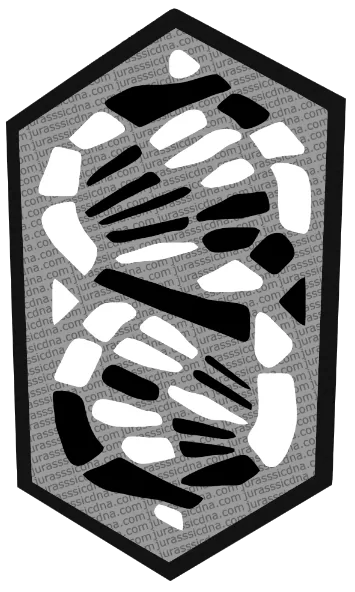
Open your Jurassic World Play App (previously the Jurassic World Facts App), press the Scan button and point it at the DNA code below.
Gallery
Frequently Asked Questions
One button on the back triggers all three features at once: a jaw-snapping motion, several pterosaur screams, and a blinking light effect that glows from inside the body. The wings are separately poseable by hand.
Yes. Mattel used translucent plastic for the wing membranes and the finger bones, which gives them a distinct look and lets light pass through the way real pterosaur wing skin would. It is an unusual material choice at this price point.
There is a fade from a dark base up into a toxic bright yellow, which also appears on the lower jaw and parts of the crest. The face and crest mix those yellows with brown camouflage markings, and the wing membranes and fingers are moulded in translucent plastic.
The huge backward-sweeping crest belonged to males; females had a much smaller one. It is one of the clearest examples of sexual dimorphism known in any pterosaur, and it is why Pteranodon is usually depicted with the large crest — that is the showier half of the species.
Open the Jurassic World Play App, tap the Scan button, and point it at the DNA barcode on the figure or at the code shown on this page.