
Home › Jurassic World Survival › Ceratosaurus Wild Roar
Wild Roar Review
Ceratosaurus Wild Roar
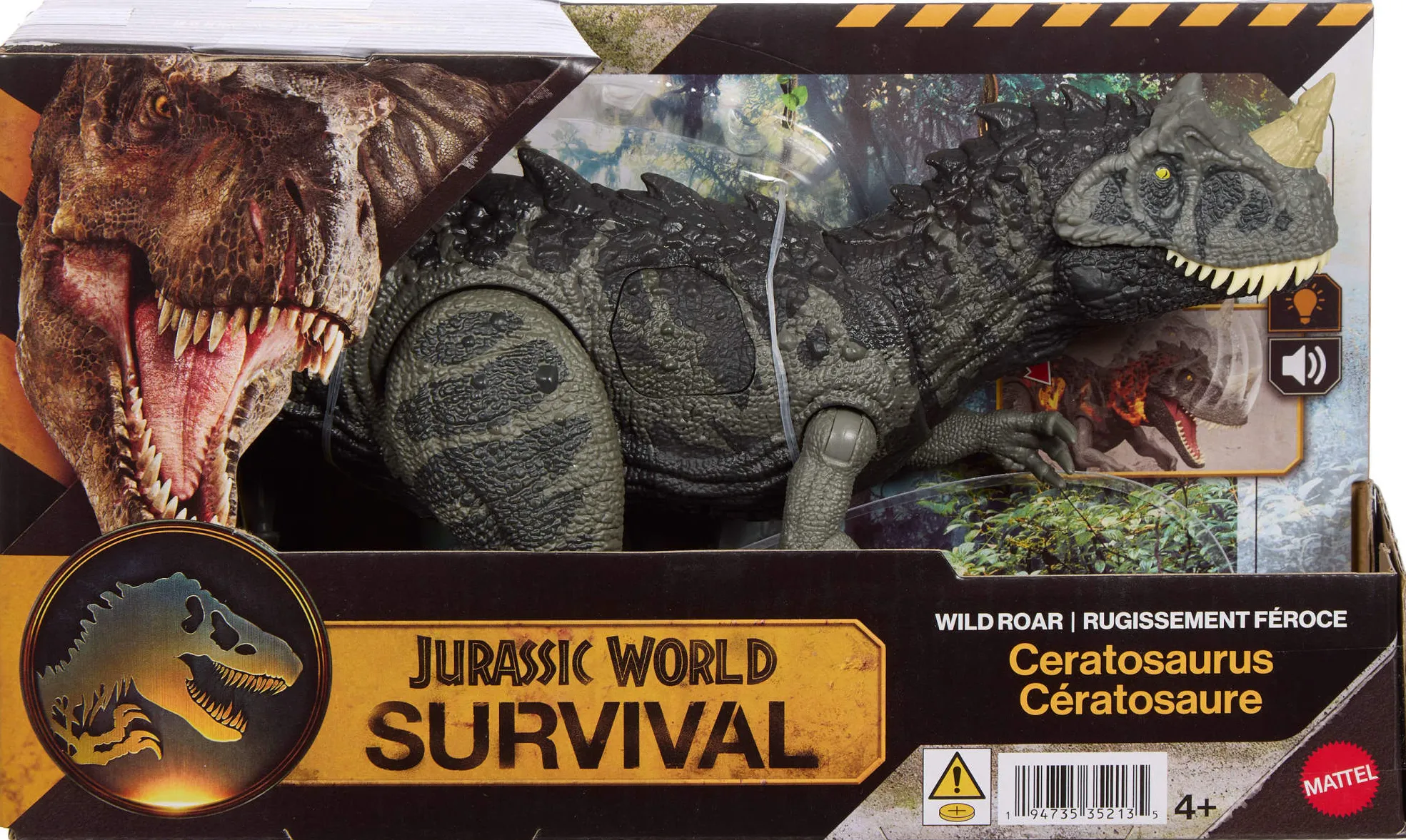
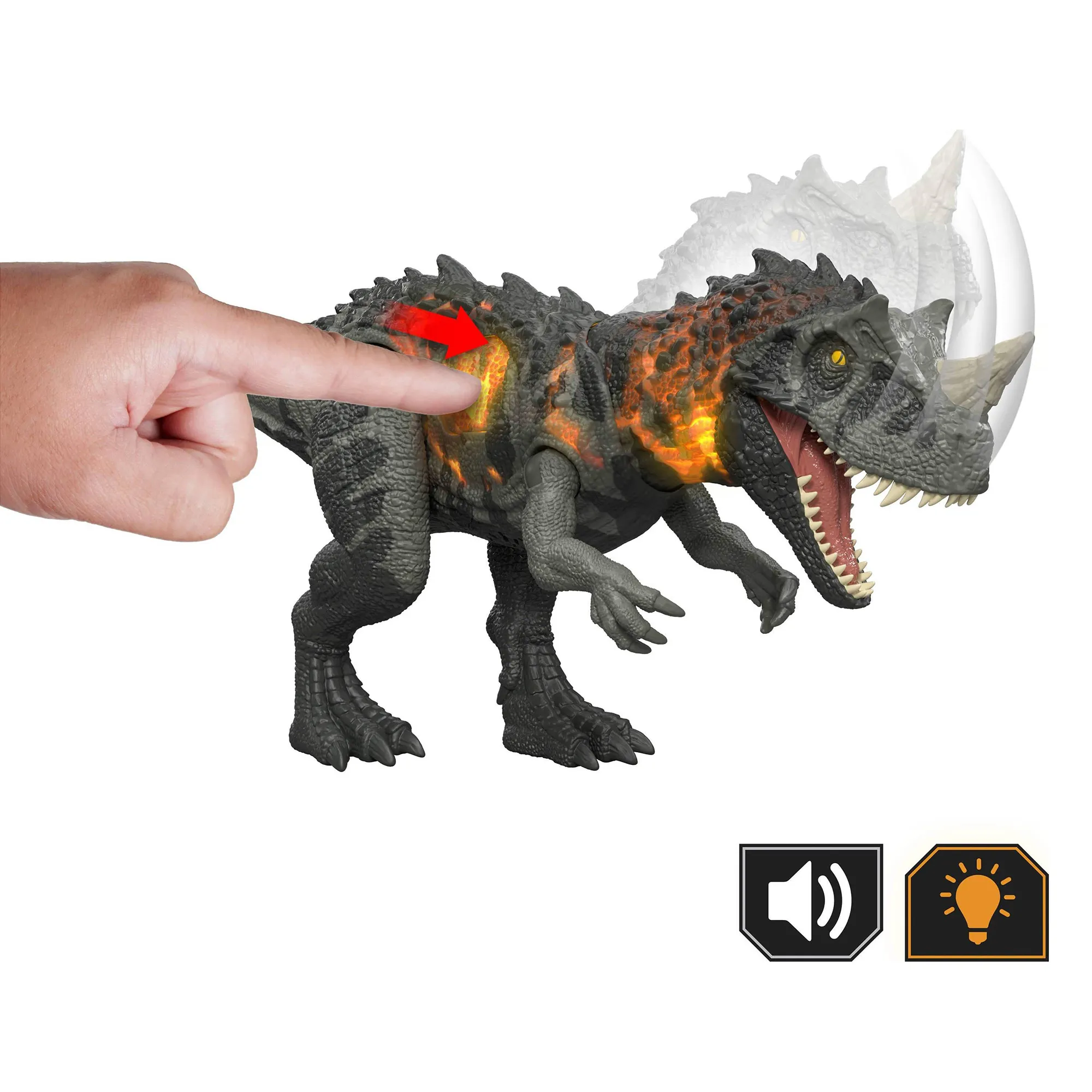
Mattel’s Survival line takes the Ceratosaurus somewhere it has never been before: beefier, more menacing and openly mutated, with a humongous nasal horn and a line of large ridges running down its back. Press the button on its side — or push the head down — and the jaws snap, the roars start and a toxic yellow light glows out of the body.
🎣 Wild Roar sub-line🔊 Roars & sounds💡 Light-up bodyMattel · 2026Scan code included
🦖 A Bigger, Meaner Ceratosaurus
Mattel has made the Ceratosaurus several times over the years, and this Survival release is comfortably the beefiest and most menacing of them all. It is a deliberately mutated take rather than a straight species figure, and the extra bulk is what sells it.
“Now this dinosaur is something special. Well, they’re all special, but this one stands out because of the horns on top of its head. It’s called Ceratosaurus. It kinda looks like a slightly smaller T. rex. But its bite is probably about the same.”
— Claire Dearing
What Is Wild Roar?
Wild Roar is one of several sub-lines inside Jurassic World Survival, sitting alongside Strike Attack, Gigantic Thrashers, Frenzy Pack and the rest. What sets it apart is that these figures are electronic: sound and light are built in, so the action feature is not just a mechanical snap.
On this Ceratosaurus that means snapping jaws, a run of different roars and growls, and a toxic yellow glow that lights up from the side of the body. Other Wild Roar figures on the site include Pteranodon, Afrovenator and Triceratops.
Paint & Colour Scheme
Main body
Body tones
Pattern along the back
Accents that light up
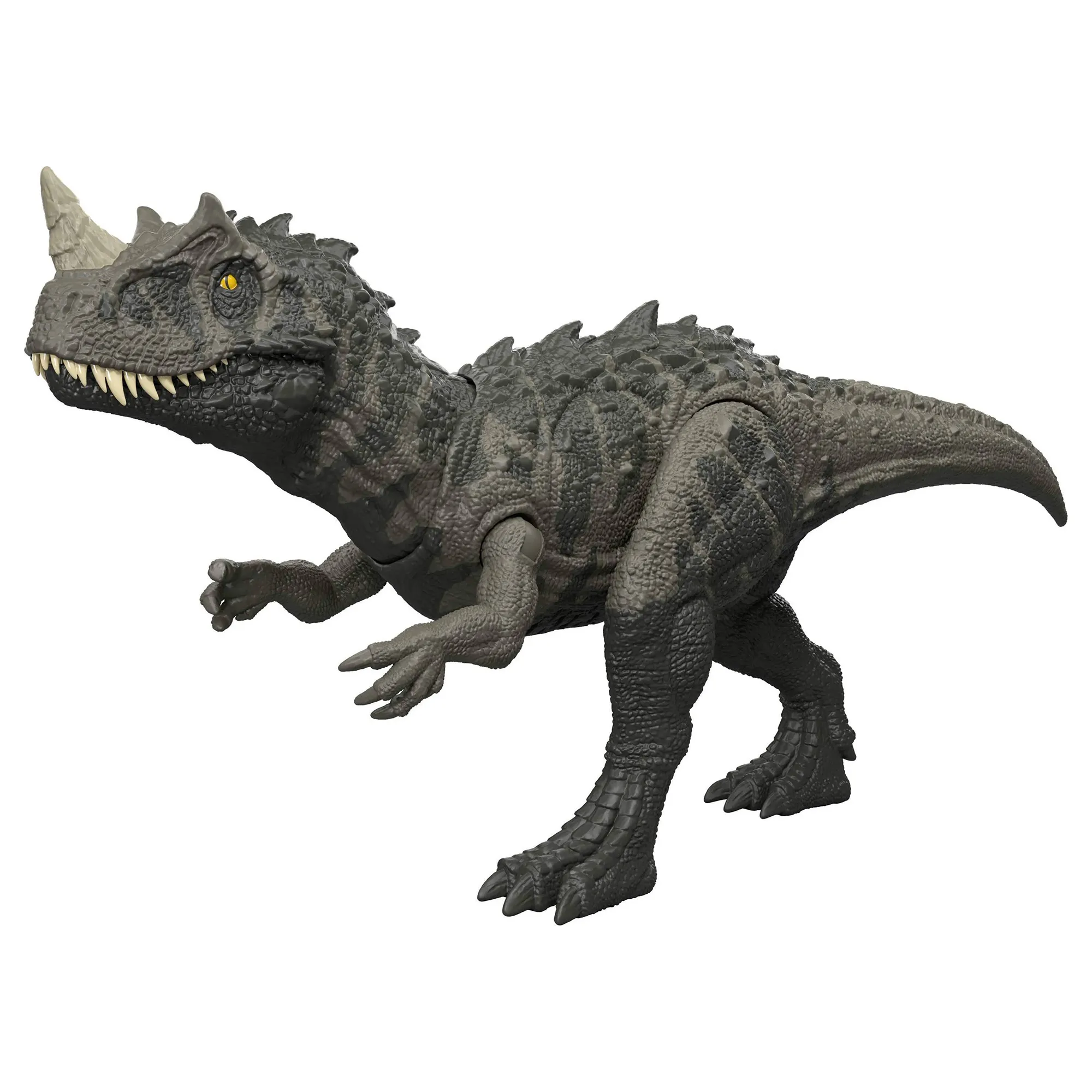
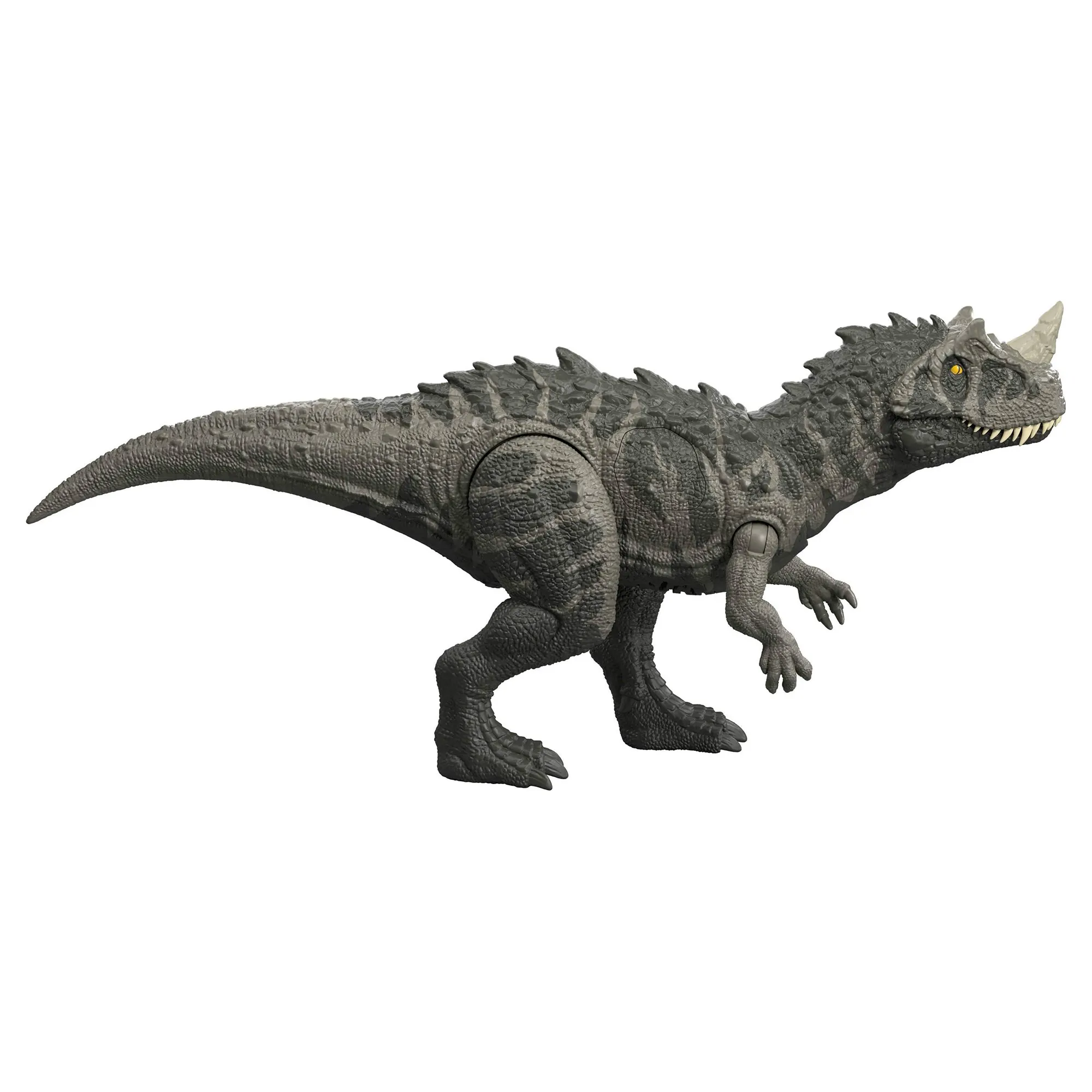
The painting on this toy looks just amazing. The main body is covered in grey and green tones, and over that sits a heavy black pattern that runs the length of the back. It is a darker, dirtier scheme than most of the Survival figures, and it suits a dinosaur being sold as a mutation.
The Sculpt
The horn
The nasal horn is humongously large — far beyond anything the real animal carried — and it is the single detail that gives this figure its character. It is the first thing you notice on the shelf and the reason the mutated angle works rather than looking arbitrary.
Skin and spine ridges
The skin detail is very rough and rugged, and a line of large ridges runs along the spine from the neck to the hips. Together with the extra bulk through the chest and legs, it is what makes this Ceratosaurus read as heavier and more dangerous than any Mattel version before it.
The tail
Action Feature & Controls
✓ Button on the side✓ Press the head down✓ Snapping jaws✓ Several roars and sounds✓ Toxic yellow light-up
There are two ways to set this one off. A button on the side of the body is the obvious one, but pushing the head down works too — which is the more natural way to play with it, and a nice touch. Either input triggers the same sequence: the jaws snap shut, a run of different roars and growls plays, and a toxic-looking yellow light glows out of the side of the body.
Verdict: Should You Buy It?
Yes. This is the best Ceratosaurus Mattel has put out, and it is not close — the bulk, the oversized horn and the rugged skin add up to a figure with real presence, and the paint job is genuinely one of the better ones in the Survival line. The dual activation and the light-up yellow accents give it more play value than the mechanical-only figures. The short tail is the one thing holding it back, and it is a shame, but it is not enough to spoil the rest.
✦ What Works
- Beefiest, most menacing Ceratosaurus Mattel has made
- Humongous nasal horn gives it real character
- Rough, rugged skin with a line of ridges down the spine
- Excellent grey-and-green paint under a heavy black pattern
- Two ways to trigger it: side button or press the head
- Snapping jaws, multiple roars and a toxic yellow light-up
✦ What Doesn't
- The tail is too short for the size of the body
- A mutated take, so not a species-accurate Ceratosaurus
About the Ceratosaurus
Ceratosaurus — the name means “horned lizard” — was a large predatory theropod from the Late Jurassic, best known from the Morrison Formation of the western United States and first described by Othniel Charles Marsh in 1884. It shared its landscape with Allosaurus, and the two are often found in the same quarries.
Its trademark is the blade-like horn on the snout, backed up by a smaller pair of ridges in front of the eyes. The horn was almost certainly for display rather than fighting — it is thin, and the bone underneath is not built to take impact. Ceratosaurus also carried a row of small bony osteoderms down the midline of its back, which is the real feature the Survival figure’s spine ridges are exaggerating.
As this post’s fact file has it, the animal reached roughly 8 metres (26 feet) long and about 3.65 metres (12 feet) tall, weighing in around a tonne. It was a carnivore with unusually long, blade-shaped teeth for its skull size, and a deep, flexible tail that some researchers have argued made it a capable swimmer.
How to Unlock It
How do you unlock the Ceratosaurus Wild Roar in the Jurassic World Survival collection?
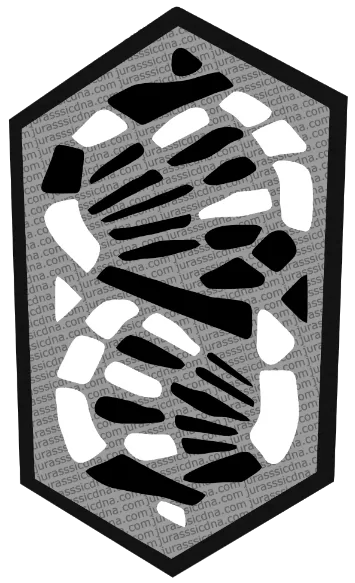
Open up your Jurassic World Play App (previously known as the Jurassic World Facts App), press the Scan button and point it towards the DNA code here:
Frequently Asked Questions
There are two ways. Press the button on the side of the body, or simply push the head down. Both trigger the same sequence: the jaws snap, a run of roars and sounds plays, and a toxic yellow light glows from the side of the body.
The main body is painted in grey and green tones, overlaid with a heavy black pattern that runs along the back. Accents of toxic yellow are scattered across the body, and those are the parts that light up when the action feature fires.
It is much beefier and more menacing than any Mattel Ceratosaurus that came before it. This is a mutated Survival-line take rather than a species-accurate figure, with a far larger nasal horn, rougher skin texture and a line of large ridges along the spine.
One: the tail is too short. On a body of this size it reads more like a failed mutation than a deliberate design choice. Everything else about the sculpt and the paint holds up.
Open the Jurassic World Play App (previously the Jurassic World Facts App), tap the Scan button and point the camera at the DNA code that comes with the figure. The code is also shown in the unlock section above.
Around 8 metres (26 feet) long, roughly 3.65 metres (12 feet) tall and about a tonne in weight. It was a Late Jurassic carnivore from the Morrison Formation, living alongside Allosaurus.