
Review
Archaeornithomimus Jurassic World Rebirth Frenzy Pack Review
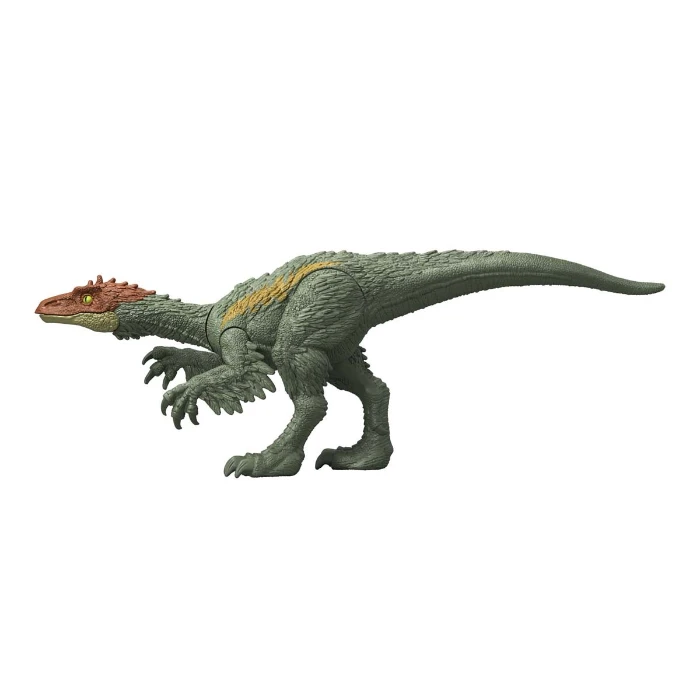
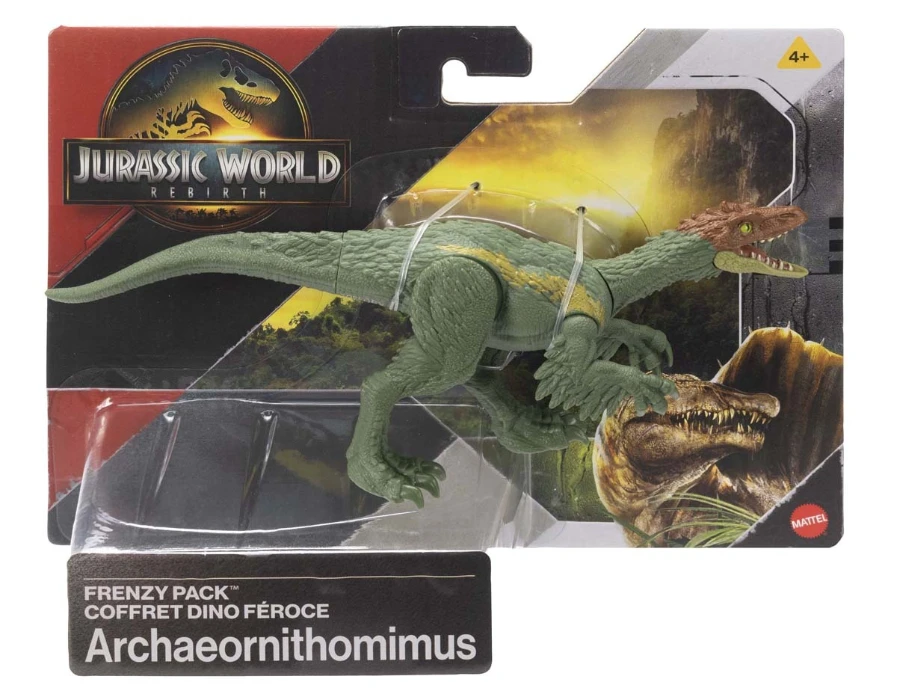
The Mattel's Archaeornithomimus reading is quite controversial to say the least. The sculpt has a striking, almost predatory silhouette with feather detail that is among the finest ever produced at this scale. However, the real animal actually looked quite different than the toy we have here.
⚠️The Size Problem - Addressed Directly
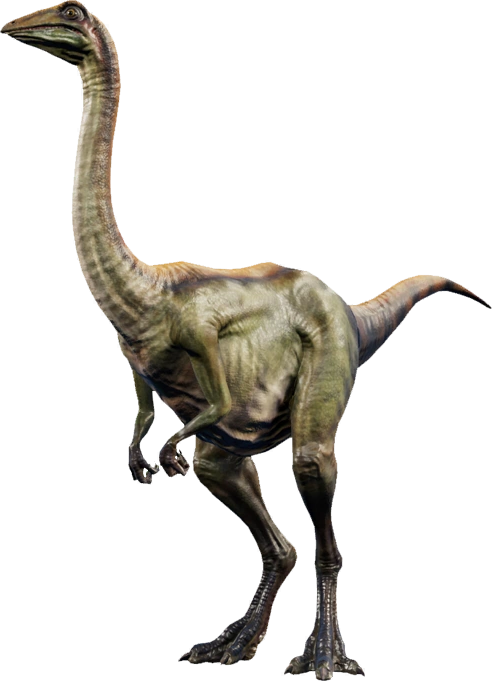
The elephant in the room: The real Archaeornithomimus was an ornithomimosaur, a group of long-legged, small-headed, beaked dinosaurs often compared to modern ostriches or emus. Think Gallimimus or Struthiomimus in body plan: slender legs, a lightly built frame, a toothless beak, and a generally gracile appearance.
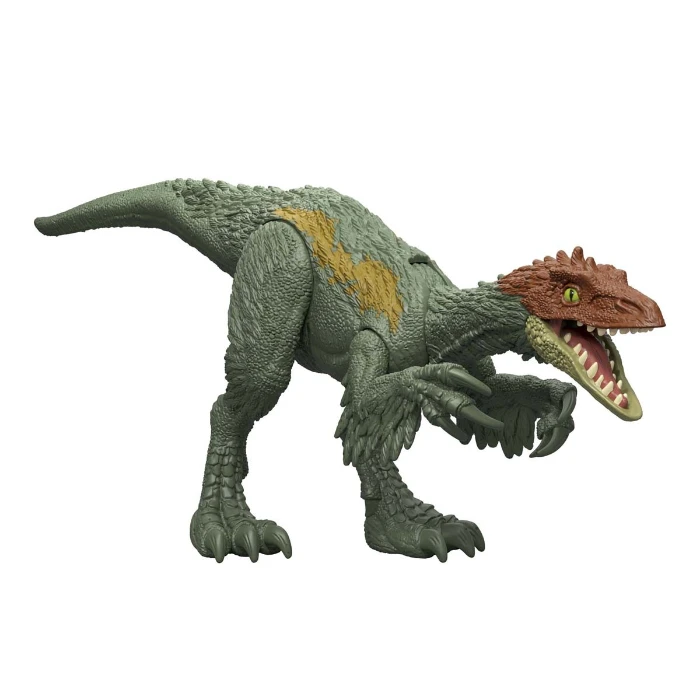
Mattel’s figure gives the species a crouched raptor-like posture, teeth it should not have, enormous hand claws inconsistent with the actual animal, and a head sculpt that resembles nothing in the ornithomimosaur lineage.
The legs are also far too stocky for a group defined by their exceptional slenderness. This is among the more significant departures from reality Mattel has produced in recent years, even by the Jurassic World line’s standards.
That said, Mattel’s Jurassic World figures have never claimed scientific accuracy, and the in-universe logic of hybrid or genetically altered animals gives the line considerable creative latitude. The figure is reviewed here for what it is as a toy, with accuracy concerns documented clearly for collectors who care about them.
A Jurassic World Connection
Archaeornithomimus holds the distinction of being mentioned by name in Jurassic World by Claire Dearing, making it one of the few species referenced in the films that never actually appeared on screen. Whether it was ever intended to be shown, or was simply a throwaway detail establishing the scale of the park’s collection, is unclear. Mattel’s decision to give it a figure in the Rebirth line finally makes it a tangible part of the toy collection, even if the design interpretation is a significant creative departure from what the real animal would have looked like.
About the Toy
1. Sculpt and painting
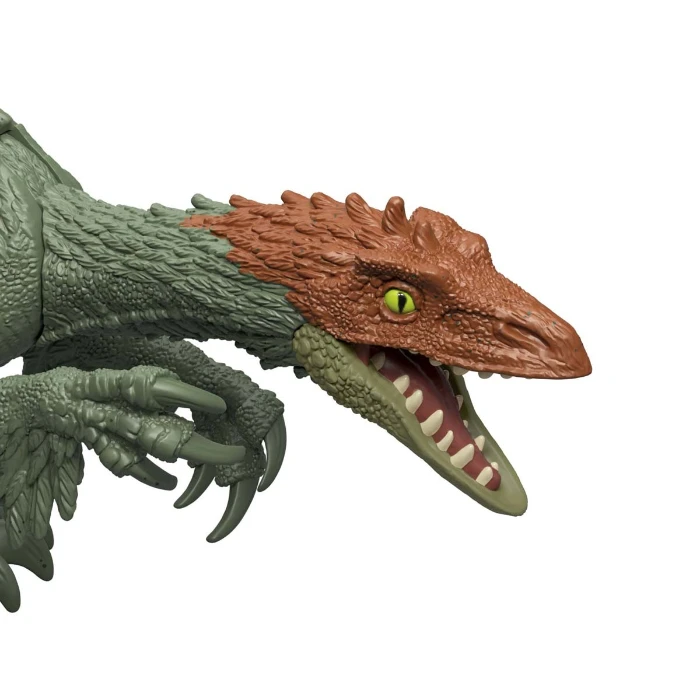
Lets start with the head again. It does not resemble what an Archaeornithomimus head would have looked like, but assessed on its own terms, the sculpt is clean and well-detailed. Scale variation across the face is nicely handled, transitioning from varied-sized scales around the cheek and jaw region to a smoother, almost beak-like surface toward the tip of the snout.
The nostrils are present but notably oversized relative to the rest of the head. The slit-pupil green eye is one of the more visually distinctive eye treatments in this wave. The jaw articulates, revealing teeth that, accuracy concerns aside, are at least present and painted, though the lower tooth placement against the tongue looks more awkward than convincing.
The paint is the weakest part of the figure. There is very little to speak of beyond the primary body tone and a handful of secondary details. A bluish-gray dominates most of the body. The inside of the mouth has a pinkish skin tone when the jaw opens, though the tooth treatment is unusual.
The claws are entirely unpainted throughout, including the prominent hand claws, which is a particular loss given how visually dominant they are on this figure. The speckling is present but sparse. This figure has exceptional potential for repainting as the sculpt quality is very high and the surface details.
The crouching, forward-leaning posture is one of the more dynamic stances in the current Frenzy line. Head lowered and angled, weight shifted forward, it reads as a figure caught mid-stalk. For an ornithomimosaur, a group not known for predatory behavior, this pose is an unusual and debatable design choice.
The rib cage is faintly visible through the body when the legs are repositioned, which is a subtle anatomical detail. You can see the bone structure that shows through the elbow area on the arms. The musculature on the legs looks stronger and more compact than an ornithomimosaur would have been, consistent with the overall re-imagining of the species as something more predatory.
2. Action Feature & Articulation
The arm articulation is notably generous for the format, with a full swivel range in addition to the standard forward and back movement. The neck articulation allows the crouched head pose to be lifted into a more upright position, giving some variety in display options. The tail swivel is present. Leg articulation is the standard forward and back, with one leg sculpted leading and the other trailing.
- Lower jaw (articulated)
- Neck (up and down)
- Arms (forward, back, full swivel)
- Legs (forward and back)
- Tail swivel
Verdict Should I buy it?
Yes. If you are collecting the Rebirth Frenzy line, the Archaeornithomimus is worth having for the featherwork alone. The neck and arm plumage in particular is the best Mattel has produced in this format, and the overall sculpt quality is high, even if the design bears no meaningful resemblance to the real animal.
Accuracy-focused collectors will find a lot to take issue with. Display-focused collectors will find a figure with a genuinely dynamic pose and exceptional surface detail. Paint apps are the persistent weakness, but that story is the same across the entire wave.
How to unlock
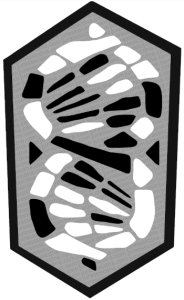
How to unlock Archaeornithomimus in Jurassic World Rebirth Collection?
Open up your Jurassic World Play App (previously known as the Jurassic World Facts App), press the Scan button and point it towards the DNA code here:
3. About the Archaeornithomimus
Archaeornithomimus asiaticus was formally described by Dale Russell in 1972 from fossil material recovered in Inner Mongolia, China. The species lived during the Late Cretaceous period, approximately 70 to 85 million years ago, and represents one of the earlier members of the ornithomimosaur lineage. The name means ancient bird mimic, reflecting the group’s characteristic resemblance to modern large flightless birds in body plan.
Ornithomimosaurs as a group are defined by their slender, long-legged build, small lightweight skulls, and toothless beaks in most species. They are closely related to more famous genera such as Gallimimus and Struthiomimus. Archaeornithomimus was estimated to have been around 3.5 metres (11.5 ft) in length and would have been among the faster-running dinosaurs of its time. Some later ornithomimosaurs have been found with evidence of primitive feathering, which makes the inclusion of feathers on Mattel’s figure a conceptually reasonable choice even if the overall design is exaggerated beyond recognition.
The accepted pronunciation is ar-kee-OR-nith-oh-MY-mus. The name breaks down as arche (ancient), ornitho (bird), and mimus (mimic), placing it within the bird mimic dinosaur group. The full name means ancient bird mimic.
No, not significantly. The real Archaeornithomimus was an ornithomimosaur, a group with a body plan similar to Gallimimus: long slender legs, a toothless beak, small head, and a gracile build. Mattel’s figure has a crouched, raptor-like posture, teeth the species would not have had, oversized hand claws, and a head that does not resemble an ornithomimosaur at all. This is one of the more stylized departures from accuracy in the Rebirth Frenzy line.
Yes. Claire Dearing mentions the Archaeornithomimus by name in the original Jurassic World film, making it one of the species referenced in the franchise without ever appearing on screen. This is part of what makes the Mattel figure such an interesting addition to the collection, as it finally gives the species a tangible presence in the Jurassic World toy line.
The featherwork is the standout quality of this figure and arguably the best Mattel has produced in the Frenzy Pack format. The neck feathers are finely detailed, the arm feathers are wavy and irregular rather than generic and uniform, and feathering appears across the neck, back of the arms, hip region, and calf area. Even the transition between feathered and scaled zones is handled with care. Collectors interested in feathered dinosaur figures will find it well worth having for this detail alone.
In terms of design accuracy, less favorably than most. Figures from PNSO, Papo, or the Hammond Collection Gallimimus give a much more faithful representation of what ornithomimosaurs actually looked like. Mattel’s Archaeornithomimus is better considered as a stylized Jurassic World creature that happens to carry the name, rather than a representative of the real animal.