
Review
Baryonyx Wild Roar Jurassic World Rebirth Review
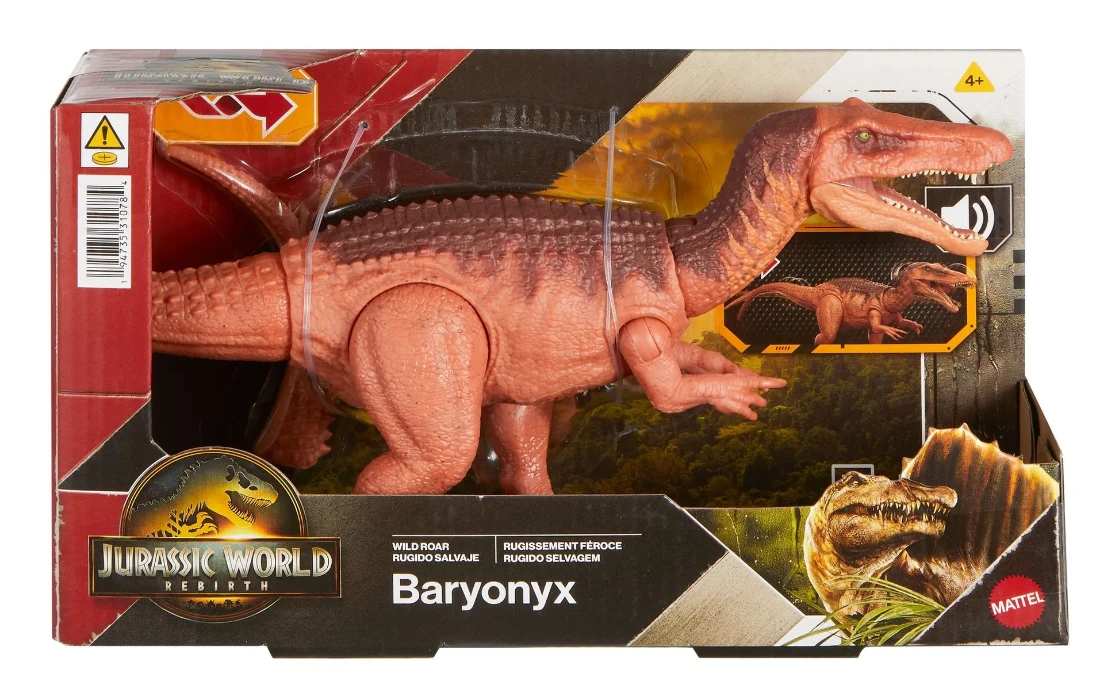
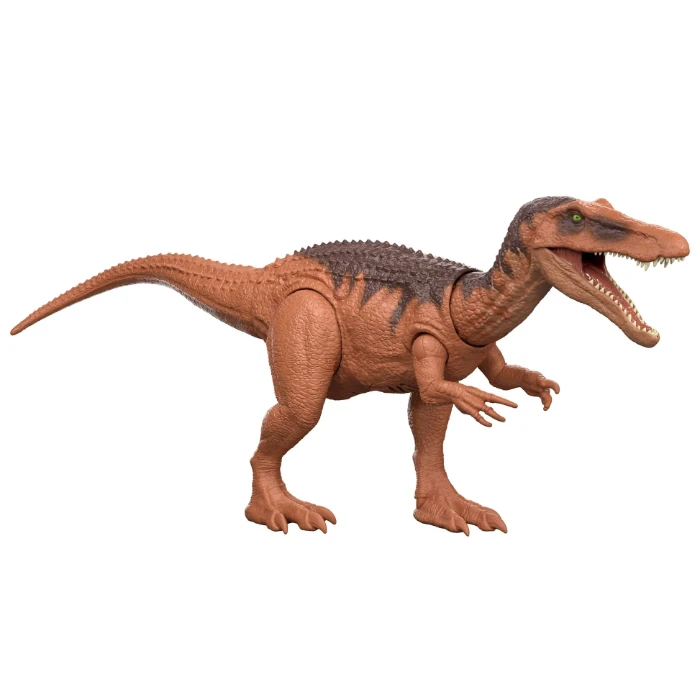
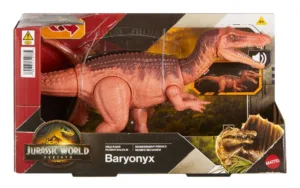
The Rebirth Wild Roar Baryonyx is the best Baryonyx sculpt Mattel has produced, with sharper rubber teeth, a more armored appearance than any previous version, and a fun multi-directional tail action with sounds. But the painting is a total scam. An orange-on-orange tones makes this figure look dull and wasted potential.
Previous Wild Roar Baryonyx vs Rebirth Wild Roar Baryonyx
Previous Wild Roar Baryonyx
- Same approximate size and scale
- Familiar legs and body feel
- Older harder plastic teeth
- Less armored tail appearance
- Slightly slimmer body
- Different head sculpt
Rebirth Wild Roar Baryonyx
- Same approximate size, slightly bulkier body ✓
- Familiar feel in some areas (evolved, not rebuilt)
- Sharper rubber teeth ✓
- More pronounced armored scoot tail ✓
- Crisper overall detail ✓
- Different head sculpt ✓
- Tail action with sounds ✓
About the Toy
1. Sculpt and painting
Let me begin with the obvious, unfortunately. The paint is this figure’s biggest weakness. It is orange on top of orange and a bit more orange for colour here and there. The only real color break comes from a dark brown circling the eye and running up slightly into the snout, a speckling of orange tones across the body, and the green eyes.
It is not the end of the world, as I personally love the color orange, but it is a missed opportunity, to say the least. For a species that has received more visually interesting treatments in earlier lines (including the Leucistic Baryonyx from Chaos Theory), this feels like a missed opportunity.
The key upgrade over previous versions is the teeth: the newer rubber material gives them a genuine sharpness and realistic quality that hard plastic teeth never achieve.
The mouth interior is beautifully finished: a nicely textured tongue, pink tones running the full interior including the upper mouth, and a gloss coat giving a convincing saliva-like quality.
The neck carries an armored look with scoots and osteoderms picking up giving the figure a more rugged quality than the smoother earlier releases. The scales throughout the body are vibrant and pop visually, which is one of the figure’s genuine strengths, even when the color palette is limited.
The arms are made from slightly different rubber material and have good scale detail and scoots along the forearm, with scoots continuing down the fingers as well.
The legs feel reminiscent of older Baryonyx releases in their overall structure and feel, though the detail is crisper. Leg articulation is notably stiff and moves only forward and back without outward swing, which is a limitation for posing.
The tail is proportionally longer than on some previous Baryonyx releases, which is a welcome improvement. The tail material is slightly flexible and a touch different from the main body, explaining the marginal color tonal shift between the two areas. A swivel joint halfway through the tail adds a point of articulation, though its contribution to posing is limited given the tail shape.
2. Action Feature & Articulation
The Wild Roar Baryonyx comes with tail-controlled multi-directional comp and roar, which is great.
Moving the tail up and down activates a jaw chomp with sounds. Twisting the tail changes the direction of the chomp, allowing attacks from different angles. Tilting the tail and then pulling produces more dramatic multi-angle chomping action.
The motion is accompanied by sounds throughout, and the combination of direction control and sounds makes this one of the more versatile Wild Roar action features in the line. You can create attack animations from multiple positions rather than just a single straight-ahead snap.
- Jaw (articulated)
- Neck (action feature linked)
- Tail (multi-directional, controls action)
- Tail swivel (mid-tail)
- Sounds
- Arms (forward, back and outward)
- Legs (stiff, forward and back only)
Verdict Should I buy it?
If sculpt quality and action features are your primary considerations, this is the best Baryonyx Mattel has produced, and the tail action with sounds is genuinely fun. The rubber teeth improvement alone makes this feel like a significant upgrade over older versions and it is kids friendly.
But if a visually exciting paint scheme matters to you, this flat orange colorway will disappoint.
Overall, I would say yes, but still the Leucistic Baryonyx from Chaos Theory lineup remains my favourite.
How to unlock
How to unlock Baryonyx Wild Roar in Jurassic World Rebirth Collection?
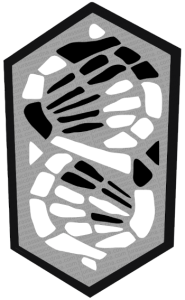
Open up your Jurassic World Play App (previously known as the Jurassic World Facts App), press the Scan button and point it towards the DNA code here:
3. About the Baryonyx
"Baryonyx. Heavy claw. A fish-eater by nature, but it will take what it can get."
— Jurassic World Franchise
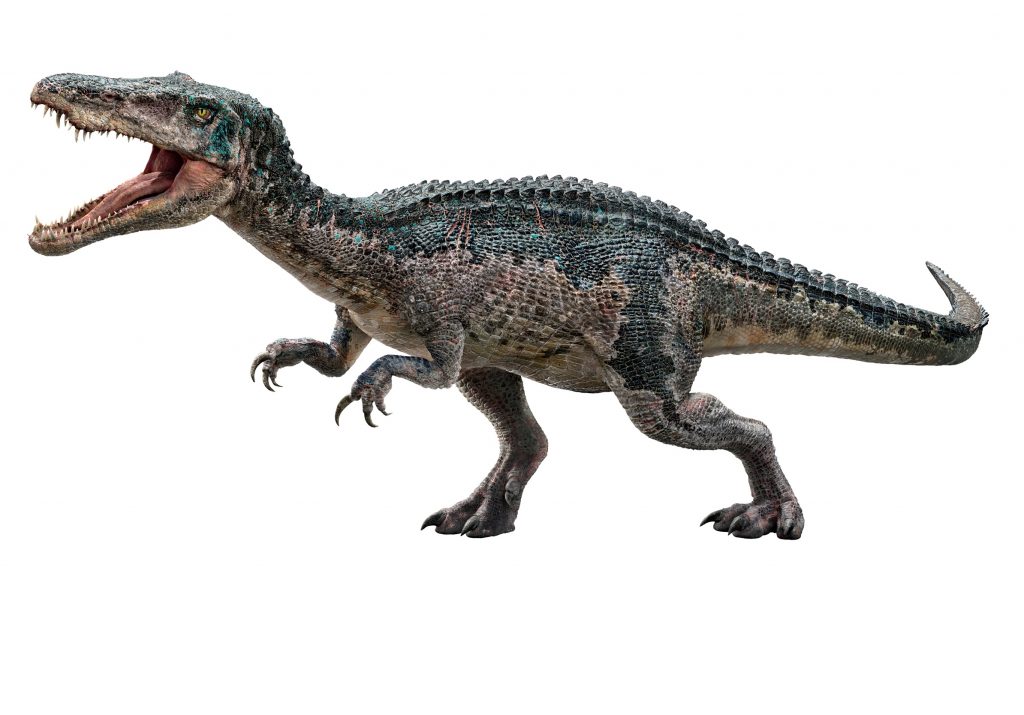
Baryonyx walkeri is an extinct genus of spinosaurid theropod dinosaur that lived approximately 130 million years ago during the Early Cretaceous period in what is now England. It was a large predator estimated at around 10 metres (33 feet) in length and 2.5 metres (8.25 feet) high at the hips, though studies suggest the known specimen may not have reached full adult size. Its name, meaning “heavy claw,” refers to the large curved thumb claw, which measured approximately 31 centimetres in length.
Baryonyx is a close relative of Spinosaurus and Suchomimus within the Spinosauridae family. A 2022 study comparing bone densities of these three species found that both Baryonyx and Spinosaurus had dense bones capable of deep-water diving, unlike the more wading-adapted Suchomimus. Baryonyx’s distinctive crocodile-like snout with cone-shaped teeth is well-suited to fish-hunting, and fish scales have been found in association with fossils, confirming this dietary preference. Despite its fish-eating specialization, the Jurassic World franchise depicts it as an opportunistic predator in enclosed spaces, most memorably in the Gyrosphere Valley and underground scenes of Fallen Kingdom.
The Rebirth Wild Roar is approximately the same size as previous Wild Roar-scale releases, with a slightly bulkier body. The sculpt is an evolution of the older design: legs and body feel somewhat familiar, but the head sculpt is noticeably different, the teeth are the new sharper rubber type, the tail has more pronounced armored scoots, and the overall detail is crisper. The paint is where it falls behind, with a flat orange scheme lacking the variation that made earlier versions like the Chaos Theory leucistic Baryonyx stand out.
Moving the tail up and down activates a jaw chomp with sounds. Twisting the tail changes the direction of the chomp, allowing attacks from multiple angles. Tilting the tail and pulling gives more dramatic multi-angle chomping action. The sounds accompany all movements.
If you value sculpt quality and action feature over paint, yes. This is the best Baryonyx sculpt from Mattel, with sharper rubber teeth and a more armored look than any previous version. If a visually exciting paint scheme is important to you, the flat orange colorway will disappoint and the Chaos Theory Leucistic Baryonyx is a more striking display piece.
Open the Jurassic World Play App, tap the Scan button, and point it at the DNA barcode on the Baryonyx figure’s foot.