
Home › Jurassic World Epic Evolution › Pachyrhinosaurus Wild Roar
Wild Roar Figure Guide
Pachyrhinosaurus Wild Roar
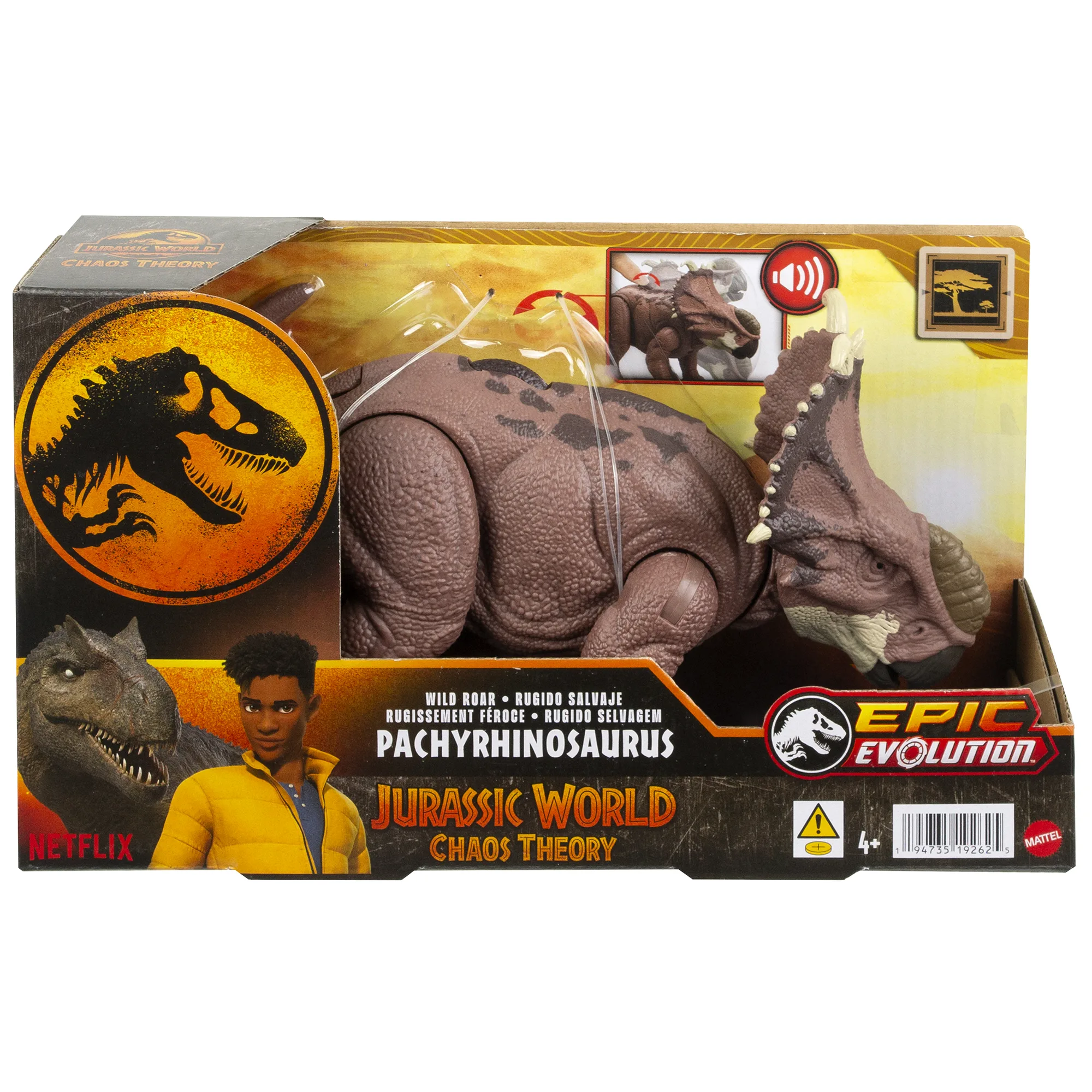
Pachyrhinosaurus is a horned dinosaur with a twist: instead of a long nose horn, it had a thick, rough boss of bone. Mattel added it to the second Wild Roar wave of Jurassic World Epic Evolution as a rose-red figure with a cream nose boss, curled frill horns, a sound and a head-butt attack. Here is what the figure looks like, the famous bonebed that revealed its herds, and how to unlock it in the Jurassic World Play App.
Nose bossSound featureHead-butt attack🧬 DNA scan code
Bonebed Report: A Herd in Stone
At Pipestone Creek in Alberta, thousands of Pachyrhinosaurus bones were found together.
A local science teacher, Al Lakusta, found the site, and the species named from it, Pachyrhinosaurus lakustai, honours him.
What Is Wild Roar?
Wild Roar is the mid-sized assortment of Mattel’s Epic Evolution line. Each figure has a roaring sound, an attack motion and movable joints, and runs on small button cell batteries. Like every Epic Evolution figure, it comes with a DNA code that unlocks the animal in the Jurassic World Play App.
Pachyrhinosaurus came in the second Wild Roar wave of Epic Evolution, alongside Ceratosaurus, Parasaurolophus and Majungasaurus.
Paint and Colours
Body, legs and frill
Nose boss and frill horns
Back and tail
Eyes
A rich, warm scheme. Pachyrhinosaurus is rose red all over, a little darker on the back, with a cream nose boss and cream horns curling from the top of the frill.
Sculpt and Detail
Head and boss
The head has a wide, rough boss of bone over the nose instead of a horn, and a frill topped with curved horns.
Body and legs
It stands on four sturdy legs with a short tail. The head tilts down for the head-butt attack.
Figure vs fossil
Action Features and Articulation
✓ Sound feature✓ Head-butt attack✓ Movable joints✗ Sound needs batteries
Like every Wild Roar figure, Pachyrhinosaurus makes a sound when you trigger it and swings into a head-butt. It has posable legs and runs on small button cell batteries.
Size and Specs
Mid-sized figure for ages 4 and up. Look for the Epic Evolution logo and the rose-red body with a cream nose boss.
Is It Worth Buying?
Pachyrhinosaurus is a great horned dinosaur with an unusual head, bright colours and a fun head-butt. Ceratopsian fans will want it.
It came out in the second Epic Evolution Wild Roar wave.
What we like
- Unusual nose boss
- Rich red paint
- Head-butt attack
- Herd species
Good to know
- No nose horn, by design
- Needs batteries for sound
- Bulky to display
About Pachyrhinosaurus
Pachyrhinosaurus was named in 1950 by Charles Mortram Sternberg from fossils found in Alberta, Canada. The name means thick-nosed lizard.
It lived in the Late Cretaceous, about 73 to 69 million years ago, in Alberta and Alaska. It was about 8 m long and weighed around 4 tonnes.
Pachyrhinosaurus was a centrosaurine ceratopsid. Some lived far north in Alaska, where they had to cope with long, dark winters.
How to Unlock Pachyrhinosaurus in the Jurassic World Play App
Open the Jurassic World Play App (it used to be called the Jurassic World Facts App), tap Scan and point your camera at the DNA code below.

Frequently Asked Questions
It makes a sound and swings into a head-butt attack.
Yes, small button cell batteries power the sound.
No. It had a thick, rough boss of bone instead.
About 8 m long and around 4 tonnes.
Probably. Bonebeds hold many animals of different ages together.
Open the Jurassic World Play App, tap Scan and point your camera at the copy of the code on this page.