
Review
Deinonychus Frenzy Pack Jurassic World Survival Review
My son was constantly asking when his favourite chicken from the Jurassic World Alive game would be made in to an action figure and here we are at last. Mattel relased their first Deinonychus figure and as it is part of the Survival line it is as weird as it is fun to have it in your hands.
🔬 Science Note: The Real Raptor Behind Jurassic Park
📋 Velociraptor Origin
About the Toy
1. Sculpt and painting
Paint Scheme: Dark Gray, Red, Off-White, Brown
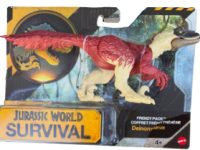
The primary colour of the figure is Red as the most of the body is covered in it. There is a bit of Dark Gray which under certain light look even Black, and the head, neck and tail are painted in off-white kind of yellowish colour.
The lower jaw has a bit of brawn and that’s about it. To me the painting looks very very basic. it is like assembled from the parts of different figures. Neck and tail from one the body is from another, and then the head is a third.
Still, the colors are very strong and fit perfectly in the Survival line as otherwise it would have looked just ridiculous.
The head sculpt has fairly fine skin detail throughout, with the dark gray giving the face a lean, predatory look. The jaw opens to a good width and articulates cleanly. The teeth are painted decently, though they lack the genuine sharpness of the rubber teeth found on larger figures.
Moving toward the back of the head, feathers begin creeping in as you approach the neck. Feathers are fully present from the neck back, and the detail in the feathers is genuinely impressive. Crisp, well-defined, with variation in size and direction. Wavy feather shapes run along the underside of the neck and throat. Neck articulation allows the head to move up and down, which adds useful poseability for a raptor-style figure.
The back carries feathers along the spinal column with lots more feathering there, and the arms show decent feather detail at the elbow area before transitioning to skin texture for the majority of the arm. Arm articulation covers forward and back but does not swing out away from the body.
Feathers run from the upper thigh and taper as you move down toward the knee, with skin texture taking over for the lower leg. Red speckling continues through the leg regions. The claws have a reasonably sharp look due to the flexible rubber material. Leg articulation covers forward and back.
The tail is the figure’s highlight: magnificent feather plumage at the tip, with large, well-defined feathers creating an impressive display fan. The feather detail here is some of the best Mattel has produced on any feathered figure in the Jurassic World line. The tail curves naturally and has a swivel joint. The undersides of the tail feathers also carry detail between the larger plumes.
2. Action Feature & Articulation
- Jaw (articulated, opens wide
- Neck (up and down)
- Arms (forward and back)
- Wrists (pronated, not correctly positioned)
- Legs (forward and back)
- Tail swivel
Verdict Should I buy it?
Yes. As the first Mattel Deinonychus release, I think this figure would be very well looked after. The tail plumage is exceptional, the feather detail throughout the neck and back is genuinely impressive, and the attempt to give the figure a look that acknowledges the real animal alongside the JW raptor heritage is appreciated.
How to unlock
How to unlock Deinonychus Frenzy Pack in Jurassic World Survival Collection?
Open up your Jurassic World Play App (previously known as the Jurassic World Facts App), press the Scan button and point it towards the DNA code here:
3. About the Deinonychus
"The raptors in Jurassic Park were based on Deinonychus. Without John Ostrom's discovery and his work on it, the Dinosaur Renaissance never happens, and the velociraptors that stalked the kitchens of Jurassic Park never capture the imagination of the world."
— Paleontology community, on Deinonychus's cultural legacy
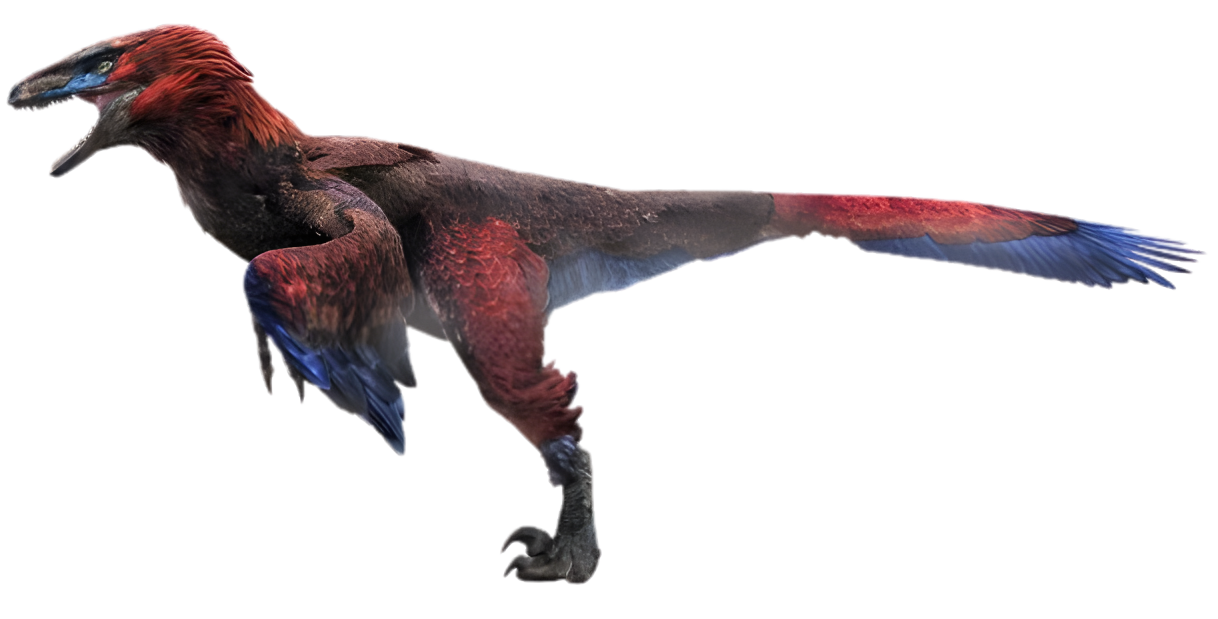
Deinonychus antirrhopus (meaning “terrible claw,” referring to the enlarged killing claw on the second toe) is a genus of dromaeosaurid theropod dinosaur from the Early Cretaceous period, living approximately 115 to 94 million years ago in what is now the western United States. Fossils have been found in Montana, Wyoming, Utah, and Oklahoma, with possible teeth in Maryland. At 3 to 3.4 metres (10 to 11 feet) in length and up to 100 kilograms (220 pounds), it was a mid-sized predator significantly larger than its close relative Velociraptor.
Deinonychus was described and named by paleontologist John Ostrom in 1969 following an excavation he led in Montana in 1964. Ostrom’s detailed analysis of the skeleton, noting its sleek horizontal posture, lightweight hollow bones, and enlarged raptorial foot claw, argued persuasively that Deinonychus was an active, agile, warm-blooded predator fundamentally different from the slow, lumbering reptiles that the public imagined when they thought of dinosaurs. This work ignited what became known as the Dinosaur Renaissance, and established the close evolutionary relationship between dromaeosaurids and modern birds. When Michael Crichton was developing Jurassic Park, it was Deinonychus that he had in mind for the “raptors,” though he used the name Velociraptor for dramatic effect. The JP raptors in the films are Deinonychus in all but name.
Yes. The Velociraptors in Jurassic Park were largely based on Deinonychus rather than the real Velociraptor, which is much smaller, roughly the size of a turkey. Michael Crichton and Steven Spielberg used Deinonychus’s larger size and predatory capabilities as the model, simply calling them Velociraptors for dramatic effect.
Yes. The Survival Frenzy Pack Deinonychus is the first Deinonychus figure Mattel has produced for the Jurassic World toy line.
The Deinonychus is noticeably smaller than the standard Mattel Velociraptor, sitting closer in size to the Dromaeosaurus from this same Survival line. In reality the Deinonychus was significantly larger than Velociraptor, but in the toy line it sits in the smaller Frenzy Pack size range. The Deinonychus has a fully feathered look while the standard Mattel Velociraptor is skin-textured throughout.
No direct feather fossils have been found for Deinonychus itself, but the evidence strongly supports feathers. Scientists think it’s very likely that it did, as some very closely related dinosaurs including Velociraptor definitely had them. Mattel’s feathered design is therefore scientifically defensible and more accurate than the scaly JW raptors of previous films.
Open the Jurassic World Play App, tap the Scan button, and point it at the DNA barcode on the Deinonychus foot.