
Home › Jurassic World Survival › Dunkleosteus Strike Attack
Strike Attack Review
Dunkleosteus Strike Attack Jurassic World Survival Review
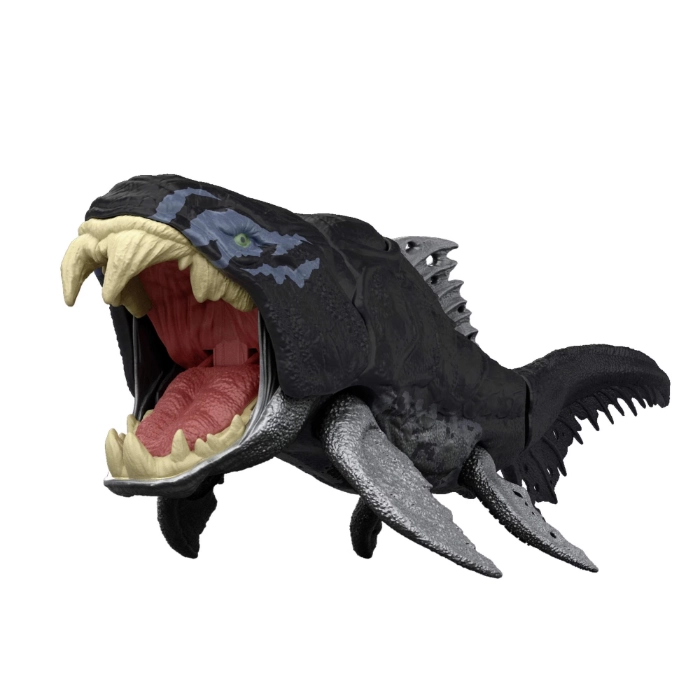
The Dunkleosteus is a marine creature my son and I both enjoy in Feed and Grow: Fish — a terrifying prehistoric fish that terrorised the oceans with massive bone plates instead of teeth. The figure is definitely smaller than I expected, even though I was not expecting much from a Strike Attack release. It still looks better in hand than the pre-release images circulating online suggested.
📏 ~15 cm / 6 in🪥 Bony jaw plates, not teeth🔥 Button-activated jaw chompMattel · 2026Scan code included
🎮 About the Survival Line
The Jurassic World Survival line depicts mutated versions of prehistoric animals, tied to the Survival PS5 game concept. Every creature in the toy line carries exaggerated features, unusual colouration, fins, ridges or armour compared to its historical counterpart. The Dunkleosteus is a good example of the Survival aesthetic, especially in the way Mattel decided to paint the frontal bone plate like a massive tooth or beak.
⚖️ How Big Is It, Really?
The figure measures roughly 15 cm (just over 6 inches) from mouth to tail tip and stands around 6.5 cm (2.5 inches) tall propped on its fins. That is smaller than I expected — but for the price, and for the novelty of finally getting a Dunkleosteus at all, it is still an easy purchase.
Paint & Colour Scheme
Primary bodyLight blue
Head & face stripesPale yellow
Jaw platesMetallic silver
Dorsal fin
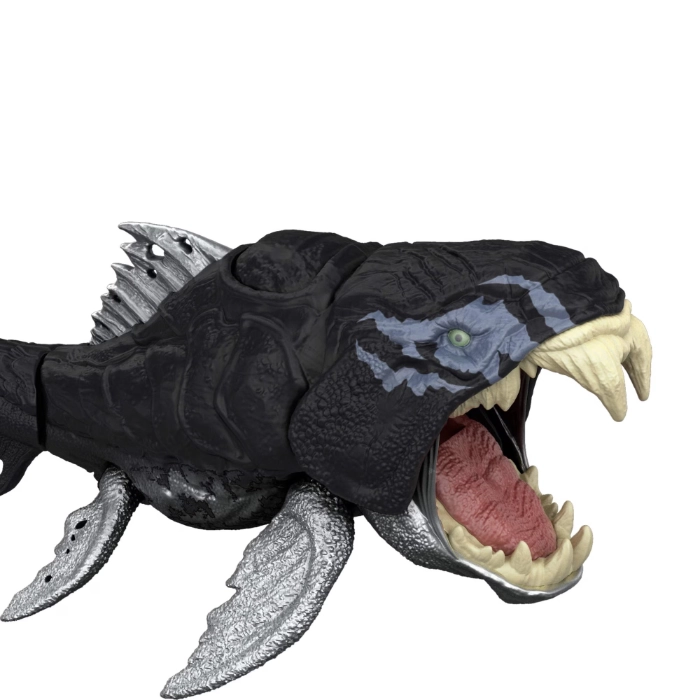
The primary body colour is a very dark, almost navy blue that works well for a deep-water predator. Stripes of light blue run across the top of the head and the face. The bone plate is painted in a very light yellow and stands out as a very big — even comically big — single tooth.
Dunkleosteus did not have true teeth. Instead it had self-sharpening bony jaw plates, extensions of its jawbones that formed razor-sharp blades capable of slicing through armour and crushing bone. Those plates sharpened themselves every time the fish closed its mouth. The Mattel figure stylises them into prominent fang-like protrusions that look very much like oversized teeth, especially with the off-white paint applied — and the real plates are what made this animal one of the most powerful biters in vertebrate history.
Sculpt & Detail
Head and Jaw Plates
The head sculpt carries a bumpy skin texture that reads as armoured plating right across the face, fitting the natural look of a placoderm. The jaw plate protrusions are prominent and dominate the front of the figure, giving it a menacing look — and it is exactly that menace that kids will like about it.
Body and Armour
The rest of the body has a solidly armoured appearance throughout, again fitting the real biology of a placoderm. Moving from the head into the body, the armoured look continues along the top, with the dark blue providing good contrast against the silver dorsal fin rising above it.
Tail
Taken as a whole, the figure looks noticeably better in hand than the pre-release images that circulated online suggested it would.
Action Feature & Articulation
✓ Jaw — upper and lower, button activated✓ All four fins — swivel✓ Tail — left and right✗ Tail joint is loose✗ No second action feature
Dunkleosteus comes with a button on the top of the head that activates the jaw chomp, moving both the upper and lower jaws. That is the primary action feature. The tail moves left and right, but on a loose articulated joint rather than a button-driven one, which gives it a slightly unintentional wobble in the hand.
The overall action package is straightforward: a jaw chomp is exactly what you would expect from the Strike Attack format, and it works cleanly.
Size & Specs
Those numbers make it one of the smaller figures on a Strike Attack shelf, and the profile is long and low rather than tall. Propped on its fins it reads more as a display piece than a poseable one, which suits a fish far better than it would a theropod.
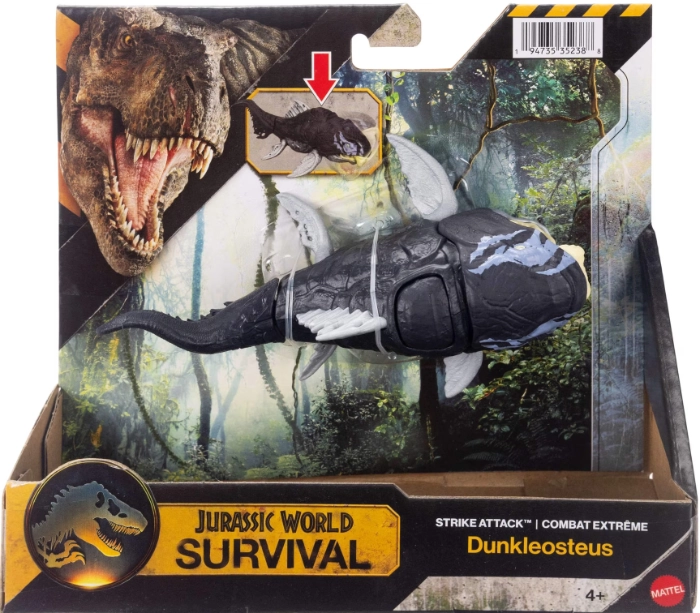
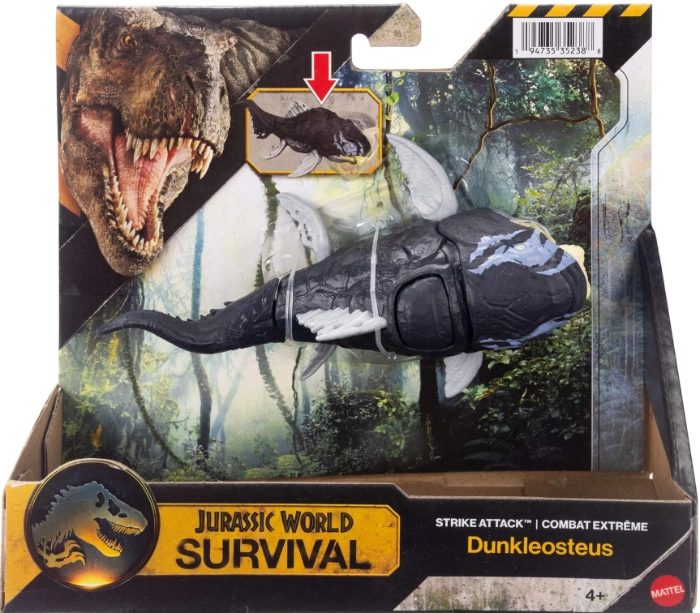
Verdict — Should You Buy It?
Buy it if you love the prehistoric monster fish. The very affordable price is a fair trade-off for the actual size of the figure — and the damage detail on the fins is some of the best in the whole Strike Attack range, with the metallic silver elements reading beautifully against the dark blue body.
✦ What Works
- Best fin damage in the Strike Attack range
- Holes that go right through the rear fin
- Silver dorsal reads well against the navy
- Bumpy armour texture suits a placoderm
- Clean, reliable button-activated jaw chomp
- All four fins swivel
- Very affordable for an unusual species
✦ What Doesn't
- Smaller than expected at ~15 cm
- Loose tail joint wobbles in the hand
- Jaw plates painted as comically large teeth
- No button-driven tail movement
- Only one action feature
- Not much articulation beyond the fins
About the Dunkleosteus
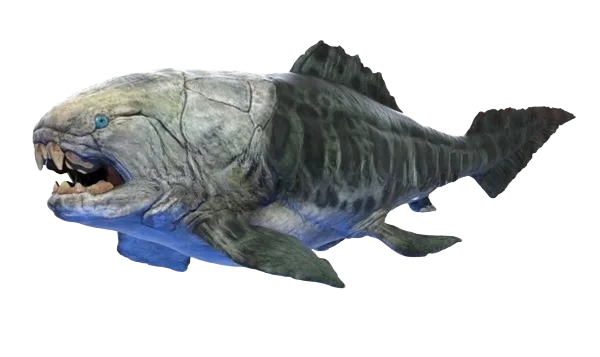
Dunkleosteus is an extinct genus of large arthrodire placoderm fish that lived during the Late Devonian, roughly 382 to 358 million years ago — predating the dinosaurs by over 150 million years. Its name honours the paleontologist David Dunkle, who studied the fossils extensively. The largest and best-known species is Dunkleosteus terrelli, named for Jay Terrell, who first found remains along the Lake Erie cliffs in 1867. Fossils have since been recovered in the United States, Canada, Belgium, Poland and Morocco. At least ten species are currently recognised, though the validity of several is still debated.
In its time, Dunkleosteus terrelli was likely the largest and most undefeatable animal to have existed in Ohio. Three hundred and fifty-eight million years ago, a shallow sea teeming with marine life covered Northeast Ohio, and Dunkleosteus ruled it.
Dunkleosteus had no true teeth. Instead it possessed self-sharpening bony jaw plates that formed razor-sharp cutting blades, re-sharpening themselves every time the animal closed its mouth. Biomechanical studies suggest it could open its jaws in around 20 milliseconds and generate bite forces among the highest of any fish, living or extinct. The armoured head and thorax were covered in thick interlocking bony plates, while the rear of the body was unarmoured and likely cartilaginous.
Because only the armoured front portions are typically preserved as fossils, estimates of total length vary enormously: a 2023 study using a new orbital measurement method suggested typical adults were around 3.4 metres (11 feet), much smaller than older estimates of 6 to 9 metres — though the debate continues. Whatever its actual length, it was among the first true vertebrate apex predators in Earth’s history, capable of hunting armoured prey including other placoderms.
How to Unlock
How to unlock Dunkleosteus Strike Attack in the Jurassic World Survival Collection?
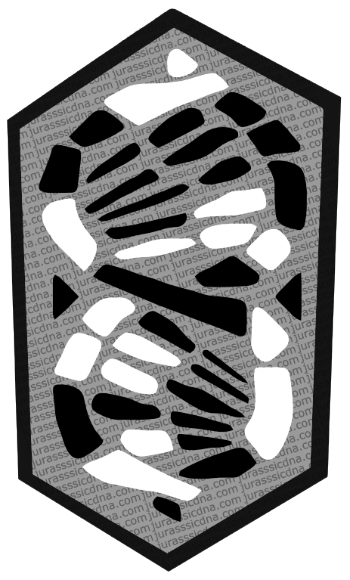
Open up your Jurassic World Play App (previously known as the Jurassic World Facts App), press the Scan button and point it towards the DNA code here: