
Home › Jurassic World Dino Trackers › Iguanodon Roarin’ Battle Pack
Roarin' Battle Pack Figure Guide
Iguanodon Roarin' Battle Pack
This Iguanodon comes in the Jurassic World Dino Trackers Roarin’ Battle Pack (HLN15), the Amazon-exclusive two-pack it shares with Skorpiovenator. It is a sandy, striped repaint of the Dominion Roar Strikers Iguanodon, with a roaring sound and an attack action. Iguanodon was one of the very first dinosaurs ever named, and it has one of the strangest hands in the animal kingdom. Here is what the figure looks like, what that hand could do, and how to unlock it in the Jurassic World Play App.
🔊 Roaring sound💥 Attack action📦 Two-pack with Skorpiovenator🧬 DNA scan code

Five Fingers, Three Jobs
Iguanodon’s hand was a multi-tool. Each finger was built for a different job, a combination not seen in any living animal.
That spike once caused one of palaeontology’s most famous mistakes: early scientists found it on its own and put it on the animal’s nose like a rhino horn.
What Is the Roarin' Battle Pack?
The Roarin’ Battle Pack is an Amazon-exclusive Dino Trackers set that pairs Iguanodon with Skorpiovenator. Both are repaints of the Jurassic World Dominion Roar Strikers figures, redone in a sandy desert habitat look to match the Dino Trackers theme.
Each figure has a press-down action that triggers a roar and an attack move, powered by small button batteries that come in the box. Each also has its own DNA scan code.
Paint and Colours
Head, legs, belly and tail
Stripes along the back and neck
Eyes and small details
A desert camouflage look. Most of the figure is a pale sand colour, with olive-brown stripes running down the neck, back and upper tail, like dappled shade across a dry plain. It pairs nicely with the rust and orange Skorpiovenator from the same box.
Sculpt and Accuracy
Head and beak
The long, horse-like head ends in a toothless beak, which is right for the real animal. Behind the beak, Iguanodon had rows of leaf-shaped grinding teeth, the iguana-like teeth that gave it its name.
Posture
The figure stands on all fours with its back level and tail held out, which is how scientists picture adult Iguanodon today. Older museum mounts stood it upright like a kangaroo with its tail dragging, a pose now known to be wrong.
Found in a coal mine
Roar and Attack Features
✓ Roaring sound✓ Press-down attack✓ Batteries included✓ DNA scan code
Press down on Iguanodon’s back and it roars while it moves into an attack. The sound runs on small button batteries that are included, so it works straight out of the box. Face it off against the Skorpiovenator from the same pack for an instant predator-versus-prey scene.
Pack Details
For ages 4 and up. The box is about 12.9 x 8.5 x 3.5 inches.
Is It Worth Buying?
The Roarin’ Battle Pack is a good buy for kids who want a big plant-eater that fights back, and the roar on both figures adds a lot of play value. The sandy striped Iguanodon looks natural and accurate in its four-legged pose. The main drawback is that it is an Amazon exclusive, so it can be harder to find.
It is mostly found second hand now.
What we like
- Roaring sound and attack
- Accurate four-legged pose
- Two figures in one box
- Batteries included
Good to know
- Amazon exclusive
- Repaint of an older sculpt
- Batteries eventually run out
About Iguanodon
Iguanodon was named in 1825 by English doctor and geologist Gideon Mantell, from teeth found in Sussex that looked like giant iguana teeth. It was only the second dinosaur ever named, after Megalosaurus, and one of the three animals used to define the word dinosaur in 1842.
The best-known species, Iguanodon bernissartensis, lived in the Early Cretaceous, around 126 to 122 million years ago, in what is now Europe. It was a large plant-eater, around 10 m long and 3 to 5 tonnes, able to walk on all fours or on its hind legs.
Many of the Bernissart skeletons are on show at the Royal Belgian Institute of Natural Sciences in Brussels, one of the most impressive dinosaur displays in the world.
How to Unlock Iguanodon in the Jurassic World Play App
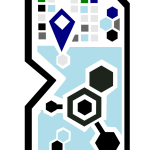
Open the Jurassic World Play App (it used to be called the Jurassic World Facts App), tap Scan and point your camera at the DNA code below. The same code is on the Iguanodon figure.
Frequently Asked Questions
It comes in the Roarin’ Battle Pack (HLN15), an Amazon-exclusive two-pack with Skorpiovenator.
Yes. Press down on its back and it roars and attacks. The batteries are included.
Nobody knows for sure. Ideas include defence against predators, fighting rivals and breaking open food.
No. Early scientists put the thumb spike on its nose by mistake. Complete skeletons found in Belgium in 1878 showed it belonged on the hand.
Around 10 m long and 3 to 5 tonnes.
Open the Jurassic World Play App, tap Scan and point your camera at the code on the figure, or at the copy of the code on this page.